Make cities and human settlements inclusive, safe, resilient and sustainable.
Wilfrid Laurier University engages in a range of initiatives to make cities and human settlements inclusive, safe, resilient and sustainable. By advancing SDG 11, we play a role in enhancing the quality of life for those in our local communities and beyond.
The work that Laurier completed in 2025 to advance SDG 11.
The City of Brantford invites listeners to discover local tourist attractions, historic sites and public artwork in a new series of short-form audio episodes produced in collaboration with students at Wilfrid Laurier University’s Brantford campus. The first of 14 episodes in the Best of Brantford Audio Tour showcases the colourful history of the Sanderson Centre for the Performing Arts, narrated by theatre manager Glenn Brown from within the theatre itself. New episodes will be released weekly on the Discover Brantford website through February 2026.
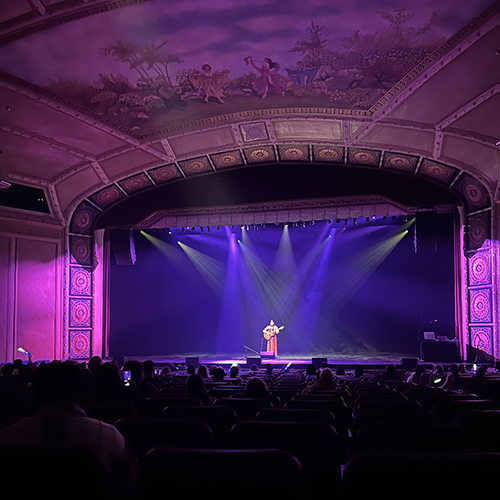
Top multicultural talent lit up the stage at the Sanderson Centre for the Performing Arts. Fusion Beats 2025, presented by Wilfrid Laurier University’s Hub for Community Solutions, Laurier International Student Support, the City of Brantford and the Downtown Brantford BIA, with additional funding from Laurier Brantford Grants, offered an electrifying evening of diverse music and dance performances. Admission is free and open to the public.
The Sun Life Centre for Healthy Communities at Wilfrid Laurier University is giving local children a new opportunity to learn and play with the launch of Toyota STEM and Sport, a free evening program that combines physical activity with hands-on science, technology, engineering and math (STEM) learning. Following a successful debut in Waterloo earlier this year, the Brantford program kicked off at Russell Reid Public School and invites local children ages 9 to 12 to explore STEM concepts through sport-based games and activities. From measuring heart rates with Fitbits to learning coding through football drills, participants will discover how science and sports intersect in fun, engaging ways that get them moving while they learn.
This spring the City of Brantford will once again host Town and Gown Advisory Committee meetings thanks to a motion passed at municipal council in late March. Melissa DiLeo, director student life and experience, and Sebastien Corrie, AVP: government and stakeholder relations for the Wilfrid Laurier University Students’ Union spoke in favour of the motion at the March 18 meeting of Brantford’s municipal council.
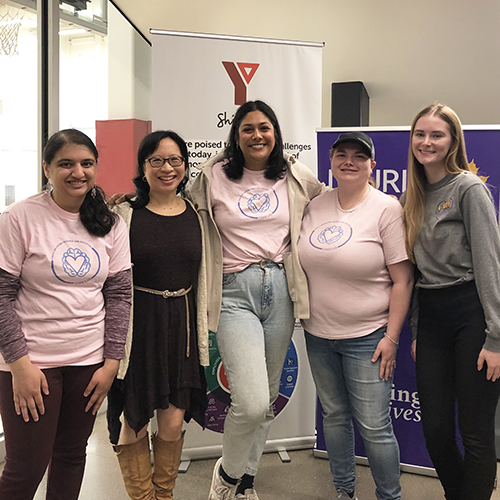
A recent partnership between Wilfrid Laurier University and the YMCA of Hamilton | Burlington | Brantford has yielded far-reaching benefits — not only for the YMCA, which gained valuable insights into the effectiveness of its youth programs, but also for the student researchers who led the project.
“The whole idea of the CARE Lab is to conduct research that benefits the broader community,” says Sharma. “We’re a part of the community in which we operate and we’re always open to collaboration.”
Callum McKean (BA ’23) originally came to Wilfrid Laurier University to study Kinesiology and play football for the Golden Hawks, but the 6-foot-5 defensive lineman had to hang up his pads early due to a neck injury.
“I realized that I had to do something other than football for the rest of my life,” says McKean. “I’d always enjoyed film and writing scripts as a kid, but it took a backseat once I became focused on football.”
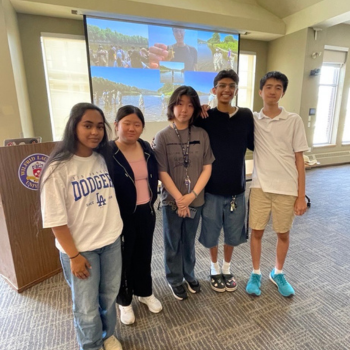
Wilfrid Laurier University’s Milton Academic Centre buzzed with energy as students unveiled their solutions to a challenge presented by the Town of Milton: making it easier to connect with municipal government. Over the fall term, 28 students in the course UX100: Design Thinking I: Foundations worked with the town on this real-world problem. Their proposed solutions were showcased Nov. 27 in five “pitch-style” presentations that capped their months-long design project.
Laurier research centres advancing SDG 11.
The Viessmann Centre for Engagement and Research in Sustainability (VERiS) is an interdisciplinary and community-engaged research centre striving to be a catalyst and nexus for the transition toward strong cultures of sustainability. The centre understands cultures of sustainability “as characterized by shared values, symbols, rituals and practices grounded in sustainability principles leading to individual and societal choices that promote environmental protection, social justice and well-being, and a supportive economy." A culture of sustainability may exist within an organization, a building with multiple organizations or a community.
The Laurier Centre for the Study of Canada (LCSC) focuses on the interdisciplinary, multidisciplinary and comparative study of the Canadian experience. LCSC has three objectives:
In pursuit of this mission, LCSC recognizes there are expansive, evolving, and contested interpretations of Canada.
The Laurier Centre for Music in the Community (LCMC) was formed with a mission of connecting Laurier to the wider Waterloo Region community through musical activities, community research and collaboration. The LCMC lives out this mission through research, symposia, publishing, projects, partnerships and concerts. Using music as a conduit, it works to connect community, collaborate with music-makers, and contribute to the vitality of music and people.
Laurier initiatives in 2025 that advanced SDG 11.
All buildings, monuments and natural heritage landscapes on all Laurier campuses and locations are free and open to the public. Laurier is home to 11 heritage buildings, including the Carnegie Library Building and the Lucinda House.
The public can take self-guided tours of the campus. To support accessibility, free virtual tours are also available.
The Laurier Library provides public access to 1.3 million online resources and holds one million print resources that can be accessed through the library’s Omni search system. The public is welcome to access the Laurier Library and borrow books from the library free of charge.
Laurier’s Robert Langen Art Gallery (RLAG) is the university’s art gallery and is open to the public for free. RLAG oversees art collections and Laurier’s multicampus milieu and organizes visual arts programming that inspires, challenges and expands learning beyond the classroom. Working with a wide range of university and community partners, the gallery develops exhibitions, artist lectures and arts-related events featuring practitioners who range from students and community members to leading national and international visual artists.
Laurier’s Archives and Special Collections are open to the public. The collecting emphasis is on Laurier artifacts, the environmental conservation movement in Canada, the Evangelical Lutheran Church in Canada and its Eastern Synod, music in Kitchener-Waterloo and the history of Waterloo Region. Appointments are not necessary to visit. Laurier Archives and Special Collections staff are happy to provide instruction sessions and tours of the archives.
Laurier's Waterloo campus has five hectares of land that is permanently accessible and open to the public. The campus is connected to the surrounding community through unrestricted municipal vehicle and pedestrian infrastructure. Presently, green space covers 30% of the campus and an ‘urban forest’ runs throughout the campus that members of the community are welcome to enjoy. The campus features a large, 14,000 sq. ft. community garden. Woven into the community garden plots at the Northdale Community Garden is an edible forest featuring fruit trees bearing a variety of apples, pears and service berries.
Community members can take self-guided bike or walking tours of the campus. To support accessibility, free virtual tours are also available.
The Laurier Faculty of Music is host to a variety of events, including more than 100 publicly available concerts, recitals, guest workshops and other community events. Home to the Maureen Forrester Recital Hall and the Theatre Auditorium, the performance halls host thousands of guests each year.
The public can also engage with Laurier ensembles and faculty performances from the comfort of home by streaming past concerts on our Faculty of Music YouTube channel.
Laurier is also home the Robert Langen Gallery. The Gallery offers diverse annual exhibition programs, activities and events which fosters creative thinking, critical debate and the exploration of ideas. Gallery programs provide an important resource tool for arts education, research, stewardship and creative community dialogue. By encouraging campus engagement and free public access to these resources it is hoped that greater interdisciplinary partnerships and opportunities for the exchange of ideas on arts and culture will occur.
Laurier is working locally, nationally and internationally to help preserve cultural heritage. For example:
Through its Sustainability Action Plan, Laurier has established a number of targets for more sustainable commuting. These are measured through an annual survey and by tracking annual commuter and travel data from department and faculty budget expenditures. Targets set include:
Laurier, in partnership with the Region of Waterloo’s TravelWise program, conducts an annual Alternative Transportation Survey to measure and improve sustainable commuting practices. The survey results help the Sustainability Office, Parking and Transportation Resources, and Sustainable Waterloo Region gain valuable insights into student transportation patterns and identify areas for promoting more sustainable, eco-friendly commuting options, including carpooling, public transit, and cycling.
Survey participants were asked a range of questions, including their preferred modes of transportation, familiarity with Grand River Transit (GRT) discount options available to staff, and the challenges they face when considering alternative commuting options such as cycling, carpooling, or public transit. Demographic data was also collected to provide a comprehensive understanding of travel behaviours across different groups within the Laurier community.
The survey results offer valuable insights into how Laurier can enhance its transportation strategies, promote sustainable travel choices, and reduce barriers to adoption, such as lack of infrastructure or convenience, aligning with broader campus sustainability goals.
Laurier offers a variety of programs and initiatives to promote and support a safe and environmentally friendly commute to campus:
Laurier allows remote work as part of its commitment to providing a safe, inclusive and supportive work environment for all employees. Laurier's commitment to remote work is demonstrated in policy 8.14 Flexible Work Policy. The goals for Laurier's flexible work include:
This policy applies to Employees in the following non-academic bargaining units and Employee groups:
The university also offers a compressed work week arrangement initiated by employees and approved by managers, whereby employees can complete their weekly working hours in a period of other than five working days provided that the employees work their normally scheduled 70 hours in a pay period. Compressed work week arrangements are available for the period of May 1 to Aug. 31 of each year.
Laurier supports its employees in finding affordable housing through several initiatives:
Laurier is committed to evaluating housing options for members of its community. The institution is a member of the local Town and Gown committee, which seeks to enhance relationships, communications and policies among the universities, the community and the city. The committee evaluates a number of issues, including housing. The committee ash recently produced an accommodation report.
Laurier’s Student Affairs oversee and evaluate housing options for students both on and off campus. Laurier provides various affordable on and off-campus options, including dormitories and apartments.
In addition, Laurier has partnered with Places4Students.com, an off-campus housing website that specializes in providing students, schools and landlords with a quality rental property listing service. The institution recently formalized a partnership with SpacesShared, an online platform that pairs students looking for affordable accommodations with older adults who have extra space in their homes. The partnership will create new housing options for Laurier students in Waterloo and Brantford and give older adults a way to leverage a spare bedroom for some extra income, company and assistance around the house.
Laurier also offers financial aid for students to assist with costs associated with housing.
Laurier is committed to evaluating housing options for members of its community. The institution is a member of the local Town and Gown committee, which seeks to enhance relationships, communications and policies among the universities, the community and the city. The committee evaluates a number of issues, including housing. The committee produced an accommodation report in 2023.
Laurier prioritizes pedestrian access on campus through the provision of multi-use paved walking and cycling paths connected to the city pathway system, which provide safe and reliable paths for the community year-round. The university's interconnected pathway system can be seen in Laurier's interactive maps.
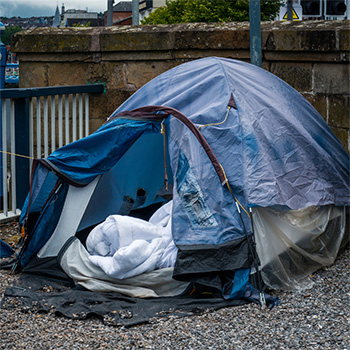
Laurier is helping to address the affordable housing crisis in Canada. Our faculty and students are working on developing innovative solutions and supporting their local communities.
As outlined in our Sustainability Policy, Laurier is committed to maintaining sustainability design standards for major projects that will enable the university to work toward LEED green building standards for new builds and introduce principles of sustainable construction, renovations and landscape design, making use of full cost cycle accounting. For example:
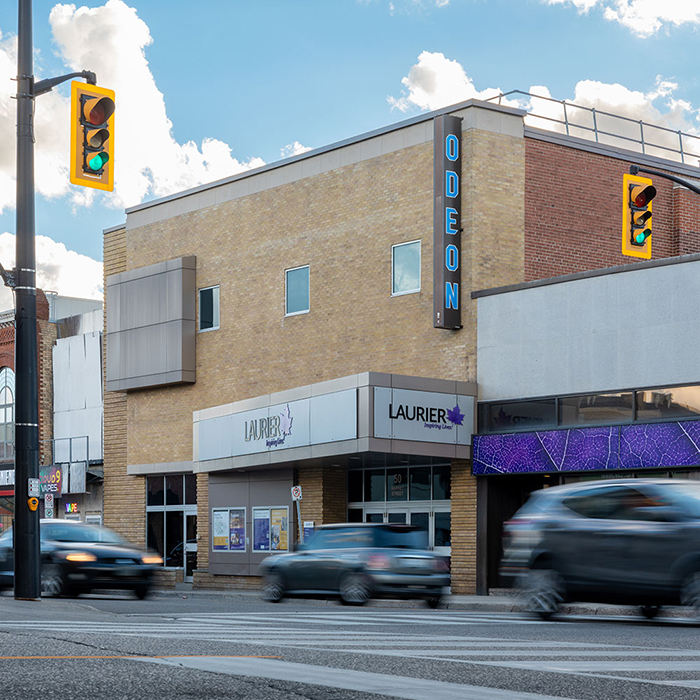
Laurier has strategically expanded its building portfolio by retrofitting brownfield building sites, particularly on the Brantford and Waterloo campuses. Through adaptive reuse, the university has revitalized historic structures and former industrial sites, transforming them into vibrant academic spaces. This approach aligns with Laurier’s commitment to sustainability, blending heritage conservation with modern functionality. The Brantford campus exemplifies this through its repurposing of downtown landmarks, while the Waterloo campus continues to integrate sustainable development into its growth strategy.
Discover how Laurier is contributing to United Nations Sustainable Development Goal targets.