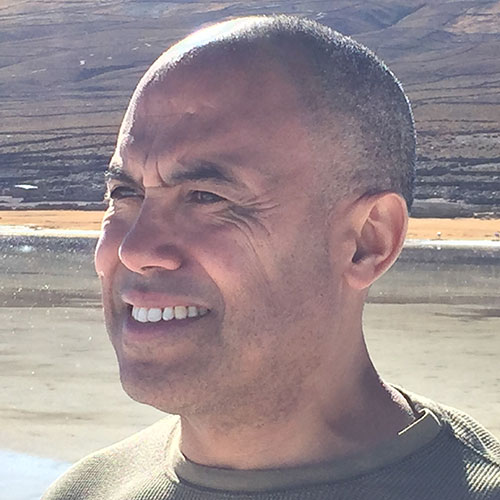
Wilfrid Laurier University’s Waterloo and Brantford campuses are located on the shared traditional territory of the Neutral, Anishnaabe and Haudenosaunee peoples, and Laurier’s Milton campus is located on the traditional territory of the Mississaugas of the Credit. Our faculty and students conduct research on the lands and territories of many First Nations, Inuit and Metis peoples from across Turtle Island. We recognize, honour and respect these Indigenous peoples as the traditional stewards of the lands and water on which we live, learn and study.
Over the past year, I have had the absolute joy of leading the Beyond the Acknowledgement program with my colleagues Heidi Swanson and Emily Daniel. With financial support from Braiding Knowledges Canada and our Office of Research Services, a cohort of Laurier staff from across the university stepped into a year of learning, unlearning and growing together. They engaged in self‑directed study and discussion circles to deepen their understanding of Canada’s true history and contemporary Indigenous contexts.
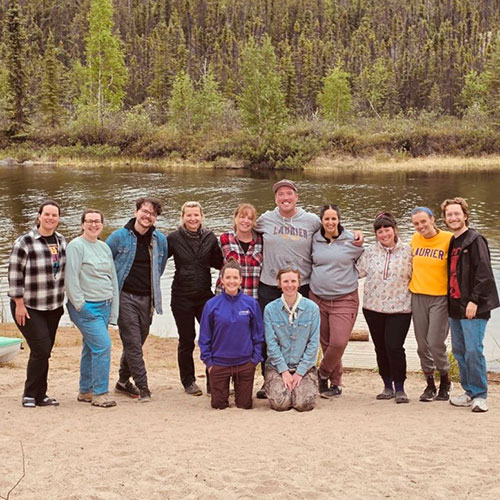
With a growing foundation of knowledge, the group travelled to the Northwest Territories for an on‑the‑land camp led by the extraordinary Carl Jr. Kodakin‑Yakeleya of Evergood Medicine. The camp invited us to slow down, listen differently, and experience Indigenous ways of knowing and being with humility and respect.
Now that our first group has returned to Waterloo, Brantford and Milton, they have begun the quiet, personal work of reflection: how to carry these teachings into their daily practice, shift habits, and make space for new ways of being in relationship with Indigenous partners. This is the work that matters most and is never ending.
Individually and collectively, we are committed to moving forward in ways that transform our stated commitments to reconciliation into meaningful change across the university.
Charity Parr-Vasquez
Assistant Vice-President: Research

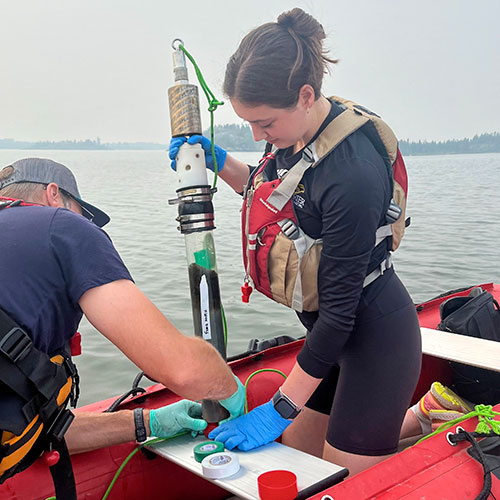
Between 1948 and 1953, gold mines in Yellowknife released an estimated five tonnes of arsenic-bearing emissions per day. More than 70 years later, many lakes in the region still have arsenic concentrations that exceed guidelines for drinking water and the protection of aquatic life.
Derek Gray (Biology) and Madeline Patenall, a PhD candidate in Biological and Chemical Sciences, are investigating how arsenic persists and cycles in subarctic lakes. Together with Mike Palmer from the Aurora Research Institute, they have been sampling water and sediments from four lakes around Yellowknife throughout the year to track how arsenic concentrations change seasonally and identify the conditions that drive its mobilization.
“Arsenic is highly mobile compared to many other contaminants,” says Patenall. “Rather than remaining locked in sediments, seasonal changes – such as winter ice cover and summer thermal stratification – can create conditions that remobilize historically deposited arsenic back into the water column, affecting present-day concentrations.”
Gray and Patenall hope their findings will help inform safe recreational use of regional lakes and support long-term monitoring and remediation efforts.
As of June 2026, there were 38 active, long-term drinking water advisories in First Nations communities across Canada. This only reflects part of the picture, however. Decentralised water systems – private wells or systems not connected to or serviced by community infrastructure – are not reported on, yet account for an estimated one-third of all homes on First Nations reserves. Due to lack of data and funding, and insufficient monitoring, management and policy, decentralised systems are a significant risk to public and environmental health, further exacerbating the water crisis in First Nations communities
In 2025, Sheri Longboat (Geography and Environmental Studies) and colleagues at Dalhousie University produced an expert report for Indigenous Services Canada addressing the essential elements of safe water management in remote and rural First Nations communities. They engaged with First Nations communities across Canada during the research process, disseminated the results, and were asked to advise on the feasibility of developing a national First Nations advisory panel.
“We hope this report will be a pathway forward to begin actioning Indigenous-led solutions for holistic design and management of drinking water and wastewater services,” says Longboat. “First Nations have the solutions. These must be community-driven and localized for unique community context.”

Is Canada Day getting warmer? That’s a question three student researchers set out to answer by analyzing 75 years of temperature data in 14 capital cities across Canada, using July 1 as a reference point. Their report showed a clear warming trend, with average temperature increases between 0.9 and 3.5 degrees Celsius since 1949.
During the past 75 years, Regina, Winnipeg, Edmonton and Halifax saw increases of between 3.1 and 3.5 degrees Celsius. In the United Nations’ Paris Agreement, countries pledged to hold temperatures to two degrees over pre-industrial levels.
Co-authors Miyuki Niyungeko, Dara Bird and Hiral Bhavsar, students in Laurier’s Geography and Environmental Studies program, say that higher average temperatures present wide-ranging economic, environmental and health risks for Canadians. They agree that climate change deserves more attention on the political agenda.
“Canada has committed to work with the international community to implement the restrictions set by the Paris Agreement,” says Bhavsar. “The 75-year temperature increases in the Prairies and Halifax are well above that limit.”
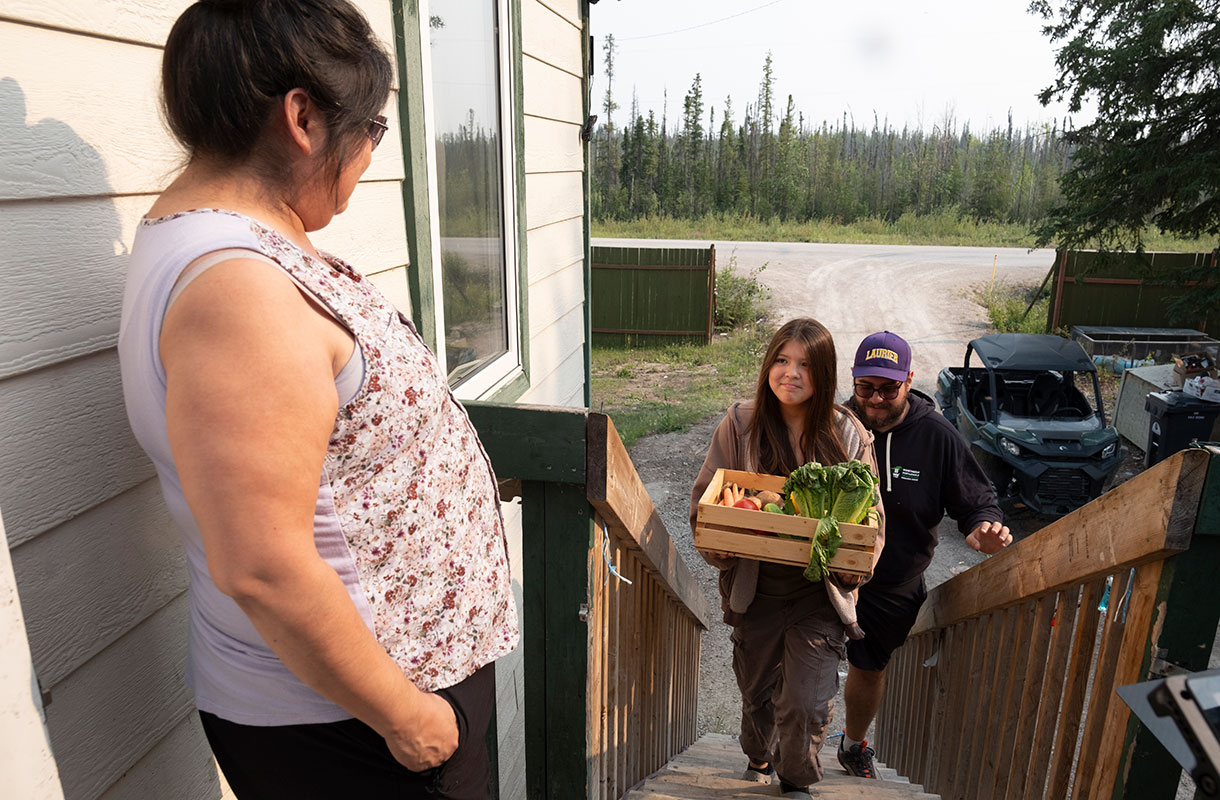
Every summer, Andrew Spring (Geography and Environmental Studies) and Laurier students travel to the lakeside village of Kakisa, Northwest Territories, to live and work alongside the community. As part of the community’s plan to adapt to the effects of climate change, they have built a thriving garden space, including two large greenhouses. Wildfires and low water levels are making hunting and fishing more challenging, and the nearest grocery store is 90 minutes away, so growing food locally is beneficial.
Michael Blair (Operations and Decision Sciences) studies how public agencies, private firms and consumers interact in markets and industries shaped by environmental challenges.
“Although governments can introduce policies, programs and regulations to try and address our environmental problems, the reality is that the actual consequences of policy decisions play out at the level of individual households and firms,” says Blair. “This presents an important challenge for policymakers, because the motivations and incentives for each group or individual are not necessarily aligned. My goal is to give policymakers and regulators the granular evidence they need to move policy design away from broad, uniform interventions and toward policies that are more targeted and effective.”

For the past six years, Homa Kheyrollah Pour (Geography and Environmental Studies) has been working with the people of Délı̨nę, Northwest Territories, a settlement of 500 residents on the shores of Great Bear Lake, co-creating solutions to community needs. Their latest collaboration is the Sahtú Lab, a portable research station that can be pulled across ice for cost-effective, long-term ecological monitoring.
Polar Knowledge Canada honoured Kheyrollah Pour with the 2025 Northern Science Award.
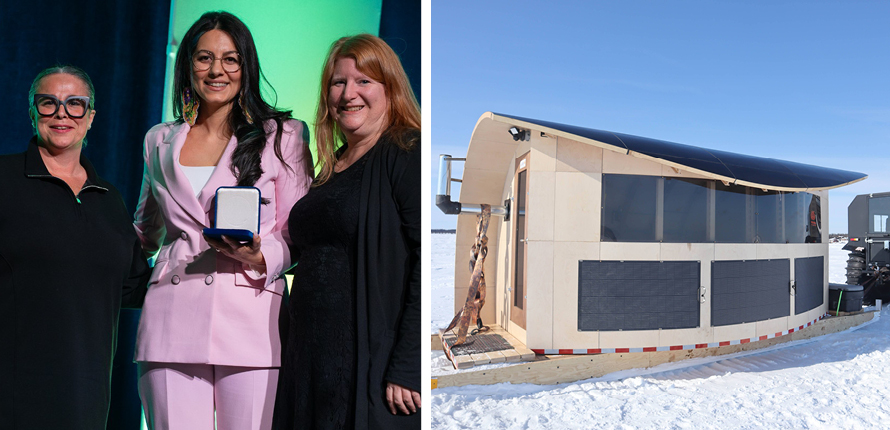
Jennifer Williams (Kinesiology and Physical Education) received a 2025 Ontario Brain Institute - Banting Discovery Award, one of 10 Canadian scientists to win the $30,000 prize.
Williams is tackling a historically understudied topic: women’s heart and brain health. Older women are at an increased risk for certain cardiovascular and cerebrovascular conditions, including heart disease, stroke and Alzheimer’s disease, yet they have been largely underrepresented in research studies, ignoring sex-specific factors such as hormone changes due to contraceptive use and menopause.
“Recent research has uncovered biomarkers that can provide early insights into the development of these diseases,” says Williams. “Understanding how short-term stressors, including food, exercise and psychological stress, impact those biomarkers reveals the health impacts of daily activities. Creating new evidence specific to women’s cardiovascular and cerebrovascular systems will find interventions to improve their health.”
In the BioAdaptive Interface Lab, director John Muñoz (User Experience Design) and his students are designing interactive technologies to improve health and well-being. Muñoz oversees a wide range of research activity, from crisis response training for police officers to self-regulation games for children.
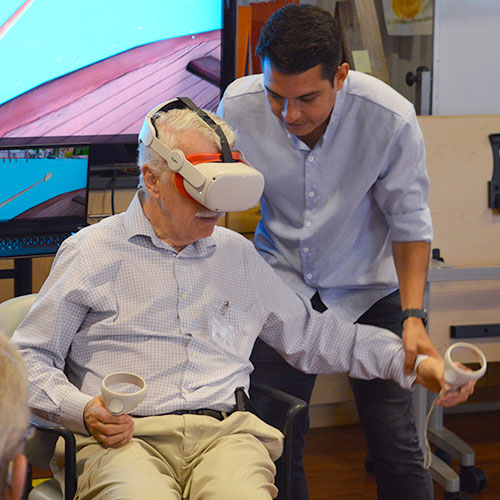
One of Muñoz’s longtime passions is designing “exergames:” videogames that empower older adults to stay active while having fun. His “Active Aging Through Play” project uses VR headsets to transport players to scenic locations, enabling people with physical challenges or dementia to row a boat, fish or do tai chi from the comfort of their chair. Exergames offer caregivers and physiotherapists a new tool for working toward therapeutic outcomes.
Muñoz has partnered with Brantford’s Adult Recreation Therapy Centre to trial a new game designed to support cognitive engagement and well-being for people living with dementia.
“All of the technologies we’re working on have uses outside of the lab, and I want them to be adopted by the people who really need them,” says Muñoz.
Laurier honoured Maurita Harris (User Experience Design) and Izabela Steflja (Political Science) with 2025 Early Career Researcher Awards, recognizing their exceptional contributions to research and student mentorship.
Harris’s research explores how to design socio-technical systems that support well-being, especially for people who are often left out of mainstream design, including older adults, people with disabilities and marginalized communities.
“A lot of my work involves talking directly with the people affected so we can co-create solutions that fit their lives,” says Harris.
Steflja’s research program focuses on issues with post-conflict justice, such as the relationship between conflict-affected communities and international criminal courts. She has spent considerable time in post-conflict countries, including Croatia, Kenya, Rwanda, Serbia and Uganda.
Steflja’s latest book, Illegitimate Justice: How Locals Talk About International Criminal Courts, was released in March 2026.

The human brain emits light – faint, spontaneous light known as ultra-weak photon emissions. A research team co-led by Nirosha Murugan (Health Sciences) found that these light emissions not only pass through the skull but also reflect changes in cognitive state, pointing to a new biophysical layer where light may carry information.
In 2025, Murugan was honoured with an Ontario Early Researcher Award and a Laurier Early Career Researcher Award.
Kyra Simons, a Psychology PhD student, received a Vanier Canada Graduate Scholarship, an award of $150,000 over three years to continue her studies. Vanier Scholarships are presented to students who demonstrate leadership skills and a high standard of scholarly achievement.
Simons’ research focuses on improving the well-being of historically underserved communities. Her doctoral work is exploring how racialized older adults in Ontario perceive their aging and racial identities, and how these distinct identities intersect or conflict.
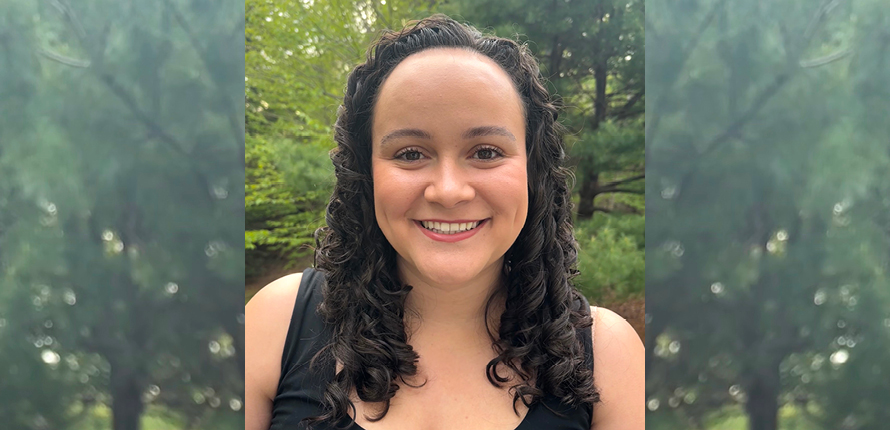
Demian Kogutek (Music Therapy) is harnessing the power of music to treat Parkinson’s disease. He believes that, much like a metronome, music provides the brain with predicted timing for upcoming movements and says it seems to steady the gait of people living with Parkinson’s. His clients have shown improvement after playing a two-pedal drum set. Kogutek has seen similar musical “normalizations” for other neurological conditions, including dementia.
Kate Rossiter (Health Studies) was awarded a 2025 Canada Prize by the Federation for the Humanities and Social Sciences. Canada Prizes recognize outstanding authors whose work provokes and informs national conversations while drawing attention to the contribution of scholarship to Canadian society.
Rossiter and her co-editor Jen Rinaldi were honoured for their book, Population Control: Theorizing Institutional Violence. Based on years of research, including archival investigations and interviews with residents and survivors of emergency shelters, asylums, prisons and residential schools, Population Control sheds light on how society manages oppressed groups of people through violence.
Since 2013, Rossiter been studying the effects of institutional violence at the former Huronia Regional Centre in Orillia, Ont., Canada’s first and largest residential facility for people with intellectual disabilities.
With many signs indicating that institutionalization is on the rise in North America, including proposals to expand group home living and create migrant detention centres, Rinaldi and Rossiter hope their book will heighten awareness of this predictable social phenomenon and prevent its reoccurrence.
In collaboration with non-profit People for Education, Laurier’s Centre for Leading Research in Education released the results of the new Annual Canadian School Survey, which included perspectives from more than 450 public school principals.
Responses show that while 9 out of 10 participating principals find their work highly meaningful and remain dedicated to making a positive difference for children, more than half state they lack the resources required to do their jobs properly, reporting unmanageable stress levels. Staff shortages, unmet student mental health needs, rising classroom instability and violence, and fractured parent-teacher relationships contribute to system strain.
The report highlights that even when federal or provincial funding is introduced for forward-thinking initiatives, scarcity can challenge implementation.
“We are asking the public and policymakers to think about the implications of these challenges and unmet needs facing educators and students,” says Kelly Gallagher-Mackay (Education). “We want our schools to proactively, intentionally respond to societal changes, yet principals are telling us that their working conditions are a barrier to innovation.”
Through her research, Dalon Taylor (Social Work) is amplifying the voices and lived realities of Black and racialized people to help “outshine the stories that are meant to stigmatize and mislead.” She is exploring a range of topics connected to race and anti-Black racism, including immigration and health inequities, to “change the course of experience that results from them.”
“I hope my research will inform and educate, highlight empowering discoveries and perspectives, and help move societal systems, institutions and structures toward social justice,” says Taylor.
Currently, she is employing virtual reality technology to create immersive pathways for social work education and practice. One project uses mixed reality to build safe spaces for racialized youth exposed to violence.
Taylor is also interested in the effects of climate change on individual well-being in Small Island Developing States, a group of nations facing unique social, economic and environmental vulnerabilities. In Jamaica, she has partnered with local researchers and representatives of a primary school impacted by a recent hurricane to study community resilience and social stability in relation to climate action.
As new technologies emerge, legal and policy frameworks struggle to keep pace. Brandon Mattalo (Strategic Management), a lawyer and educator, is examining the ethical and legal implications of new technologies, such as AI and machine learning, and how universities can harness them to improve educational outcomes.
Mattalo’s work informs more effective legal protections for consumers, businesses and governments, while also helping higher education institutions develop sound policies for integrating AI into teaching and learning.
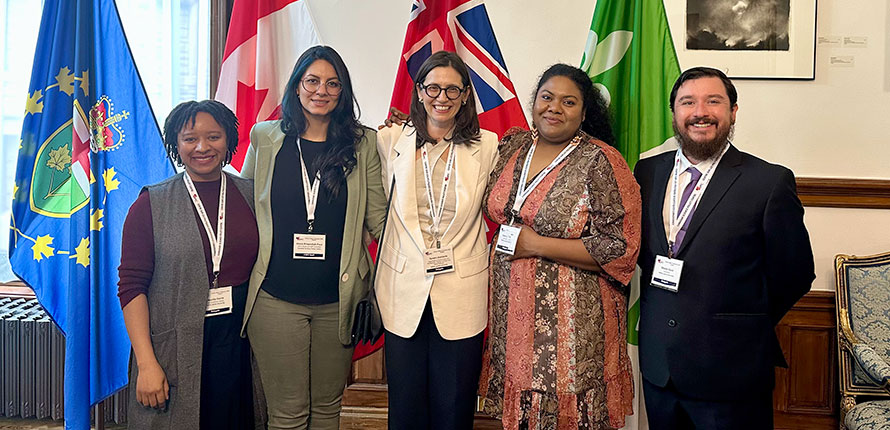
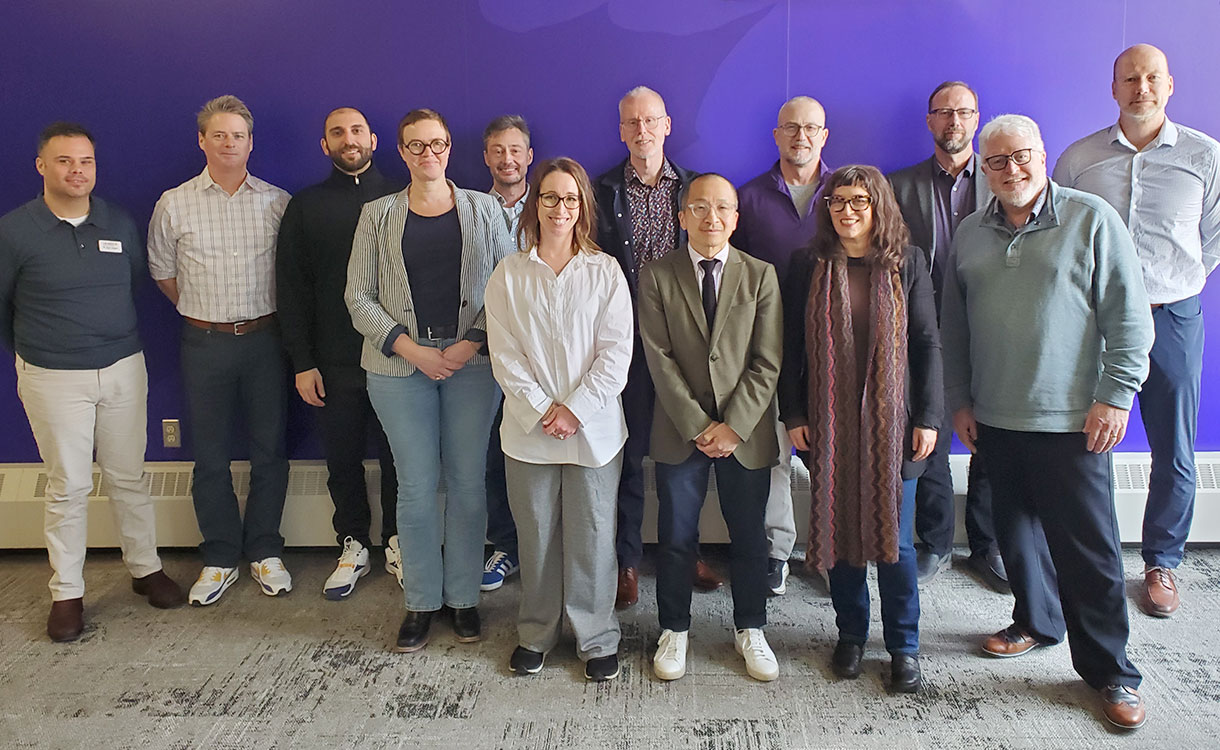
Laurier was well represented at the inaugural Science Meets Parliament Ontario event, which brought together academics and MPPs at Queen's Park to strengthen connections between the province's scientific and political communities. Pictured left to right are Laurier faculty members Maurita Harris (User Experience Design), Homa Kheyrollah Pour (Geography and Environmental Science), Sandra Danilovic (Game Design and Development), Ciann Wilson (Community Psychology) and Nikolai Cook (Economics).
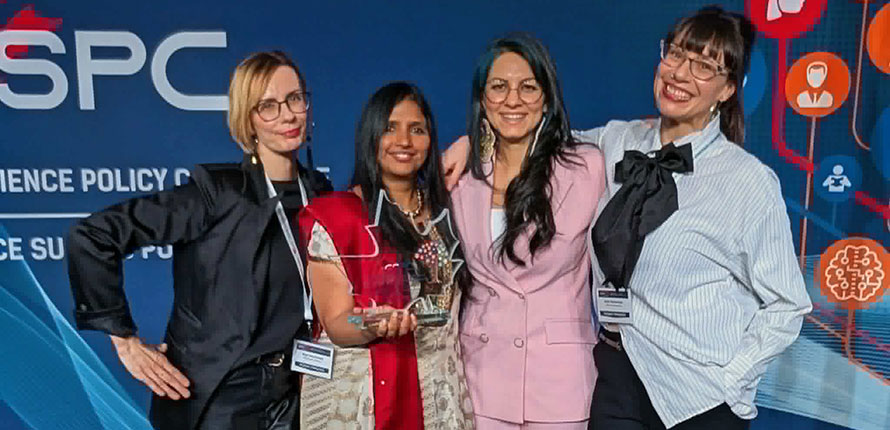
Shohini Ghose (Physics and Computer Science) won the 2025 Trailblazer Award in Policy for Science from the Canadian Science Policy Centre. Trailblazer Awards recognize individuals who have positively and significantly impacted science, technology, innovation and society in Canada, boldly spearheading change while blazing a trail and inspiring others to follow. Ghose (centre left) was also included in The Quantum 100, UNESCO's list of global leaders in quantum science.
Through academics and activism, Morgan Holmes (Sociology) has been at the forefront of the intersex rights movement since the 1990s. She was recently honoured with a King Charles III Coronation Medal for her significant contribution to Canada.
Holmes interviewed eight individuals about their lives and experiences with the medical system for a first-of-its kind needs assessment for intersexualized adults in Canada.
“What I heard over and over again was that intersex people are not dismayed about being different; they feel hurt that adults thought they were unlovable,” she says. “That’s the harm. All of this machination to create cosmetically pleasing bodies and ‘normal’ sexualities teaches kids – and later adults – that they are not viable as human beings. That’s a big burden for people to carry to make their parents happy about what they look like.”
Holmes advocates for a fundamental shift in how intersexuality is understood, rejecting the medical framework that leads to diagnoses of disorders of sexual development.
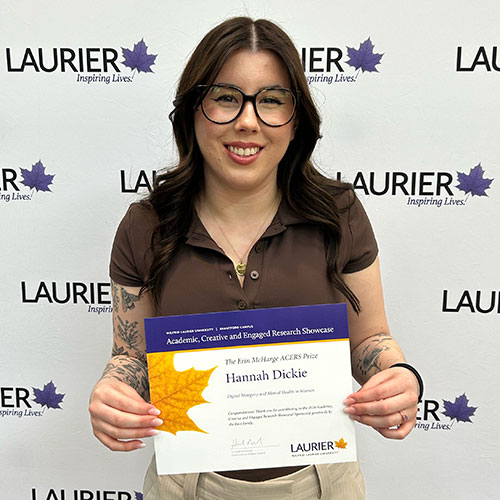
Troubled by the rise of “red pill” content online – a form of digital misogyny rooted in extreme conservatism, rigid gender roles and heteronormativity – Psychology student Hannah Dickie set out to examine its impact on women’s mental health.
“I surveyed 307 participants about their everyday exposure to and engagement with red pill content online,” she says. “My hypotheses proved correct: higher exposure to this type of content positively correlates with depression, stress and anxiety in women, with even stronger associations among those who actively engage with it.
“When people are consuming a constant stream of digital misogyny – especially those without strong media literacy skills – they can begin to internalize those messages. As a feminist, that’s very concerning to me.”
Dickie’s findings earned her second place in the poster category at Laurier’s Academic, Creative and Engaged Research Showcase (ACERS), along with the inaugural Erin McHarge ACERS Prize recognizing outstanding research in the field of gender, sexuality, feminism and 2SLGBTQQIA+ identity.
Percy Lezard (Indigenous Studies) won the 2025 Steinert and Ferreiro Award from the Community One Foundation. The award honours a scholar who has significantly contributed to the arts and sciences in the Greater Toronto Area, promoting an understanding and acceptance of 2SLGBTQQIA+ communities.
Lezard was recognized as a scholar, educator, mentor and community advocate whose efforts – from advancing inclusive education and health care to building safer, culturally grounded spaces – “have left an enduring legacy.” The organization praised Lezard’s “decolonial, trauma-informed and community centred approach” which has “uplifted generations of 2 Spirit, queer and trans people, always ensuring that those most marginalized have space to lead and be heard.”
Lezard prioritizes community-based participatory action research, working alongside social agencies that provide health and service support to Indigenous and 2SLGBTQQIA+ communities.
“Research in these areas is increasingly salient, as resources within health care must be tailored to fit the unique needs of these communities by service providers,” says Lezard.
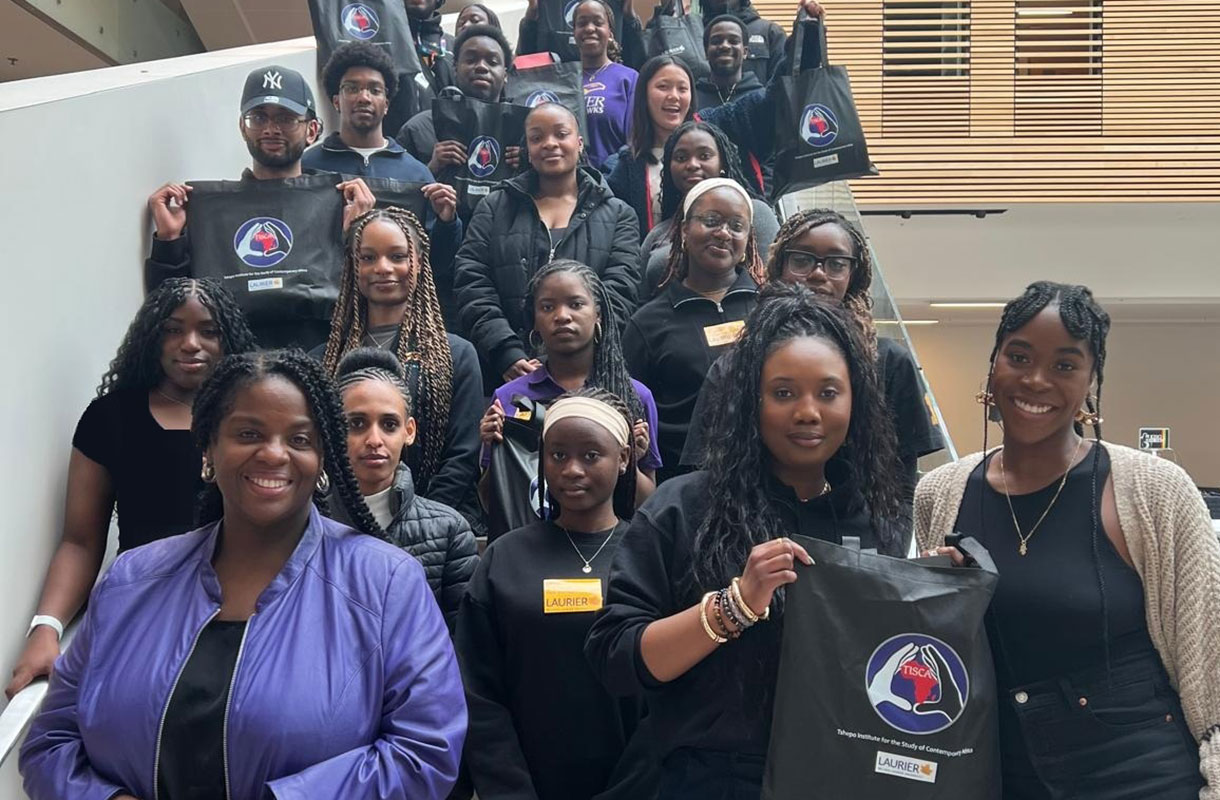
In February 2026, Laurier welcomed more than 200 African, Caribbean and Black-identifying students for the third annual Black Brilliance Elementary Conference. Organized by Laurier's Tshepo Institute for the Study of Contemporary Africa and the Waterloo Region District School Board, the conference introduces Black elementary school students in Grades 5 to 8 to a university environment and encourages them to pursue higher education after high school.
"A persistent challenge in education is that many students do not see themselves positively represented in their learning environments," says co-organizer Karen Cyrus (Music). "Through the Black Brilliance Elementary Conference, I examine how culturally affirming spaces can foster belonging, confidence and student thriving."
Ashton McCormick-Kelly, a Master of Social Work student, was awarded a Hilary M. Weston Scholarship by the Government of Ontario. McCormick-Kelly lives with borderline personality disorder and pursued social work because of her desire to help others with similar mental health struggles. As a queer woman, she is interested in the intersections of identity. Her research is wide-ranging, focusing on women’s contraception, housing services for seniors and mental health treatment for individuals with disabilities.
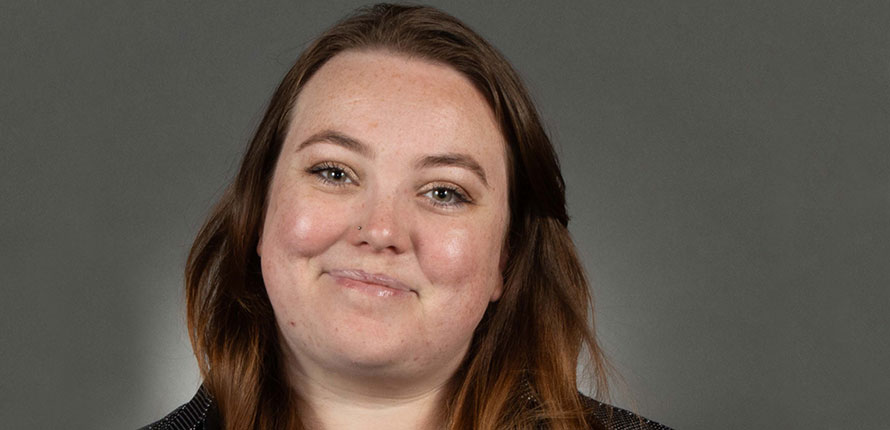
On the podcast Journeys: Transforming Indigenous Education, host Ryan Neepin (Education) welcomes teachers, principals, professors, community leaders and researchers who are shaping Indigenous education locally and globally. Each episode shares individual and collective journeys toward Indigenous resurgence, educational sovereignty and self-determination for all Indigenous peoples. The podcast is co-developed by the International Indigenous Consortium of Teacher Educators.
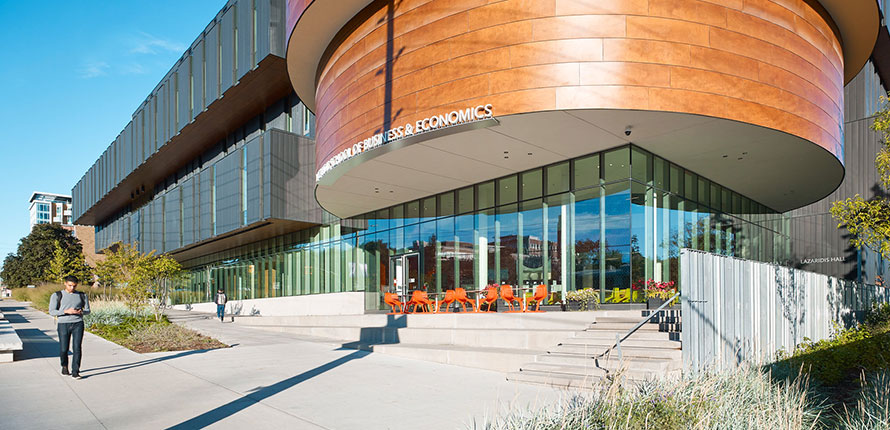
Leslie Berger (Accounting) was named the inaugural Laurier Lazaridis Research Chair in Business and Economics, recognizing her proven record of exemplary research and leadership in her field. Berger has published in five FT50 publications during her time at Laurier, and she is currently ranked first in Canada and fifth worldwide in the Brigham Young University experimental managerial research rankings.
“In this role, I am excited to promote a strong research culture at Lazaridis through mentorship of PhD students and junior faculty members, collaboration on research projects with my wonderful colleagues, and the creation of opportunities to celebrate the excellent research of Lazaridis faculty members,” says Berger.
Over her five-year term, Berger will receive a $20,000 annual research allowance to support her projects and collaborations. She will lead research grant applications, workshops, seminars and efforts to expand research partnerships and external funding, help retain mid- to late-career scholars, building expertise in priority research areas, and support the next generation of students and researchers.
Targeted attacks on journalists continue to be a global concern: 130 journalists and media workers were killed around the world in 2025. Juan Morales (Economics) and his co-author, José Jurado, investigated how the killing of journalists impacts media activity. They used Mexico as a case study, examining the fallout from 45 journalists killed between 2010 and 2020.
Morales and Jurado found that in the months following journalist killings, media outlets sharply reduced their output, illustrating the disruptive nature of targeted attacks.
To understand longer-term repercussions, Morales and Jurado analyzed Mexican census data and found that relative to similar occupations, the number of citizens who worked as journalists decreased markedly in violent locations. Furthermore, the demographic characteristics of those who remained in the profession shifted toward younger, unmarried and childless individuals.
“Violence reshapes who enters and remains in journalism,” says Morales. “In times of conflict, precisely when the stakes of public decisions are highest and the risk of abuse greatest, an independent press, free of violence, is most needed.”
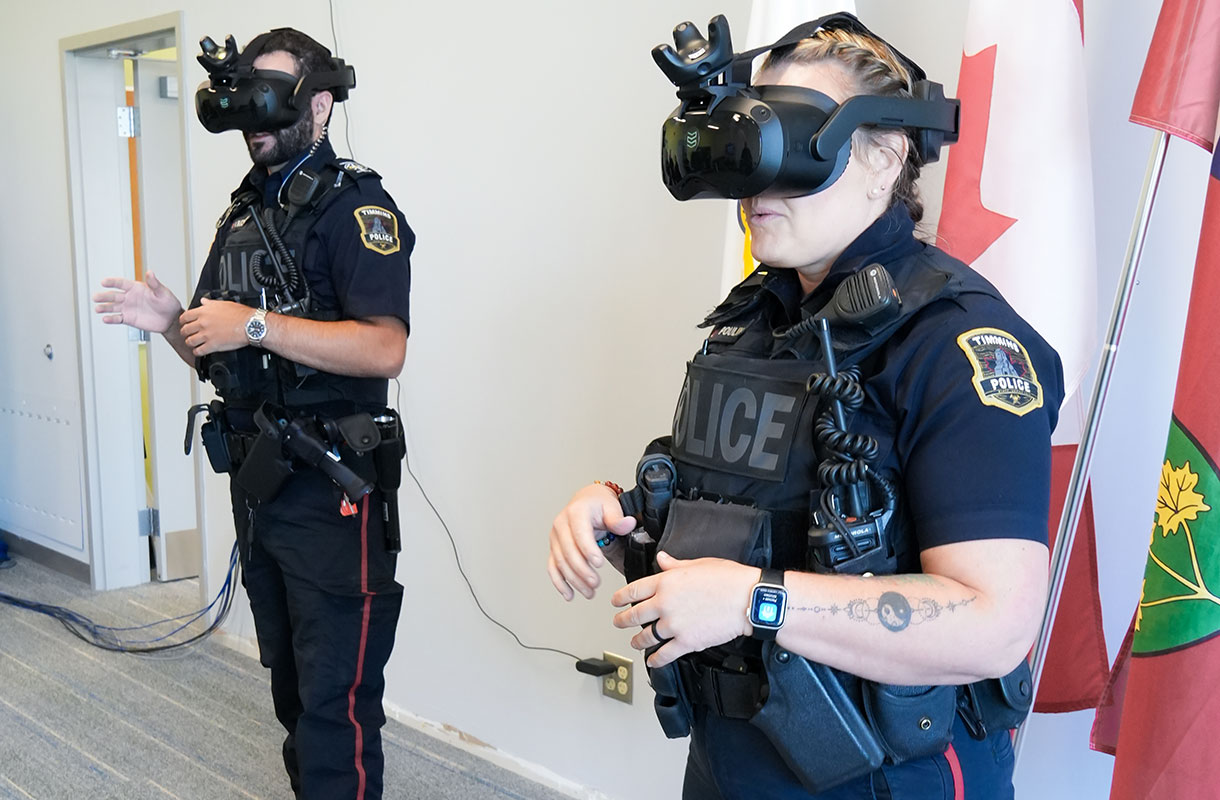
Mental health and substance use-related calls are among the fastest-growing demands on police services, yet most officers receive limited training to prepare them to respond. Now, all sworn police officers in Ontario are required to complete mental health crisis training through a curriculum developed by Jennifer Lavoie (Psychology and Criminology).
The Mental Health Crisis Response (MHCR) Education and Applied Training Program helps police officers identify mental health crises, respond skillfully and compassionately, and improve de-escalation practices to reduce reliance on the use of force. MHCR includes online modules and realistic, emotionally charged scenarios using live actors or virtual reality (VR).
“As a first-of-its-kind initiative, the MHCR program highlights the essential role of collaboration between policing and academia,” says the Honourable Michael Kerzner, Solicitor General of Ontario. “These partnerships are vital to advancing evidence-informed, community-responsive training, and the leadership of our policing and university partners has been key to its success.”
The province-wide training mandate marks the culmination of eight years of research, design and validation co-led by Lavoie.
In a recent study, Lianne Leddy (History) and Mark Humphries (History) found that large language models (LLMs) outperformed a specialized handwriting recognition software on accuracy, speed and cost. LLMs have given a major boost to their archival research, greatly improving their ability to decipher handwritten records at scale. Now Humphries is building Archive Pearl, a not-for-profit tool designed to let researchers drag and drop hundreds of pages and get clean transcriptions back in minutes rather than weeks.
Humphries was interviewed on the New York Times’ Hard Fork podcast.
In 2025-26, the Lazaridis School of Business and Economics appointed seven new research chairs:
“These appointments recognize exceptional faculty members whose research excellence and scholarly leadership strengthen our reputation and foster a vibrant culture of innovation,” says Kyle Murray, dean of the Lazaridis School.
AI technology is evolving at a rapid pace and it’s easy for parents to feel overwhelmed. In this Inspiring Conversation webinar, recorded on Feb. 24, 2026, Samantha Barbosa-Silva, a PhD student in Developmental Psychology, led a panel discussion about raising AI-savvy kids with Keri Ewart (Education) and Somayeh Fatahi (Physics and Computer Science).
Abderrahman Beggar (Religion and Culture) is pursuing stories of resistance and resilience, studying the transportation of prisoners from North African French colonies to New Caledonia, a territory comprised of dozens of islands in the South Pacific. In 1853, Napoleon III claimed New Caledonia to compete with British colonies in the region and solidify France's Pacific presence. The plan to transform it into a settlement colony faced a lack of voluntary settlers, so France sent prisoners — including a significant number from Algeria, Tunisia and Morocco — to New Caledonia, turning it into a penal colony.
In 2025, Beggar travelled to France, Australia and New Caledonia to conduct archival research.
“The highlight was undoubtedly the opportunity to meet one of the five remaining ‘Shibanis,’ or elders,” says Beggar. “These individuals represent the final direct link to the historical events I study, as their own fathers were the original deportees from North Africa.”
Beggar was also struck by the sight of North African date palm trees growing in the New Caledonian soil.
“Legend has it that prisoners carried date pits in their pockets, planting them in the colony in the hope of recreating a piece of the land they had lost,” he says. “Today, these trees stand as a living symbol of a collective memory haunted by the impossible idea of return.”
Steve Sider (Education) and Jasmin Zine (Sociology and Muslim Studies) were named Laurier’s University Research Professors for 2026-27. The annual internal awards recognize excellence and leadership in research and provide time and funding for the winners to complete a major research project.
Sider’s research helps principals create inclusive school environments where every child, regardless of ability, has a sense of belonging and can experience academic success. He is currently working with the Organisation of Eastern Caribbean States to develop professional learning materials on inclusive school leadership for all principals across the eastern Caribbean.
Zine, the author of seven books, has made meaningful contributions to the fields of critical Muslim studies and Islamophobia studies. Her “firsts” as a researcher include publishing the first ethnographic study of Islamic schools in Canada, co-editing the first book to delineate and develop the field of Canadian Muslim Studies, and completing the first report examining how Islamophobia is organized, orchestrated, networked and monetized in Canada.
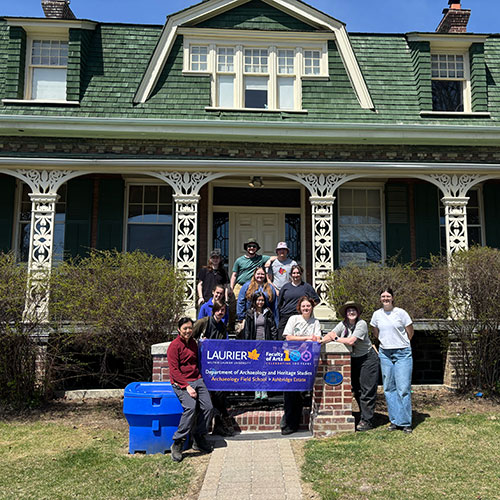
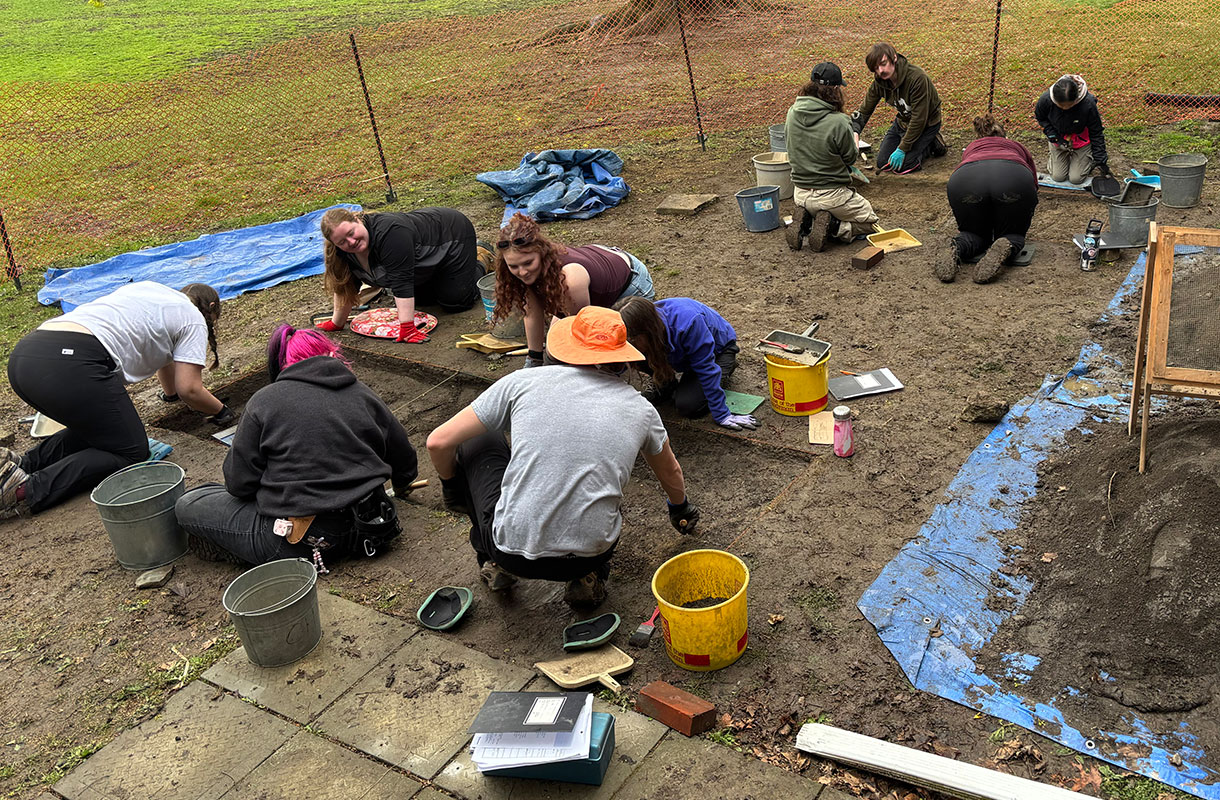
Through the discovery and analysis of ancient artifacts, Elaine Cheng (Archaeology and Heritage Studies) investigates how people lived historically and the cultures they formed in relation to the land. In spring 2025, she imparted her excavation and archaeological lab techniques to a group of nine Laurier students at a field school in Toronto.
Cheng brought the students to the Ashbridge Estate, home to one of the founding families of Toronto. Two acres of their original homestead and a house built in 1854 have been preserved to tell their story.
Cheng designed the field school excavation to build on her previous discovery of the estate’s earliest structure. Ultimately, Laurier students found the northeastern edge of that structure, as well as ceramic and glass remains.
“The excavation brought another lens to our understanding of how settlers first survived on the land and how they used the surrounding landscape to shape the Toronto we know today,” says Cheng. “Students were very engaged and surprised by the history we found right under our feet.”
Research Unplugged, a new podcast from Laurier’s Faculty of Human and Social Sciences, features candid conversations with faculty members about the research they love and the journeys that brought them to academia. The podcast is co-hosted and co-produced by Associate Dean Andrew Welsh and Tracy Woodford, research project coordinator. Listeners hear from a range of researchers, including Judy Eaton (Psychology) on her admiration of Dolly Parton’s boundless optimism and Sandra Danilovic (Game Design and Development) on her passion for games that support health and wellness.
The Fields Institute for Research in Mathematical Sciences honoured Jennifer Holm (Education) with the 2026 Margaret Sinclair Award in recognition of her excellence and innovation in mathematics education. Holm’s work centres on strengthening elementary teachers’ understanding of fundamental mathematics so they can teach students reasoning and sense-making rather than memorization of rules. This approach moves beyond simplified or template-based resources and equips teachers to handle both straightforward and mathematically complex cases with confidence and accuracy.

Meelad Moaphi (English and Film Studies) secured a theatrical release for his first feature film, His Father’s Son. The Toronto-based story follows an Iranian-Canadian family whose dynamic is upended when an unexpected inheritance triggers a chain of revelations, unearthing long-buried truths from their past. His Father’s Son premiered at the Toronto Reel Asian International Film Festival, where it won the Audience Choice Award and Moaphi won the Directors Guild of Canada’s Best Direction prize.
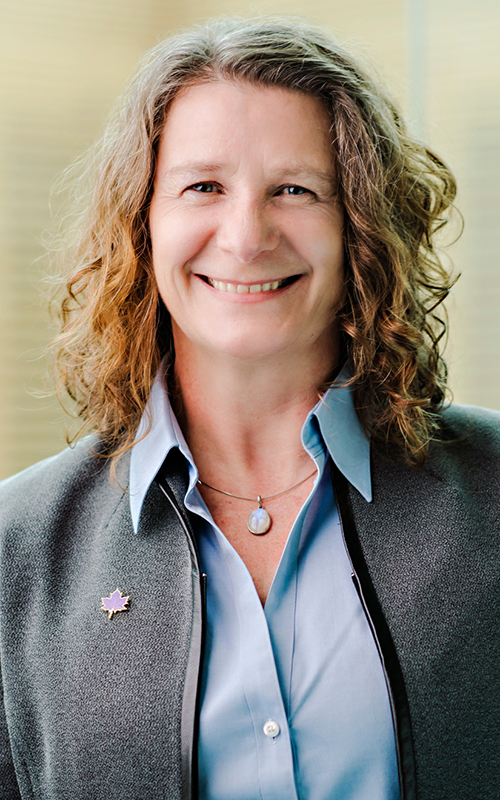
Professor Margaret Walton-Roberts, a long-standing faculty member in Laurier’s Department of Geography and Environmental Studies and the Balsillie School of International Affairs, passed away on Aug. 11, 2025, following a courageous battle with cancer. She was 57 years old.
A dedicated scholar, teacher, mentor and colleague, Margaret was a cherished member of the Laurier community and friend to all who knew her.
Trained in human geography in both the United Kingdom and Canada, Margaret devoted her academic career to the study of international migration, with a focus on gender and immigration, transnational networks and immigrant settlement. Her recent research explored the global migration of health care professionals, as well as international student migration. Margaret’s work was widely published, with more than 50 journal articles and 43 book chapters, supported by numerous external research grants.
Margaret’s passion for research was matched by her love of travel and human connection. She formed lasting friendships and collaborations across Europe, India, Australia, Singapore, South Africa and the U.S. — always seeking to understand the lives and motivations of those she met.
Margaret’s many contributions were recognized through numerous awards, including six WLU Merit Awards, the Faculty Mentoring Award from the Wilfrid Laurier University Alumni Association in 2014, and, most recently, the Order of Wilfrid Laurier University in June 2025.
Margaret is remembered by her children, William, Samuel and Calum, and her partner, Ben, along with extended family, friends and colleagues around the world.
When Cody Groat (BA ’16, PhD ’23) returned to Laurier in 2017 to complete his PhD, he decided to study the federal commemoration of Indigenous Historic Sites. It was a subject that also held personal meaning, as Groat is Mohawk and a band member of Six Nations of the Grand River.
“I wanted to examine how the Government of Canada, by choosing specific people, events and sites as being nationally significant, has cultivated a specific, state-sanctioned narrative of Canada,” says Groat. “I studied how that related to sovereign Indigenous nations, and how Indigenous interpretations of the past differ from the federally imposed interpretations of the past.”
Groat’s academic journey took on a new dimension in 2019 when he joined the board of directors for the Indigenous Heritage Circle, a not-for-profit organization dedicated to advancing the cultural heritage priorities of First Nations, Inuit and Métis communities. Eventually stepping into the role of president, Groat found himself at the forefront of key policy conversations during a pivotal moment.
“It was really exciting because the period when I engaged with them was just as the United Nations Declaration on the Rights of Indigenous Peoples (UNDRIP) Act was making its way through Parliament,” says Groat. “In my role as president of the Indigenous Heritage Circle, I had the chance to meet with the offices of the Prime Minister, the Minister of Justice and the Minister of Canadian Heritage, as well as the Liberal Indigenous Caucus. We were facilitating conversations about how the UNDRIP Act could impact heritage legislation in Canada.”
Although not all their advocacy efforts yielded immediate results, Groat emphasizes the importance of representation. “We got a seat at that table — and that matters,” he says.
Since 2021, Groat has served as an assistant professor at Western University, teaching in the Department of History and the Indigenous Studies program. His approach to teaching — shaped by his time at Laurier — focuses on connection, accessibility and trust.
Recently, Groat was appointed to the International Advisory Committee for UNESCO’s Memory of the World Programme, a globally respected initiative dedicated to safeguarding and commemorating documentary heritage of international significance.
The International Advisory Committee plays a critical role in identifying and preserving records, archives, manuscripts and documentary collections that hold lasting value for humanity. Committee meetings are held every two years at UNESCO headquarters in Paris, where members help guide international efforts surrounding cultural memory and historical preservation.
According to the Canadian Commission for UNESCO, Groat is believed to be the first Canadian appointed to this committee since former National Archivist of Canada Jean-Pierre Wallot served in the 1990s.