

We use cookies on this site to enhance your experience.
By selecting “Accept” and continuing to use this website, you consent to the use of cookies.
Dec. 19, 2025
Print | PDFWilfrid Laurier University’s Milton Academic Centre buzzed with energy as students unveiled their solutions to a challenge presented by the Town of Milton: making it easier to connect with municipal government.
Over the fall term, 28 students in the course UX100: Design Thinking I: Foundations worked with the town on this real-world problem. Their proposed solutions were showcased Nov. 27 in five “pitch-style” presentations that capped their months-long design project.
Before developing solutions, students visited Milton Town Hall to hear directly from municipal staff about the complexities of public inquiries – from snow-removal complaints to navigating the town’s website. Throughout the term, Town of Milton representative Tash Harriott, director of communications and customer experience, worked closely with students to refine solutions and provide feedback at key milestones.
The result was an impressive range of ideas: redesigned “contact us” pages, streamlined municipal websites, AI-powered chatbots, and a full rethinking of how residents connect with local services. One team branded their concept “Milton Made Simple,” a user-focused optimization aimed at reducing frustration and improving clarity.
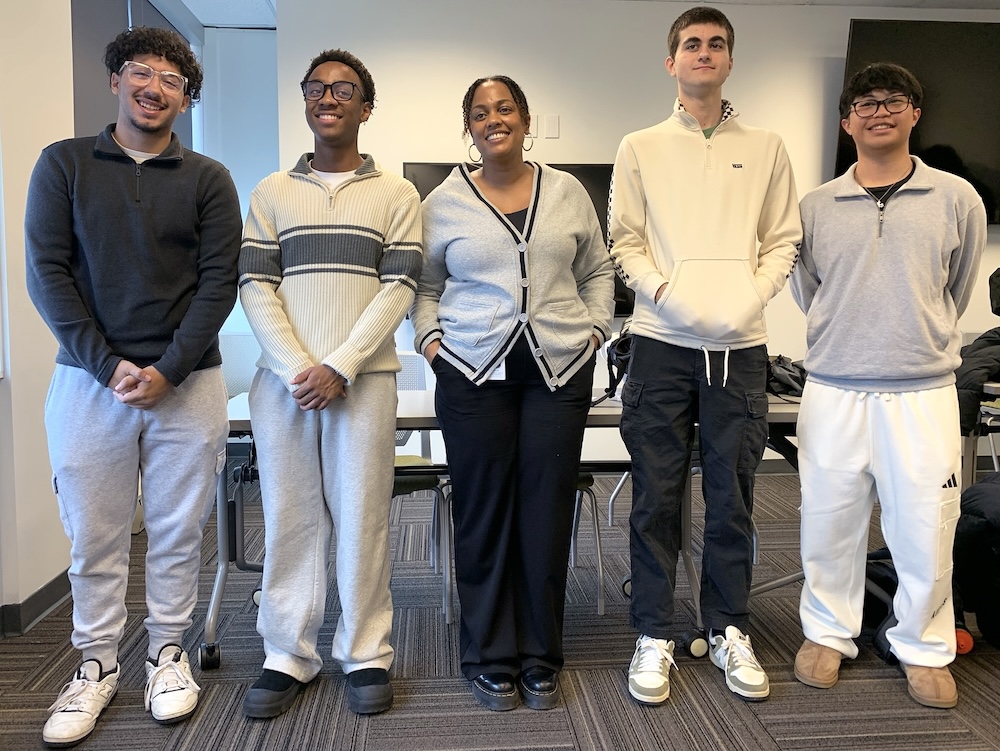
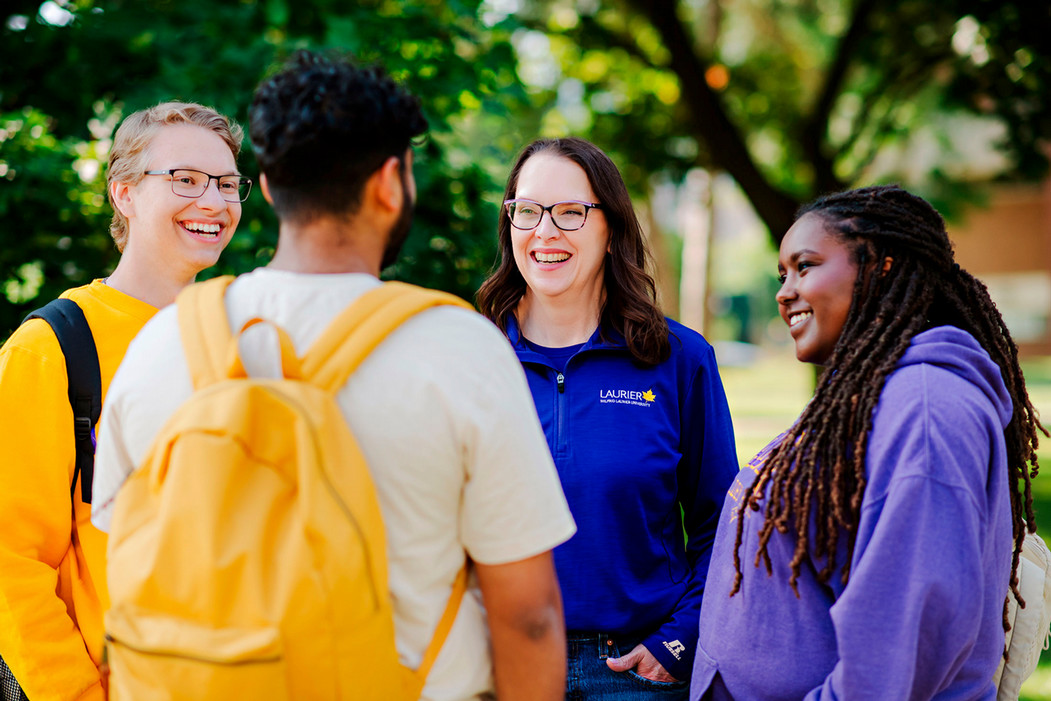
Tash Harriott, director of communications and customer experience with the Town of Milton, centre, worked with students in the course UX100: Design Thinking I: Foundations on their fall-term design challenge project.
The collaboration with the Town of Milton demonstrated Laurier’s commitment to community-engaged learning and provided students a glimpse of experiential education. Harriott, who had worked with the students since September, left the event inspired.
“This whole cohort gives me hope for the future,” says Harriott. “Students bring a perspective we don’t always get to see – and a lot of what they’ve shown us today is implementable.”
UX100 Instructor Jennifer Krul says she was proud of the work students put into their projects and the solutions presented.
“Many of the students came into the class not knowing much about user experience design or design thinking,” says Krul. “On top of learning the foundations of design thinking, they worked really hard to develop solutions for a real problem, iterating their designs along the way based on feedback from the Town of Milton.”
Krul describes UX100 as an iterative, collaborative and human-centred course. Students experiment, learn, reassess and iterate again – one of the core principles of design thinking.
“User experience design is a collaborative effort,” says Krul. “Students need to feel confident sharing ideas, even if they’re not perfect. And when they connect with each other and with a real client, you see the engagement click.”
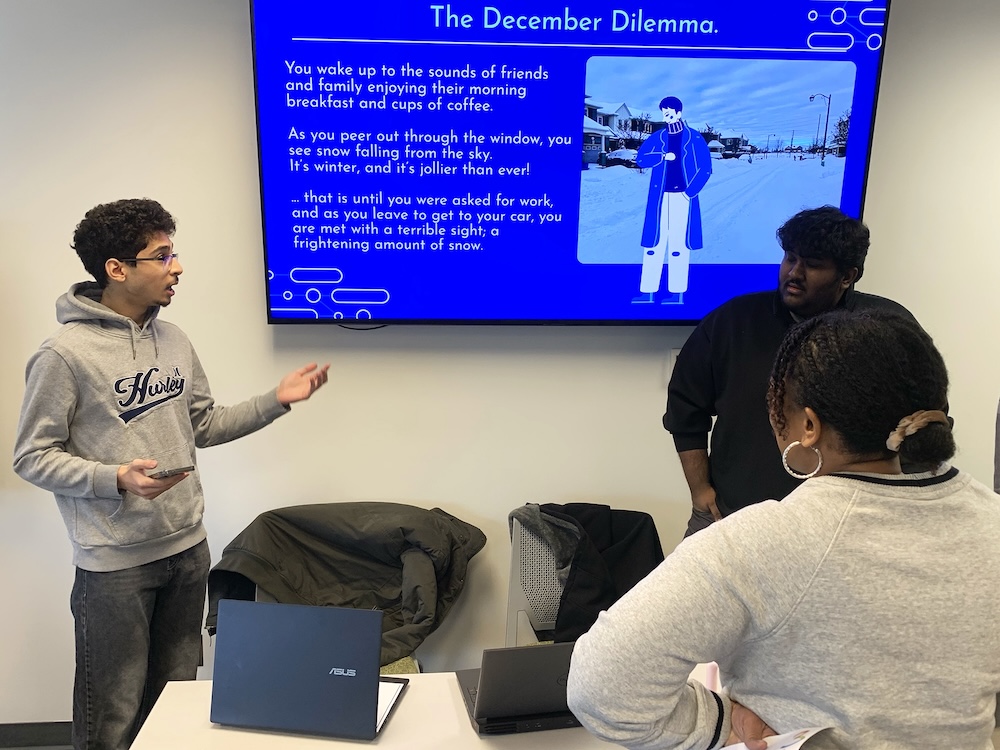
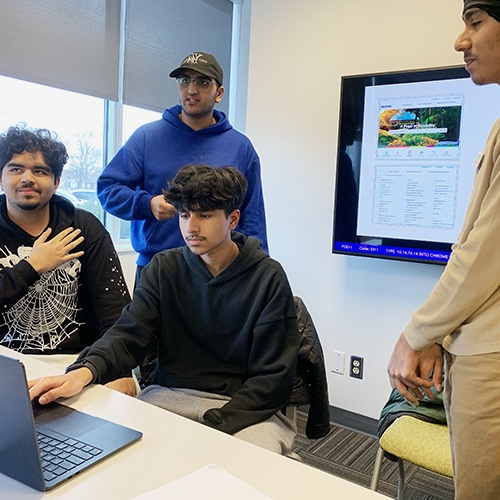
Students presented a range of solutions during pitch-style presentations at the Laurier Milton Academic Centre.
A multidisciplinary mix of students – from Computer Science to Psychology to Business Technology Management – enriched the work. For many students, the project was a turning point in how they understood design thinking’s purpose and potential.
Sean Santosh, whose group reimagined Milton’s “contact us” page with an AI chatbot, appreciated the authenticity of the experience.
“What I love about projects like this is that they give you the chance to explore and understand the problem and apply skills we’ve developed,” says Santosh. “We went back to the drawing board multiple times and it felt like I was working toward something real.”
For Judy Almalki, whose team presented Milton Made Simple, the experience was exhilarating and humbling.
“We had the opportunity to make a difference and give back to the community,” says Almalki. “Presenting to municipal staff – people who live the challenge every day – made the work feel consequential. It made me understand our work wasn’t just theoretical. We were actually being heard.”
Almalki’s biggest takeaway?
“Design thinking isn’t about perfection, but empathy – and trying again until it makes sense.”
“Laurier being here – it’s immeasurable. The university is helping to evolve Milton and shape the future of the town in a way that resonates, especially with younger audiences.” – Tash Harriott
Harriott says Milton’s collaboration with Laurier on UX100 projects has the potential to shape municipal work, noting that the town is currently redesigning its website and considering its “contact us” processes. She says pieces of the students’ projects could be carried forward as part of that effort.
“At the Town of Milton, we value education and great young minds,” says Harriott. “Laurier being here – it’s immeasurable. The university is helping to evolve Milton and shape the future of the town in a way that resonates, especially with younger audiences.”
During the pitch presentation event, Jason Coolman, Laurier’s vice-president of Advancement and External Relations, thanked the Town of Milton for its partnership and the students for their work.
“It’s amazing to see what is possible when learning connects to real people and real challenges,” says Coolman. “As Laurier’s partnership with the Town of Milton continues to grow, this type of innovation will only accelerate.”