Protect, restore and promote sustainable use of terrestrial ecosystems, sustainably manage forests, combat desertification, and halt and reverse land degradation and halt biodiversity loss.
By aligning its efforts with the targets of SDG 15, Wilfrid Laurier University not only contributes to the preservation of terrestrial ecosystems but also instills a sense of environmental responsibility in our community and serves as a model for sustainable practices in higher education.
The work that Laurier completed in 2025 to advance SDG 15.
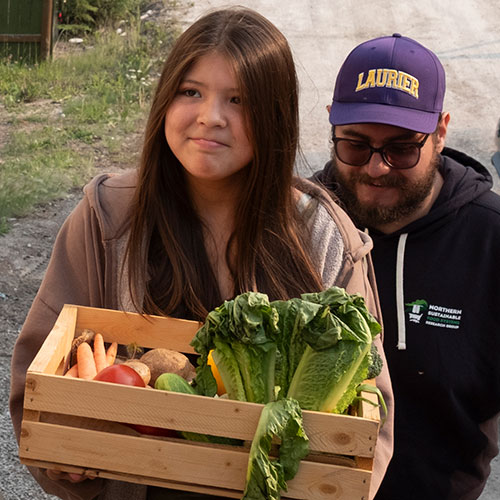
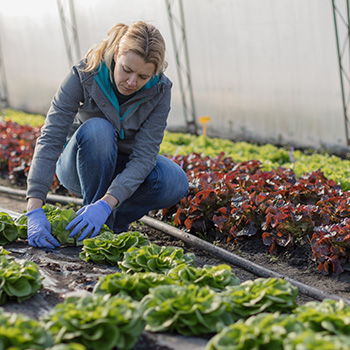
When you ask a student where Laurier’s community garden resides in Waterloo, many students are surprised to hear that we have one on campus. Nestled behind the Northdale Campus building, you’ll find more than a green space – a growing hub for sustainability, food sovereignty, biodiversity, community engagement, and campus connections. This is the Northdale Community Garden—Wilfrid Laurier University’s 14,000 square foot garden where sustainability, community, and learning come together in full bloom.
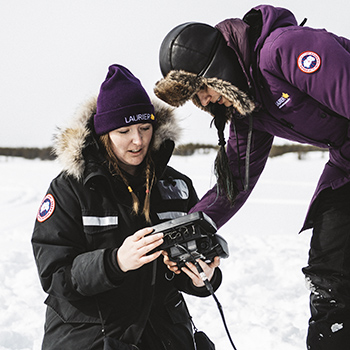
Wilfrid Laurier University welcomed a renowned Arctic ecosystem expert for the 2025 Anne Innis Dagg lecture on March 6. Isla Myers-Smith, Canada Excellence Research Chair in Forest and Conservation Sciences at the University of British Columbia, spoke about rapid changes in the Canadian North as a result of accelerating climate change, including changes to vegetation, permafrost, wildlife habitat and food webs.
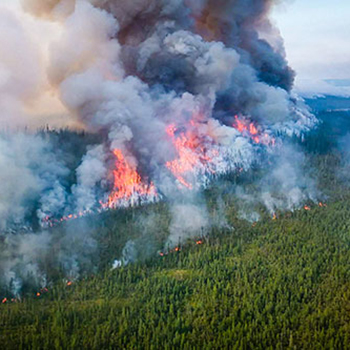
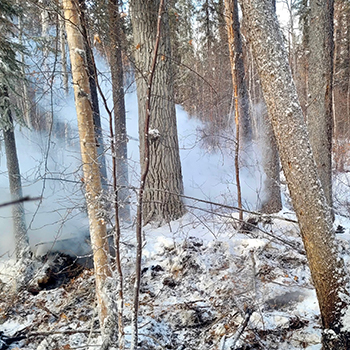
A new study from Wilfrid Laurier University offers a rare “good news story” in relation to forest fires. Jennifer Baltzer, the Canada Research Chair in Forests and Global Change, published the first-ever field data on overwintering fires – also known as “zombie” fires – which continue to smoulder throughout the winter and reignite the following spring. Despite fears that zombie fires would increase carbon release and hinder forest regrowth, Baltzer’s data suggests that they are less destructive than anticipated.
Laurier research centres advancing SDG 15.
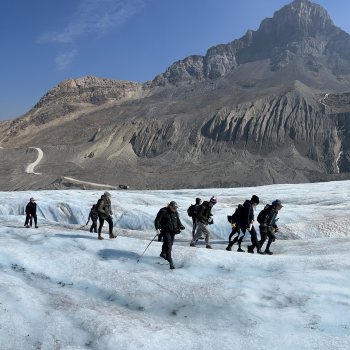
The Cold Regions Research Centre was established in 1987. Initially focused on arctic and mountain glaciology and hydrology, the scope has broadened to cold regions (mountain and northern) research consulting on topics such as hydrology, climatology, glaciology, resource management, parks planning and biogeochemistry.
The Laurier Centre for Sustainable Food Systems (LCSFS) connects researchers and community partners engaged in sustainable food systems change. It creates opportunities for citizens, practitioners, policy-makers, private enterprise and academics to work together to imagine and foster food systems that are fair, healthy, ecologically regenerative, culturally appropriate, prosperous and inclusive. Using food as a lever for positive change, the LCSFS enables meaningful collaboration among people across institutions, sectors and disciplines to support community-driven research, innovative knowledge sharing, and the development of community resources and sustainable food system policy.
Laurier initiatives in 2025 that advanced SDG 15.
Since 2010, Laurier has maintained a unique and productive research partnership with the Government of the Northwest Territories (GNWT). The partnership, which has been expanded and extended to 2030, has brought new research expertise and training opportunities to the Northwest Territories and strong community connections and research opportunities to Laurier scholars. Much of the work through Laurier's partnership with the GNWT addresses the SDGs. Close connections between academic researchers and government enhance policy development related to the SDGs and improve the capacity of government to engage in adaptive management.
Discover how Laurier is contributing to United Nations Sustainable Development Goal targets.