Achieve gender equality and empower all women and girls.
Wilfrid Laurier University is steadfast in our commitment to a more inclusive world where gender equality is realized, and all women and girls can fully participate in society and reach their full potential. We engage in a range of initiatives that promote gender equality on our campuses and beyond, working to advance SDG 5.
The work that Laurier completed in 2025 to advance SDG 5.
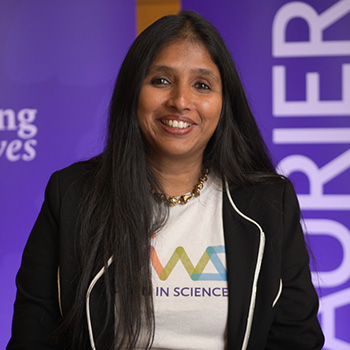
Information technology and cybersecurity are vital to post-secondary institutions and affect the success of every student, faculty member, researcher, and employee. Yet when it comes to advancing technology and security, Wilfrid Laurier University’s Chief Information Officer (CIO) Nela Petkovic has found she is often one of the only women in the room. Petkovic set out to change that. Together with Tracy Dallaire, deputy chief technology officer and director of information security and client services at McMaster University, and several other leaders, Petkovic helped established Inclusion in Cybersecurity Canada (ICC), an organization that provides education, mentorship and community for underrepresented groups in the traditionally male-dominated field, with a particular focus on supporting equity and diversity in the Canadian research and education cybersecurity sector.
Treisha Hylton is taking social work out of the office and into the ocean. She returned to her home country of Jamaica to help young Black girls grow and heal through surfing. In partnership with a non-profit surf school called Surf Girl Jamaica, Hylton held a two-week camp for 15 to 18-year-old girls who wouldn’t otherwise have the opportunity to surf. They gathered at Bull Bay beach each day and shared their feelings, worries and dreams as they paddled through the waves.
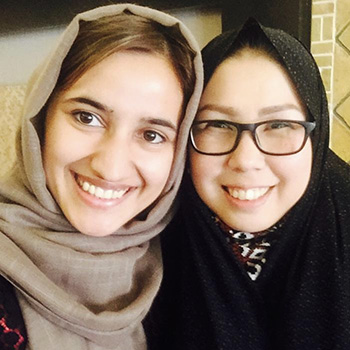
When Hasina Hamidi crossed the stage at Wilfrid Laurier University spring convocation in June, she marked more than the end of an academic journey. To earn her Master’s degree, Hamidi defied the odds of war, displacement and the erosion of women’s rights in Afghanistan.
Times Higher Education (THE) has ranked Wilfrid Laurier University among the top 13 per cent of global universities in its 2025 University Impact Rankings. Laurier was celebrated for tackling climate change, fostering gender equity and combatting food insecurity. It ranked in the top four per cent of global universities for SDG 5: Gender equality.
Laurier research centres advancing SDG 5.
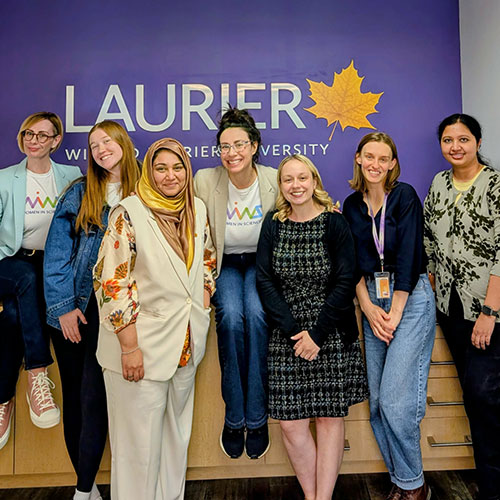
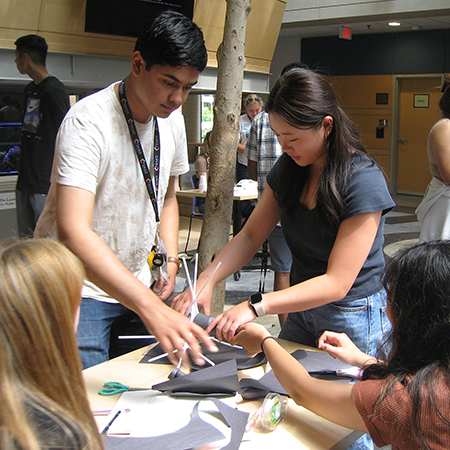
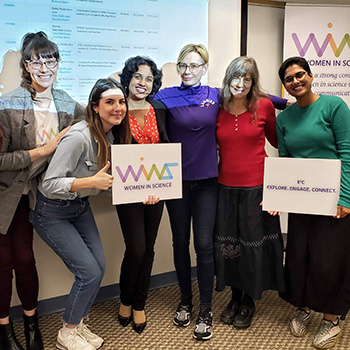
Launched in 2012, the Laurier Centre for Women in Science (WinS) is proud to champion women in science, technology, engineering and mathematics (STEM). The centre is building an inclusive scientific community through research, action and communication. Its ultimate goal is to make the centre redundant.
Laurier initiatives in 2025 that advanced SDG 5.
Laurier’s Institutional Research Office systemically measures and tracks women’s applications and acceptance rates. Some indicators are publicly reported through Common University Data Ontario.
|
Gender Identity |
2022 |
2023 |
2024 |
2025 |
|---|---|---|---|---|
|
Female |
|
|
|
|
|
Male |
|
|
|
|
|
Another Identity |
|
|
|
|
|
All Identities |
|
|
|
|
Laurier’s Strategic Action Plan and Academic Plan include commitments to diversify its student body and increase representation of students historically underrepresented on campus. This includes women. Laurier’s Equity, Diversity and Inclusion (EDI) Strategic Plan highlights the use of an EDI Data Specialist to systematically collect, analyze and track demographic student data. The EDI Data Specialist develops and implement plans to address differential outcomes identified through data analysis with a view to identifying and reducing barriers to student success and wellness, including funding, bursaries and scholarships for students and student-athletes from equity-deserving groups.
Laurier is committed to ensuring that our university student body represents the diversity of the Canadian population and is accessible to all sectors of society. The recently launched Laurier Strategy sets the foundation for the institution’s success. A key metric of the plan is measured diversity within the student body across key demographics. The university encourages applications from all qualified persons including women, members of visible minorities, First Nations, Métis and Inuit, persons with disabilities, and sexual and gender minorities.
Laurier's Policy 6.1 Prevention of Harassment and Discrimination and Sexual Misconduct further affirms Laurier’s commitment to EDI and Indigeneity as part of its core values, and understands that the effective creation and dissemination of new knowledge must take place in an academic community that is free from harassment, discrimination and sexual misconduct, where all members of our community have equal opportunity to be successful.
The Ontario Human Rights Code prohibits discrimination against any person because of age; ancestry, colour, race; citizenship; ethnic origin; place of origin; creed; disability; family status; marital status (including single status); gender identity, gender expression; receipt of public assistance (in housing only); record of offences (in employment only); sex (including pregnancy and breastfeeding); and sexual orientation. Laurier complies with the act when it considers students for admission, participation, promotion and graduation.
Laurier’s Policy 8.4 Employment Equity outlines Laurier’s commitment to creating a culture of inclusion where women, among other equity deserving groups, feel accepted and experience a sense of belonging to ensure equal participation in the university.
Laurier offers a range of mentoring and targeted support schemes to support the success of women at the institution. These include:
Of students who choose to self-identify, 53 percent of Laurier's current undergraduate enrolled are female identifying student, according to Ontario Universities' Application Centre data. Our Strategic Action Plan, Equity, Diversity and Inclusion Plan, and Strategic Academic Plan outlines our commitments to increase the participation of diverse student groups, including women, particularly in fields were they are currently underrepresented. Laurier is home to a number of initiatives to increase the participation of women in these fields:
Laurier is committed to EDI and Indigeneity as part of its core values, and understands that the effective creation and dissemination of new knowledge must take place in an academic community that recognizes the dignity and value of all students, staff and faculty members. The university is committed to fostering a learning, scholarly and workplace environment that is free from harassment, discrimination and sexual misconduct.
Laurier’s Policy for the Prevention of Harassment and Discrimination and Sexual Misconduct affirms that women within the Laurier community have a right to equal treatment and freedom from harassment, discrimination and sexual misconduct based on the Protected Grounds of the Ontario Human Rights Code with respect to employment and the receipt of education and related services and facilities. Laurier’s Policy on Gendered and Sexual Violence outlines that Laurier is committed to fostering a university culture where:
Laurier’s Policy for the Prevention of Harassment and Discrimination and Sexual Misconduct affirms that transgender and gender diverse members of the Laurier community have the right to equal treatment and freedom from harassment, discrimination and sexual misconduct based on the Protected Grounds of the Ontario Human Rights Code with respect to employment and the receipt of education and related services and facilities. Additionally, Laurier Employment Equity Policy affirms Laurier's commitment to created a culture of inclusion where all employees, including those who identify as transgender, feel accepted and experience a sense of belonging.
Laurier’s gender inclusivity initiatives seek to ensure that all members of the university community have an inclusive experience at Laurier. Laurier strives to be a place in which all individuals can express their authentic selves and recognizes that respect and support for transgender and gender diverse people are central to their success and well-being.
"A thriving community where all members of the university can reach their potential" is a key component of Laurier’s Strategic Plan for EDI. Part of this strategy is to develop and maintain an inclusive environment where everyone can experience a powerful sense of belonging. To support transgender and gender diverse members of the Laurier community, there are a number of programs and initiatives in place, including:
Laurier offers a variety of mentorship opportunities offering support to all women at the university and more than 10% of female students particpate. These include:
Laurier’s Office of Institutional Research and EDI Data Specialist collect, analyze and track demographic student data, including graduation rates of women. In 2024, 58% of Laurier credentials were awarded to females in undergraduate and graduate programs.
|
Convocation |
Level |
Female |
Male |
Other |
Total |
|---|---|---|---|---|---|
|
Spring |
Undergraduate |
1,873 |
1,223 |
29 |
3,125 |
|
Spring |
Graduate |
457 |
268 |
11 |
736 |
| Spring |
Undergraduate and Graduate |
2,330 |
1,491 |
40 |
3,861 |
|
Fall |
Undergraduate | 573 | 733 |
6 |
1,312 |
|
Fall |
Graduate |
324 |
151 |
12 |
487 |
|
Fall |
Undergraduate and Graduate |
897 |
884 |
18 |
1,799 |
|
Spring and Fall |
Undergraduate and Graduate |
3,227 |
2,375 |
58 |
5,600 |
Laurier's EDI Data Specialist develops and implements plans to address differential outcomes, including graduation rates, identified through data analysis with a view to identifying and reducing barriers to student success and wellness, including funding, bursaries and scholarships for students and student-athletes from equity-deserving groups.
Laurier excels at creating a culture of engagement that develops the whole person and builds reciprocal community relationships by fostering a highly personalized, equitable, diverse and inclusive community in which all members can experience the powerful sense of belonging that has distinguished Laurier throughout its history. It has many programs in place to ensure the success of women at the institution, from application all the way to graduation. These include scholarships, Women in Leadership Laurier, the Centre for Student Equity, Diversity and Inclusion, Centre for Women and Trans People, the Laurier Brantford Women’s Centre, the Laurier Centre for Women in Science (WinS) and the NSERC Chair for Women in Science and Engineering (Ontario).
Discover how Laurier is contributing to United Nations Sustainable Development Goal targets.