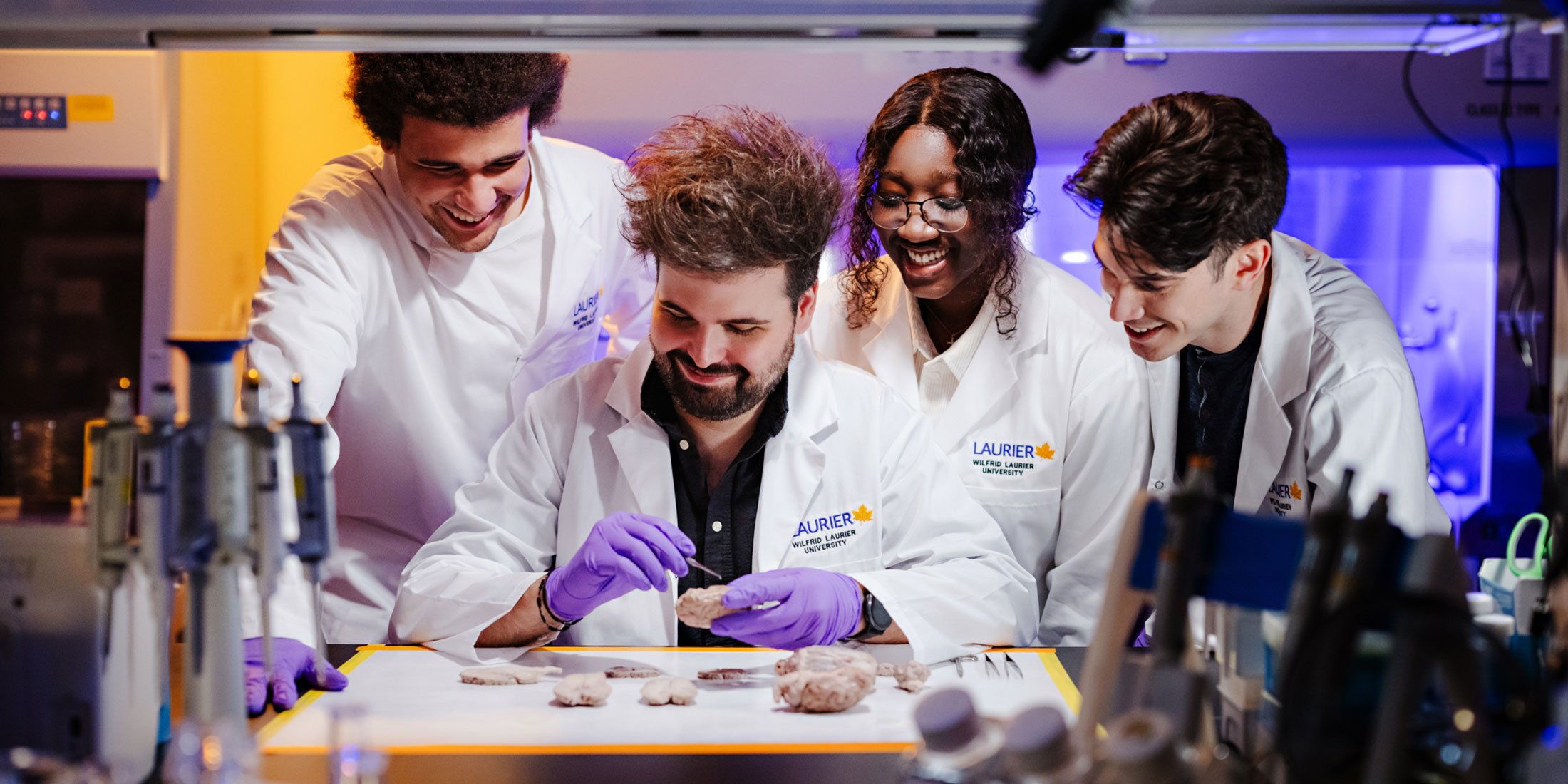
Are you ready to push the boundaries and expand our collective understanding of health? In Laurier’s Master of Science (MSc) in Health Sciences program, you will learn from leading academics, immerse yourself in research, and develop as a scientist and critical thinker.
With a distinctive “cell-to-society" approach, you will integrate biomedical and social perspectives to address today’s most pressing health challenges.
Customize your degree through one of two fields: Molecular and Medical Sciences (MMS) or Community, Public and Population Health (CPPH). We also offer a coursework or thesis option for each to match your career goals.
Graduate ready for a variety of in-demand health and science careers.
Complete the MSc in as little as 10 months with the coursework option.
Study alongside world-class, award-winning researchers in the thesis option.
This program offers two formats based on your learning and career goals:
In the coursework option, you will complete your MSc in as little as 10 months through a course-based format designed for advanced study across key areas of health sciences. You will explore timely and relevant topics through a diverse selection of courses while applying our distinctive “cell-to-society" approach.
In the thesis option, you will work closely with a faculty supervisor and their research team to design and conduct an original research project. With a strong emphasis on hands-on lab-based and applied research, you will develop advanced research and analytical skills while generating findings for your final thesis.
Choose a field of study that aligns with your academic background and career goals:.
Both fields are available in either the coursework or thesis option, allowing you to customize your learning experience.
Both the coursework and thesis options offer distinct learning experiences tailored to your chosen field of study. Whether you pursue course-based learning or independent research, you will gain the advanced knowledge and skills needed to prepare for careers in health, research, and related fields.
The coursework option for both fields is normally completed in three academic terms (10 months) and requires the completion of 4.5 credits.
Molecular and Medical Sciences (MMS)
Study the molecular and cellular foundations of human health, including areas such as immunology, stem cell and regenerative medicine, and disease processes.
Core Courses:
Electives (choose up to two):
A description of each course can be found in the Academic Calendar.
Community Public and Population Health (CPPH)
Examine health at the population level, addressing real-world challenges such as health equity, access to care, and the social determinants of health through interdisciplinary approaches.
Core Courses:
Electives (choose up to two):
A description of each course can be found in the Academic Calendar.
The thesis option for both fields is normally completed over six academic terms (24 months) and focuses on independent, research-intensive study.
Molecular and Medical Sciences (MMS)
Study the molecular and cellular foundations of human health, including areas such as immunology, stem cell and regenerative medicine, and disease processes.
Required Courses:
A description of each course can be found in the Academic Calendar.
Community Public and Population Health (CPPH)
Examine health at the population level, addressing real-world challenges such as health equity, access to care, and the social determinants of health through interdisciplinary approaches.
Required Courses:
A description of each course can be found in the Academic Calendar.
As you consider the next steps in your education, we want to support you along the way. Our emails have the updates, insights and information you need to make the decision that's best for you.
Take the next step in your graduation education by applying to the MSc in Health Sciences. Choose between the coursework or thesis option based on your goals and follow our step-by-step admissions process, from application to enrollment.
Thesis Applicants:
Coursework Applicants:
Please note: Applications cannot be evaluated until all required documentation is provided.
MSc Health Sciences Application Deadlines
Both the thesis and coursework options are offered in a full-time format. Please see the list of application deadlines below, based on program option and entry term.
Coursework Application Deadlines (Domestic)
Fall 2027 Start
Coursework Application Deadlines (International)
Fall 2027 Start
The coursework option receives a high volume of applications. We strongly encourage applicants to apply as early as possible. Applications are reviewed on a rolling basis and will continue to be accepted until all available spots are filled. Please be advised that the application portal may close prior to the posted deadline once capacity has been reached.
Thesis Application Deadlines (Domestic)
Winter 2027 Start
Spring 2027 Start
Fall 2027 Start
Winter 2028 Start
Spring 2028
Thesis Application Deadlines (International)
Spring 2027 Start
Fall 2027 Start
Winter 2028 Start
After submitting your OUAC application and paying the non-refundable application fee, you will receive an email from Wilfrid Laurier University with instructions on the next steps.
Required Documents
Your application must include:
After submitting your OUAC application and paying the non-refundable application fee, you will receive an email from gradadmissions@wlu.ca with instructions to upload your required documents to Laurier’s Online Registration and Information Systems (LORIS).
Required Documents
Tuition Deposits
A tuition deposit is required after you accept your offer of admission. Please do not submit payment until your offer has been accepted.
Study Permits
If you have questions about the study permit process, including updated financial requirements:
Proficiency in written and spoken English is required for graduate studies at Laurier. Applicants whose previous postsecondary education was not completed in English must submit proof of English language proficiency.
Coursework applicants must submit test scores through the applicant portal.
Thesis applicants must submit test scores through LORIS.
Questions? Contact hegradadvising@wlu.ca.
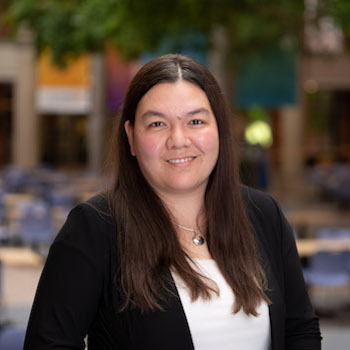
"Students who want to link their passion for learning, research, and making community impacts will be mentored and trained to conduct impactful research by leading researchers in diverse and interdisciplinary health fields."
Melody Morton Ninomiya, Associate Professor, Health Sciences and Canada Research Chair (T2) in Community-Driven Knowledge Mobilization and Pathways to Wellness
Regardless of the type of graduate program you intend to pursue, financial planning is important. At Laurier, we want to provide you with as much information as possible about a variety of scholarship and funding opportunities and equip you with the skills to manage your finances effectively in the years to come.

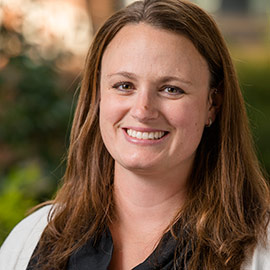
"Hands-on experiences in internationally-recognized research labs in combination with an integrative seminar series will provide students with both depth and breadth in the field of health sciences."
Diane Gregory, Associate Professor, Kinesiology and Physical Education and Health Sciences
This program can lead to the following careers:
ASPIRE is with you every step of the way – from before you arrive on campus to graduation – with dedicated grad student support for community building, wellness education, skills development and career success.
Learn about the interests and ongoing research of our faculty members. If their research interests you, email the professor directly to set up a meeting. Include information about yourself, your skills, your experience, and why you’re interested in their research. If you are looking for more information about this program, have questions, or want to set up a meeting, contact a member of our team.
Stephanie DeWitte-Orr
Professor, Health Sciences and Biology
Associate Dean, Research and Graduate Studies, Faculty of Science
Diane Gregory
Associate Professor, Kinesiology and Physical Education and Health Sciences
Nirosha Murugan
Assistant Professor, Health Sciences
Sarah Poynter
Associate Professor, Health Sciences
Nicolas Rouleau
Assistant Professor, Health Sciences
Stewart Russell
Assistant Professor, Health Sciences
Anish K. Arora
Assistant Professor, Health Sciences
Todd Coleman
Associate Professor, Health Sciences
Graduate Coordinator
Renee S. MacPhee
Associate Professor, Health Sciences and Kinesiology and Physical Education
Melody Morton Ninomiya
Associate Professor, Health Sciences
Kate Rossiter
Associate Professor
Ketan Shankardass
Associate Professor, Health Sciences
Robb Travers
Chair, Health Sciences
Professor, Health Sciences
Think this is the perfect program to continue your education?