


We use cookies on this site to enhance your experience.
By selecting “Accept” and continuing to use this website, you consent to the use of cookies.

Aug. 25, 2026
Print | PDFWilfrid Laurier University faculty members are using new federal research infrastructure funding to pursue novel cancer treatments, improve food security for northern Indigenous communities and uncover life-saving information about cardiovascular health.
Researchers Holly Fruehwald, Aravindhan Ganesan, Nicolas Rouleau, Heidi Swanson and Jennifer Williams all received grants from the Canada Foundation for Innovation’s (CFI) John R. Evans Leaders Fund (JELF).
“Canada is investing in researchers and innovators whose ideas will drive our future prosperity,” says the Honourable Mélanie Joly, minister of industry and minister responsible for Canada economic development for Quebec Regions. “We are equipping researchers with the cutting-edge infrastructure they need to advance discovery, attract top talent and build Canada’s economic growth and resilience.”
 Fruehwald, an assistant professor of Chemistry and Biochemistry, is testing materials to catalyze the conversion of carbon dioxide (CO2) into substances that fuel clean energy technologies. She was awarded $86,000 to purchase a solution-handling robot and a scanning electrochemical microscope, which will support rapid screening of the chemical products produced from electrochemical conversion of CO2.
“Converting CO2 into value-added chemicals will help support Canada’s Emissions Reduction Plan by reducing CO2 in the environment and reusing the CO2 emitted into something useful,” says Fruehwald. “Having this unique equipment on campus will also provide Laurier students with sought-after technical skills for their future careers.”
 Ganesan, an assistant professor of Chemistry and Biochemistry, will dedicate $152,000 in JELF funding to the establishment of IntegCore, a new research platform that will enable the rapid discovery, characterization and validation of novel therapeutics for non-communicable diseases, including cancer and neurodegenerative disorders.
“This infrastructure will create a closed-loop platform for AI-enabled, high-throughput computational screening and experimental validation, accelerating biochemistry and therapeutic discovery research at Laurier,” says Ganesan. “In particular, IntegCore will help uncover the molecular mechanisms of critical disease-associated proteins and translate those insights into the design and validation of new classes of therapeutics.”
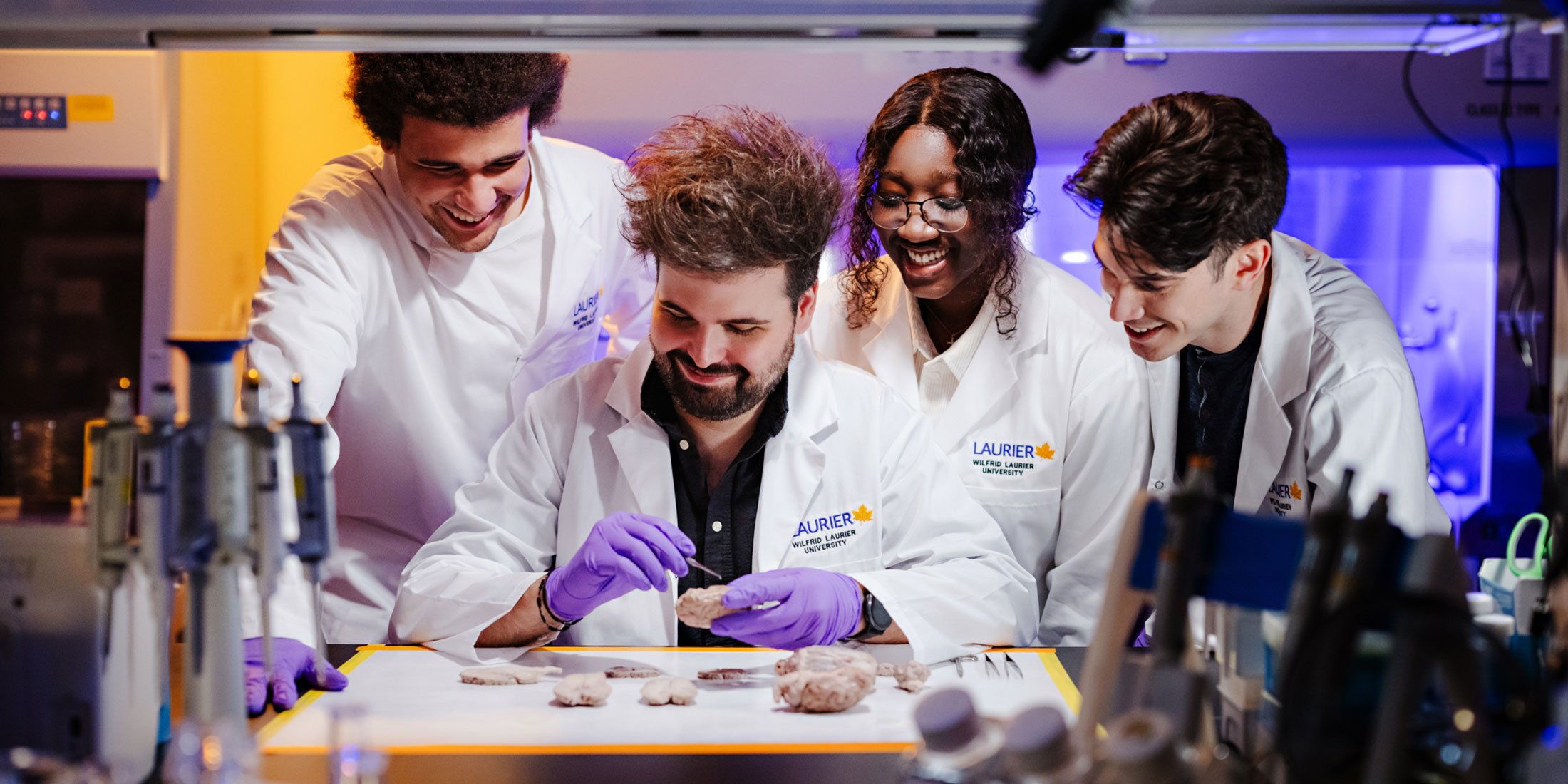
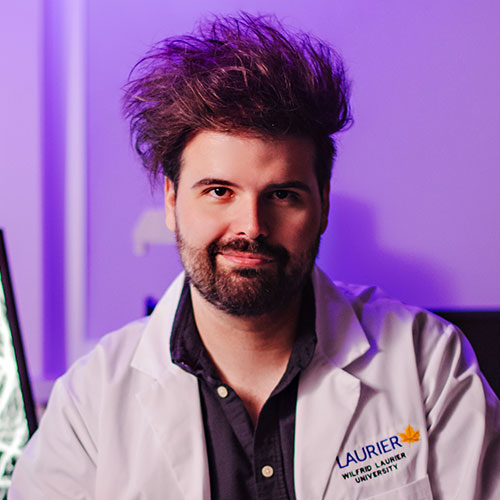 Rouleau, an assistant professor of Health Sciences, is studying the mechanisms of cognition by constructing miniature brains in petri dishes that emulate the central nervous system. He was awarded $76,000 to acquire a multi-well microelectrode array, a device that can sense electrical impulses from multiple miniature brain tissues at the same time and deliver stimulation to build a minimal biological computer.
“One of the main goals of the research is to understand how living brain tissues solve problems with feedback,” says Rouleau. “Biological computing can inform the design of more efficient artificial intelligences.”
 Swanson, the Jarislowsky Chair in Sustainable Water Futures, is working with Inuit communities in Nunavut to determine the safest and healthiest sources of local fish. Subsistence fisheries are critical to the cultural, spiritual, nutritional and economic well-being of remote northern Indigenous communities, but climate change is affecting the ecology, movements and mercury concentrations of northern fish.
Swanson and her partners were awarded $325,038 for research, field sampling and storage equipment. Their findings will inform consumption guidance for communities who rely on wild-harvested fish.
 Williams, an assistant professor of Kinesiology and Physical Education, is investigating how stress and exercise affect the cardiovascular system, including in relation to sex hormones in women. Her JELF grant of $91,000 will fund a wet lab facility at Laurier’s Northdale Research Centre with the capacity to analyze cardiovascular biomarkers and enhance cell culture research.
“This funding will provide the infrastructure and tools to study how everyday stressors impact cardiovascular health across the lifespan,” says Williams. “I hope our research will uncover early changes to the heart and arteries and help us identify better ways to prevent cardiovascular disease, particularly among women.”