


We use cookies on this site to enhance your experience.
By selecting “Accept” and continuing to use this website, you consent to the use of cookies.
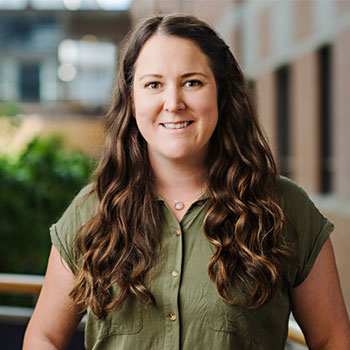
I am a cognitive neuroscientist and assistant professor in the Department of Psychology at Wilfrid Laurier University, where I direct the Cognisant Lab. I received an Honours BSc from Laurier in 2010 and a PhD in Cognitive Neuroscience from Laurier in 2015. I subsequently completed postdoctoral training in the Autism and Developmental Disabilities Lab at Simon Fraser University and the Brain and Mind Institute at Western University.
In 2022, I returned to Laurier as an assistant professor. My research program has been supported by the Natural Sciences and Engineering Research Council of Canada (NSERC), the Social Sciences and Humanities Research Council of Canada (SSHRC), the Organization for Autism Research, the Ontario government, the John R. Evans Leaders Fund, and the Canada First Research Excellence Fund (CFREF). In 2026, I received Laurier's Early Career Researcher Award in recognition of my research contributions and commitment to student training and mentorship.
My research examines individual differences in sensory processing and how these differences shape communication, behaviour, and well-being across the lifespan. I use behavioural and electrophysiological methods, including EEG, to investigate why people differ in the way they perceive and respond to sensory information and how these differences relate to higher-level cognitive and social processes. Much of my work takes a neurodiversity-informed approach and examines sensory processing both within and across neurodevelopmental groups.
One major area of my research focuses on auditory processing and decreased sound tolerance, including misophonia and hyperacusis. I am interested in understanding why everyday sounds can evoke intense emotional, physiological, or behavioural responses for some people, as well as the neural and sensory mechanisms that contribute to these experiences. My research in this area examines responses to sound from the ear to the brain, with the goal of understanding how differences throughout the auditory system may contribute to decreased sound tolerance across development.
A second area of my research investigates how the brain uses sensory information to support speech production. In particular, I study auditory feedback control of speech—how speakers monitor the sound of their own voice and make rapid adjustments when what they hear differs from what they intended to produce. This work examines individual differences in speech motor control and how sensory processing characteristics influence the way people respond to changes in their auditory environment.
My research also examines the experiences and well-being of autistic and other neurodivergent people. Current projects investigate autistic burnout, sensory experiences, masking and camouflaging, belonging, and the factors that support or hinder neurodivergent students in postsecondary education. A central goal of this work is to move beyond deficit-based accounts of neurodivergence by examining the interaction between individual characteristics and the environments in which people learn, work, and participate.
Across these areas, my research aims to connect basic cognitive neuroscience with questions that have meaningful implications for people's everyday lives. I am particularly interested in identifying sources of individual variability, understanding how sensory and environmental factors contribute to different outcomes, and using this knowledge to inform more accessible and supportive environments.
Volunteer and research assistantships are available for highly motivated undergraduate and graduate students. Contact me for more information.
The Department of Psychology at Laurier has both a MSc and a PhD program in Cognitive Neuroscience, and accepts new graduate students each year.
BrainWorx Summer Research Opportunities
Each summer, the Cognisant Lab recruits undergraduate and graduate students to support BrainWorx, Laurier’s inclusive summer camp and child development research program. Students gain hands-on experience working with children from diverse developmental and neurodivergent backgrounds while contributing to ongoing research in areas such as sensory processing, attention, communication and social development.
BrainWorx is especially well suited to students interested in developmental psychology, cognitive neuroscience, autism and neurodiversity, or gaining practical experience conducting research with children. Opportunities may involve assisting with research sessions, supporting data collection and helping create an inclusive and engaging camp environment.
BrainWorx is an inclusive summer day camp and child development research program hosted at Laurier’s Waterloo campus. The camp welcomes both neurotypical and neurodivergent children and is designed to provide a flexible, supportive environment in which children with a wide range of sensory, social and developmental needs can participate fully in a traditional camp experience.
BrainWorx also serves as a unique research and training hub. Campers have the opportunity to participate in studies examining topics such as sensory processing, attention, language, memory and social development, while undergraduate and graduate students gain hands-on experience conducting research with children. Through BrainWorx, we aim to make developmental research more accessible and representative while creating an environment where children can have fun, build connections and contribute to science.
For more information visit: https://cognisantlab.ca/brainworx-summer-camp/
Contact Info:
Office location: N2074F Science Building
Office hours: Monday, 11 a.m. to 12 p.m. or by appointment.