A hub of neurodiversity inclusion and research
July 30, 2026
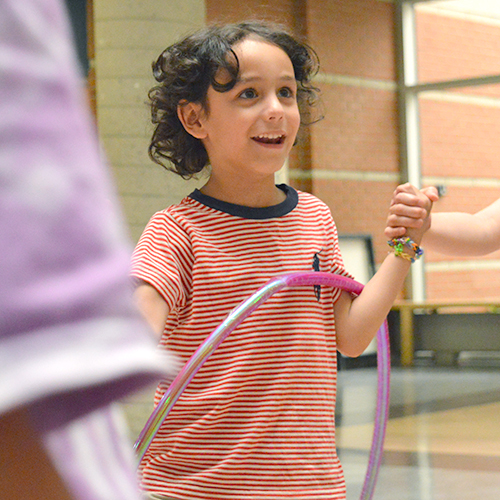
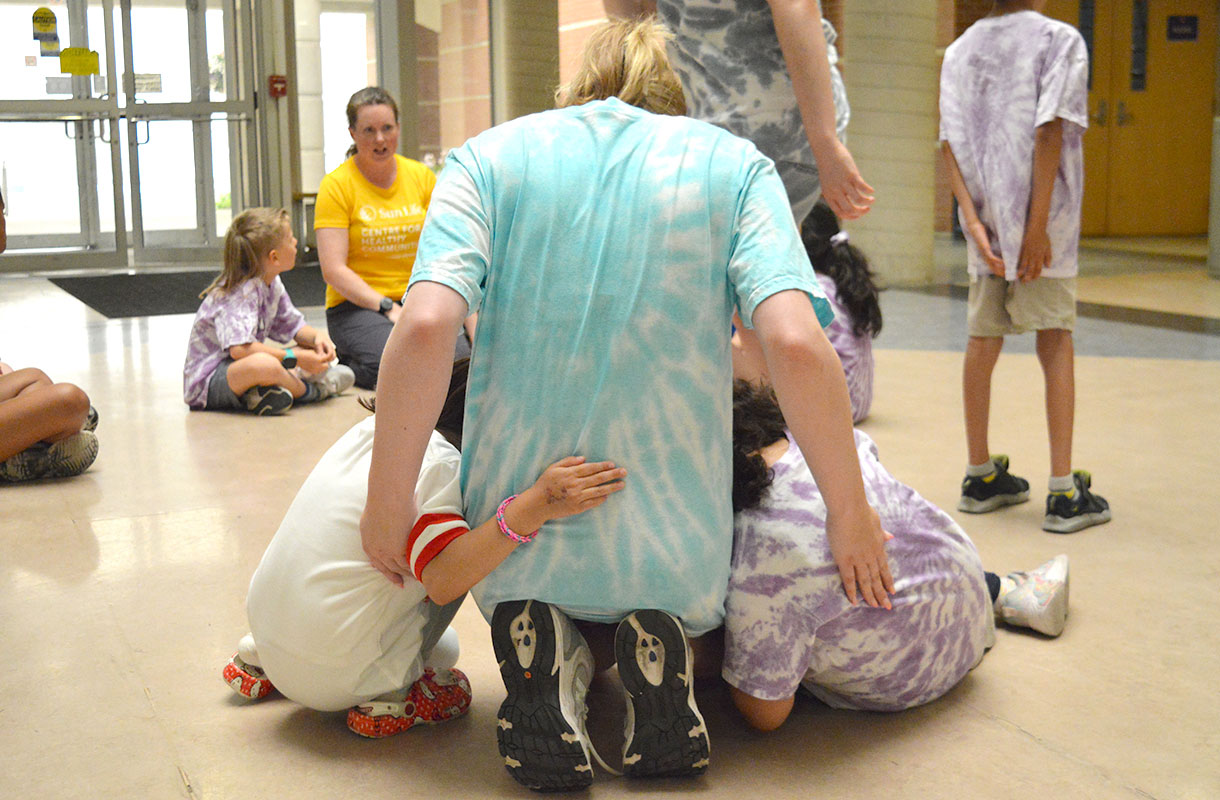
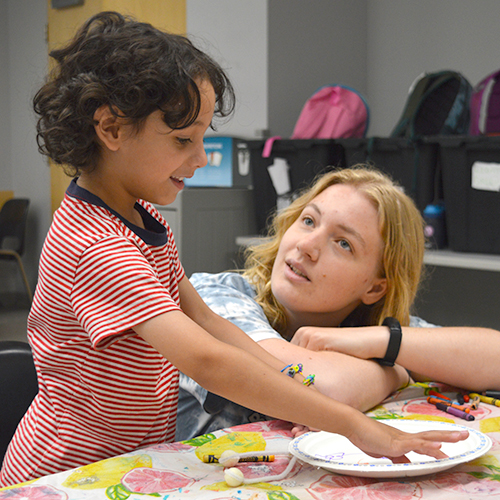
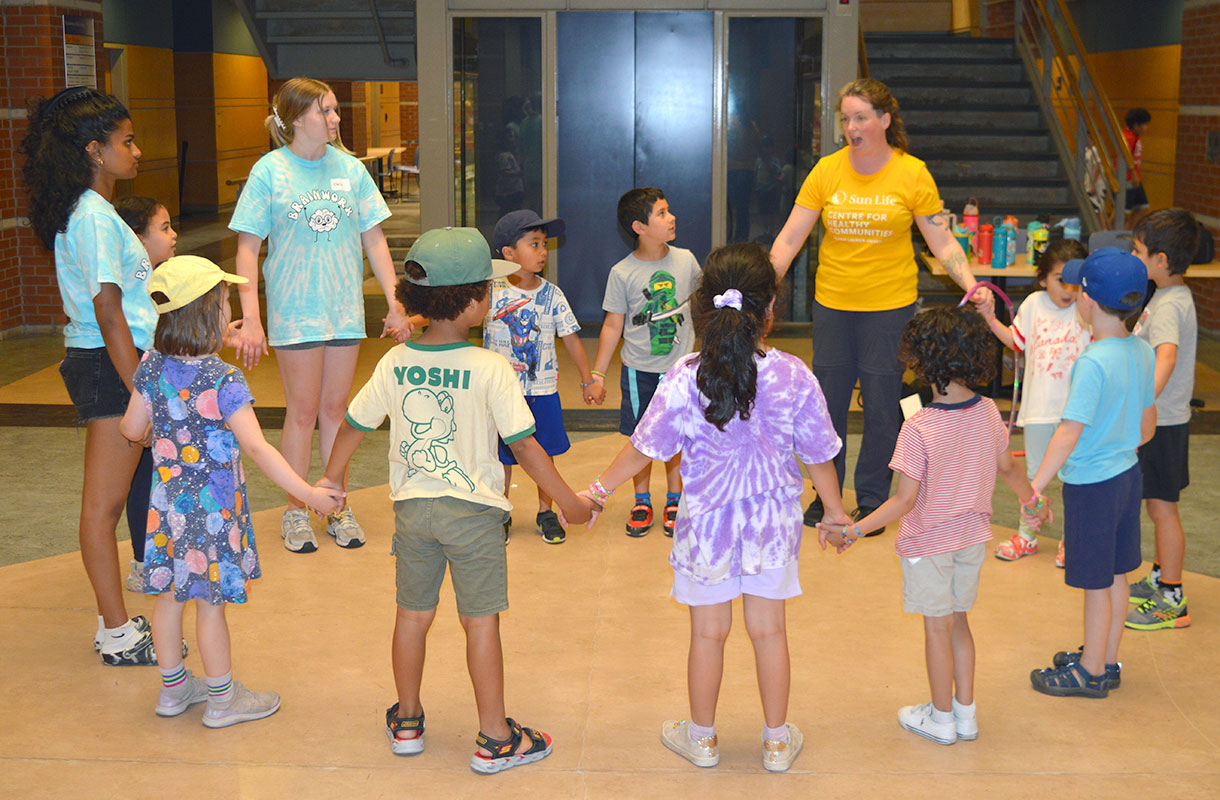
At first glance, BrainWorx at Wilfrid Laurier University is indistinguishable from other day camps. Among the steady din of laughter and chatter, children drip white glue onto paper plates and assemble cardboard volcanoes while counsellors wearing tie-dyed t-shirts jump in to help when needed.
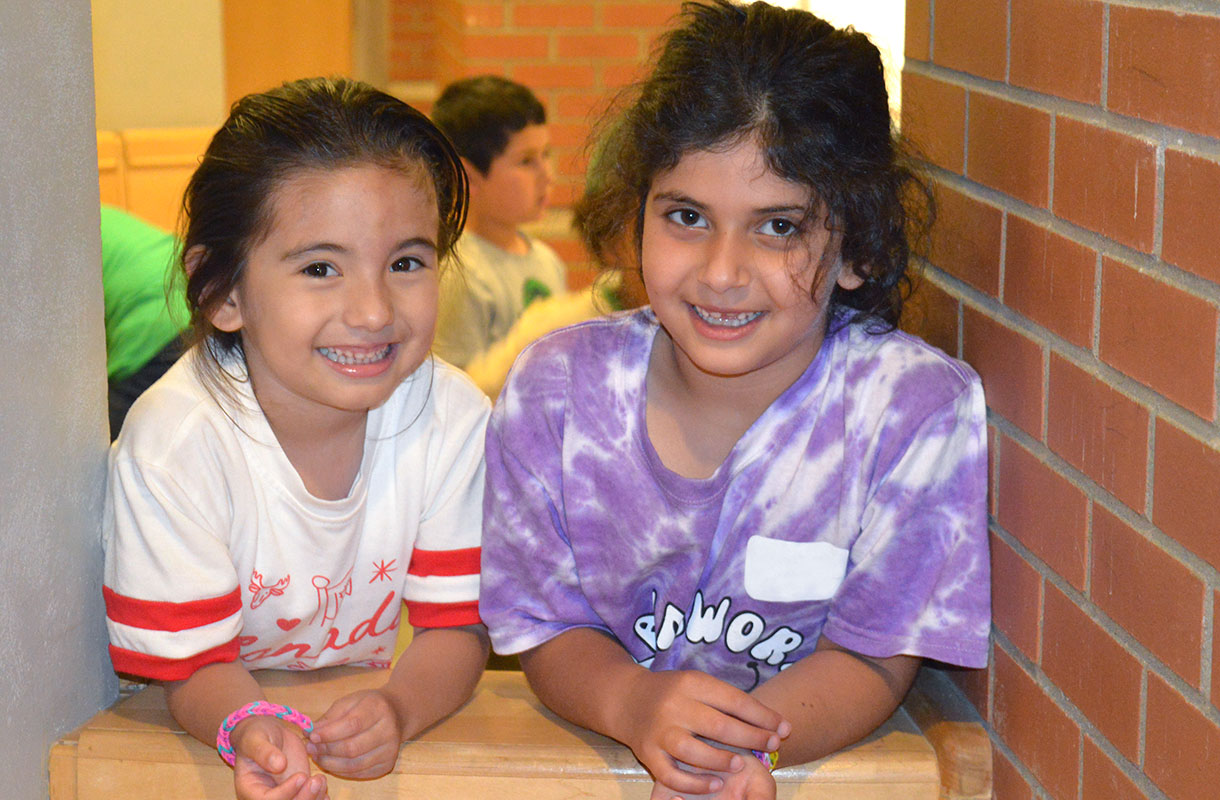
In fact, BrainWorx’ mundanity is what makes it unique. The organizers facilitate a “typical” camp experience for kids who may not be able to experience it elsewhere. Up to one third of the campers are neurodiverse, including autistic children and those with ADHD and anxiety.
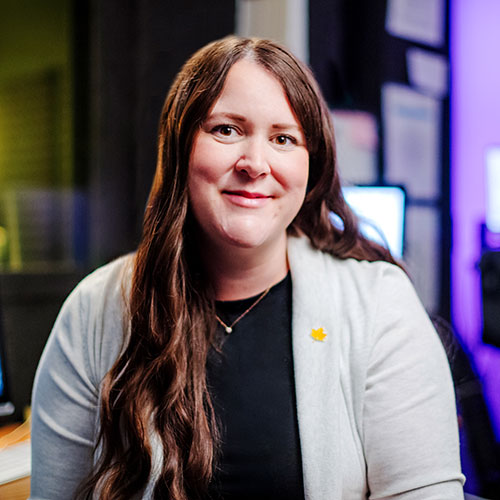
Nichole Scheerer, assistant professor of Psychology, leads BrainWorx through her Cognisant Lab at Laurier, along with support from Kim Roberts' Child Memory Lab and Marc Jambon's Laboratory for the Study of Morality, Aggression, and Prosociality. Before she was an academic, Scheerer was a support worker for autistic children. She saw how difficult it was for many of them to participate in noisy, chaotic environments.
“I knew children who couldn’t attend camps because they didn’t have the necessary supports to accommodate them,” says Scheerer. “Our goal here is to create opportunities for kids who otherwise couldn’t go to camp.”
Though BrainWorx is open to all children, Scheerer’s team makes a purposeful effort to recruit neurodivergent campers. The camp runs for three weeks in July on Laurier’s Waterloo campus and welcomes nearly 100 children between the ages of four and 12 years old. Accessibility informs all aspects of BrainWorx, from registration fees to the ratio of staff to campers.
“We speak to parents and ensure that each child’s needs are met, and we adjust programming as needed,” says BrainWorx supervisor Adrianna Molenaar, who is completing her Master of Science in Cognitive Neuroscience at Laurier. “Campers always have a choice between two or three options during activity blocks. They have access to headphones, quiet rooms and individualized supports.”
Approximately 45 kids attend each week and are divided into two age groups. Younger campers do crafts and construct Lego and Magna-Tiles, while the older ones make balloon rockets and borax crystals. Everyone gets to swim at the Laurier pool and participate in science lessons on Friday mornings. Every day, representatives from Laurier’s Sun Life Centre for Healthy Communities facilitate outdoor games.
It’s a packed schedule, but each camper is allowed to move at their own pace.
“Our goal here is to create opportunities for kids who otherwise couldn’t go to camp.”
Nichole Scheerer, assistant professor, Psychology
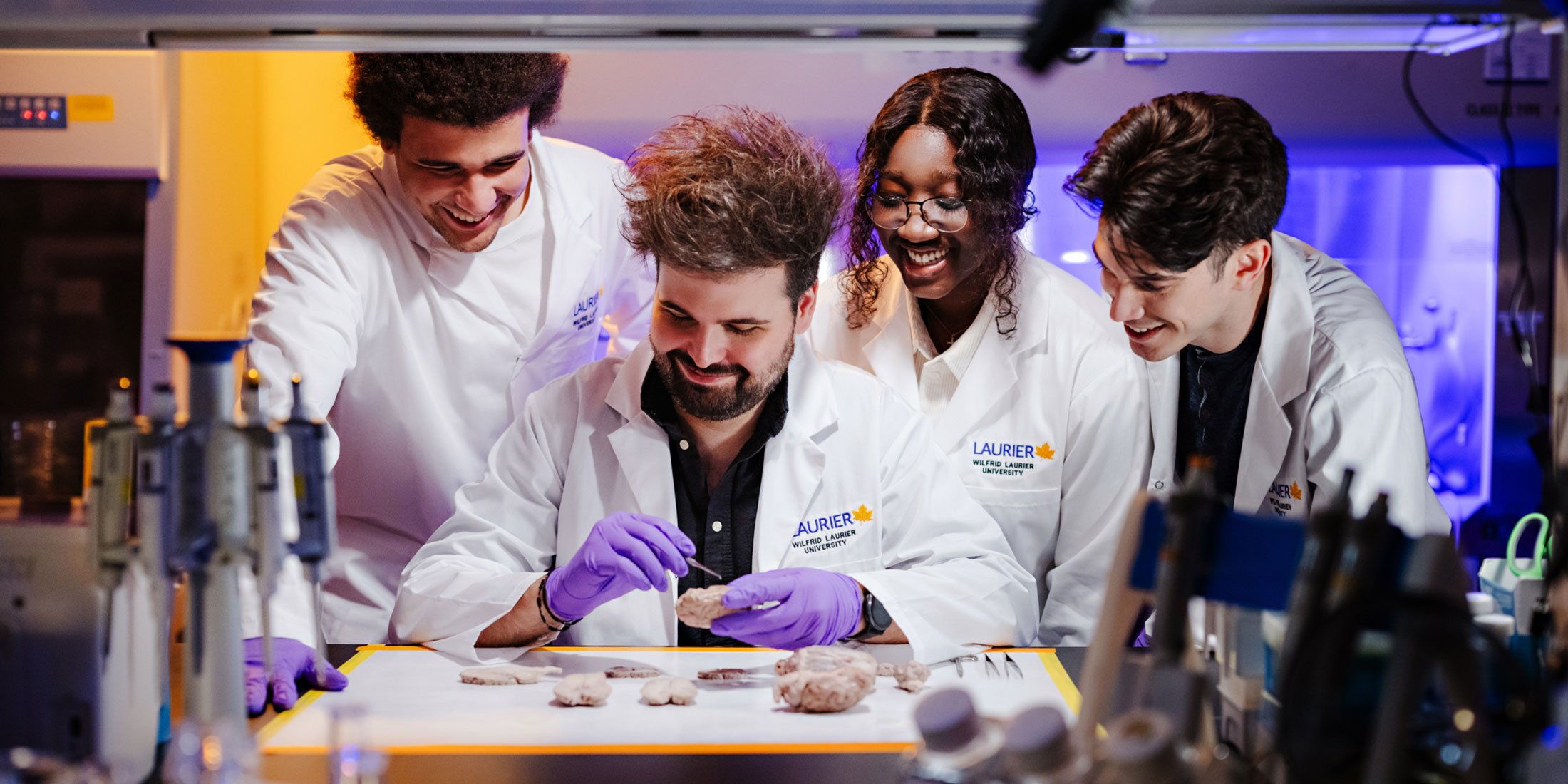
BrainWorx isn’t just a camp: it’s also a thriving research hub. Throughout each day, campers are invited to participate in studies about various aspects of child development. If they are open to it, children are excused from camp programming for half an hour or so to work with Laurier graduate students. It’s an efficient way to collect data about children's experiences that would otherwise take years to accumulate.
When Laurier faculty members Roberts and Pam Bryden founded BrainWorx in 2010, Scheerer was enrolled at Laurier as a graduate student. She worked at the camp and collected data that became “invaluable” during her PhD research on sensory processing.
“I needed data from 100 kids, which would have been impossible to gather on weekends when they are out of school,” says Scheerer. “At camp, I worked with 50 kids in two weeks.”
When Scheerer returned to Laurier as a faculty member in 2022, BrainWorx had fizzled due to the COVID-19 pandemic. Along with Roberts and Jambon, she helped revive the program and shifted its focus toward neurodiversity, matching the interests of her research program.
In 2026, BrainWorx campers participated in seven research studies. Topics included sound tolerance, the development of childhood honesty and how children assess the trustworthiness of online sources.
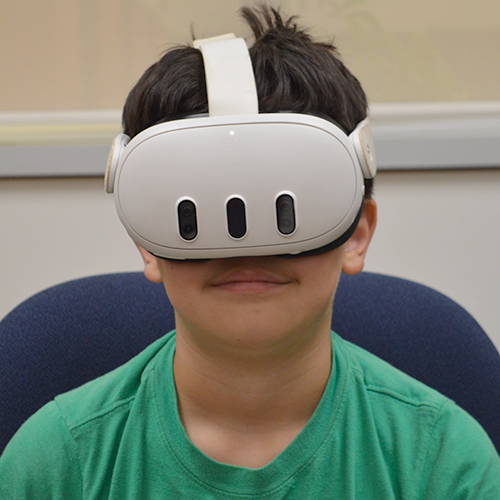
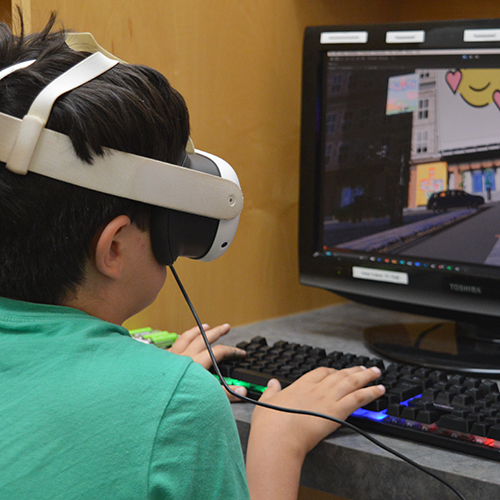
Scheerer’s research team collected data for four studies, including one that placed participants in two distinct virtual reality environments: one that was quiet with minimal distractions; the other a busy city scene. The children were asked to complete the same attention task in both settings, revealing how sensory environments influence attention.
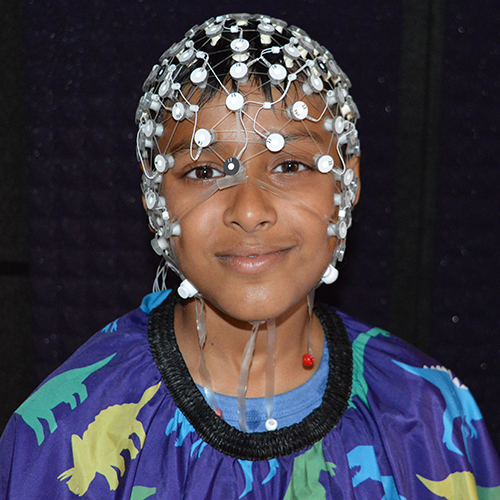
Another of Scheerer’s studies examined whether there are differences in sound processing between autistic and non-autistic children. Grad students placed electroencephalography (EEG) caps on campers – a non-invasive technology that uses sensors to measure brain signals – and measured how their brains responded to simple sounds while they watched a silent movie. The team is assessing how brain responses to sound relate to language skills, identifying patterns of typical and atypical brain development. Ultimately, Scheerer hopes to contribute to earlier identification of communication differences and help inform educational and clinical supports.
Science labs and EEG caps may sound scary, but campers embrace the novelty and excitement of participating in research.
“Kids can always say no, but usually they run over whenever an adult comes in the room and ask, ‘Are you doing research?’” says Molenaar. “They enjoy it. I think their parents have explained to them why research is important. Plus, they get undivided attention for 30 minutes and prizes.”
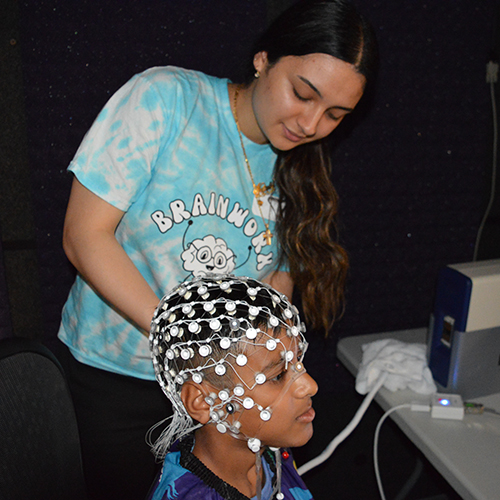
BrainWorx is also a great training ground for Laurier students. In addition to Molenaar’s work coordinating camp – Scheerer calls her the “brain behind BrainWorx” – she was able to mentor undergraduate researchers who assisted with data collection, including Brycen Piccolotto.
“It’s hard to find hands-on research experience, so BrainWorx has been awesome,” says Piccolotto, a fourth-year Psychology and Sociology student. “It’s cool getting to work with these kids. I’ve spent a lot of time working at camps, so this opportunity fulfills that interest as well.”
Molenaar has heard from parents that BrainWorx is their child’s favourite camp to come back to year after year. She enjoys returning just as much, grateful for the chance to create a welcoming space for neurodiverse kids.
“Last year, I remember one camper who began the week too shy to speak to anyone,” says Scheerer. “By day three, he was fully talking and interacting with others. He carried a special stuffed animal and by the end of the week he and another camper were letting each other play with their treasured items. That felt like such a sign of their comfort here. I feel like we’re making a huge difference for these kids.”