




We use cookies on this site to enhance your experience.
By selecting “Accept” and continuing to use this website, you consent to the use of cookies.
Aug. 11, 2026
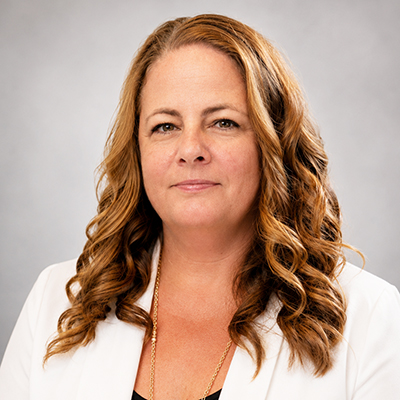
Print | PDFMany are familiar with the term “imposter syndrome,” and chances are, some have probably experienced it at some point in their lives. Emily Rowe, a Public Safety student at Wilfrid Laurier University, has taken inspiration from that familiar idea to develop a concept she calls “imposter trauma.”
During her time in the military and in her current role as a public safety professional, Rowe has experienced imposter trauma firsthand and watched others endure it, as well.
“Imposter trauma is essentially the thought that your pain or trauma doesn’t count against someone else’s,” she says. “It’s when you decide that what you’re going through doesn’t matter because somebody else has been through something worse.”
Rowe believes there are reasons why imposter trauma – a condition she and others have known about for years – remains understudied. She says the main one is a lack of language to describe it. Psychological conditions such as post-traumatic stress disorder and major depressive disorder are defined in the Diagnostic and Statistical Manual of Mental Disorders, Fifth Edition, which means they are widely accepted among public safety professionals and leaders as conditions that require treatment. By comparison, the absence of shared language or a recognized conceptual framework for what Rowe calls imposter trauma can make it difficult for people to recognize their experiences as legitimate, leaving them less likely to discuss them openly or seek support.
After speaking with several trusted public safety professionals, Rowe was shocked by the number of “that’s-how-I-feel” moments people shared. Knowing others have suffered, too, was all the proof she needed to delve deeper into her research.
The response has been overwhelming. In March, she was the guest on a podcast for the Centre of Excellence and Equity in Uniformed Public Services at Anglia Ruskin University in Cambridge, UK, and was later invited to deliver a presentation on imposter trauma at the centre’s spring conference. In May, she delivered a poster presentation to attendees at a conference hosted by the Canadian Institute for Public Safety Research and Treatment in Calgary.
As a working public safety professional, part-time student and busy mom, devoting time to studying imposter trauma has taken discipline. But Rowe is determined to make time. She knows that her trauma is valid and she wants people to know that theirs is, too.
“There are high rates of suicide across public safety professions,” Rowe says. “I’m not saying I’m going to solve that but, at the end of the day, if you don’t think that your pain counts, then you’re far less likely to tell someone or access the support that’s available.”
Though imposter trauma can affect anyone, Rowe’s research focuses specifically on women serving in uniformed public safety professions. In policing and other public safety professions, there is often an expectation to be “tough and stoic,” Rowe says, making it less likely that individuals will speak openly about psychological distress. Many people keep their experiences hidden because they fear being seen as a problem, facing career repercussions, or being perceived as unable to do the job. For women who have already had to overcome additional barriers to earn their place, acknowledging that they are struggling can feel especially risky.
Some of the tell-tale signs of imposter trauma include changes in workplace performance, increased absences or sick leave, or withdrawal from others. While Rowe doesn’t claim to have a magical solution to help those experiencing imposter trauma, she believes a mechanism of reporting would be a step in the right direction. She’s grateful that police forces and other public safety organizations are starting to support their employees’ mental health rather than relying on disciplinary measures to further punish those struggling.
“Imposter trauma is essentially the thought that your pain or trauma doesn’t count against someone else’s. It’s when you decide that what you’re going through doesn’t matter because somebody else has been through something worse.” – Emily Rowe
In addition to imposter trauma, Rowe also studies its connection to legitimacy hierarchies – the question of how valid one’s suffering appears to those on the outside. To explain the connection, Rowe often shares a story about a police officer she knew who had attended a motorcycle accident. The accident, thankfully, was minor. There was no blood involved and no casualties. However, the officer had a very difficult time with the call and went home immediately. His coworkers and superiors couldn’t understand it.
Only later did they discover that the officer’s brother had been killed in a motorcycle accident when they were teenagers. He didn’t bring that reality forward because he felt it didn’t meet the definition of trauma and didn’t feel anyone would see it as legitimate, especially when compared to other traumas, often considered more heroic in nature. Sadly, Rowe says, that’s often the way imposter trauma works.
Rowe has received countless words of support to continue her research, and she plans to do just that. She recently submitted a manuscript for peer review to the Journal of Military, Veteran, and Family Health on the topic. In October – on the same day she is due to receive her Public Safety degree from Laurier – Rowe will present her research at the Canadian Institute for Military and Veteran Health Research Forum in Halifax.
After presenting in the UK this spring, Rowe received perhaps her biggest incentive to keep going. A woman serving in the Royal Canadian Navy approached her to share that she’s experienced a lot of traumas, but the only ones she deems valid enough to discuss are the ones considered heroic in nature.
“You have to keep doing this work,” the woman told Rowe. “This is so important.”