


“I saw my Laurier experience as an opportunity to research and develop the resources clients like mine might need."
Alison Albright (MSW '26), founder of Post-Court Pathways at Victim Services Toronto
Oct. 5, 2026
Content warning: This story mentions child abuse.
For children and youth who testify against their alleged abusers in criminal court, recounting their experiences in court can be as traumatic as the abuse itself.
Alison Albright (MSW ’26), director of court programs at Victim Services Toronto (VST), has witnessed that reality throughout her career. When a trial concludes, young survivors often turn to her for a specific kind of support that, until now, hasn’t existed.
Albright founded Post-Court Pathways (PCP) at Victim Services Toronto, believed to be the first program of its kind globally to support the psychological and emotional well-being of children and youth following their experiences in the courtroom.
Developed with input from survivors, researchers and clinical experts, Post-Court Pathways provides trauma-informed, evidence-based and developmentally appropriate care to help young survivors heal, rebuild and move forward after the court case concludes. The program’s therapeutic approaches are tailored to the individual needs of the client and are delivered by a therapist with extensive experience supporting survivors of childhood trauma and who also understands the justice system.
“It was heartbreaking to tell young survivors, who have endured so much and been so brave, that the support they were asking for didn’t exist,” says Albright. “I couldn’t keep telling them, ‘I’m sorry, but I can’t help you with that.’”
The need for post-court support stems from the unique challenges young survivors face as they move through the justice system. Criminal cases often take years to resolve, leaving many children and youth in “survival mode” as they navigate a lengthy legal process. Testifying can bring past trauma to the surface while creating new trauma. The experience is often complex and emotionally taxing, requiring support from professionals who understand both trauma and the realities of the courtroom.
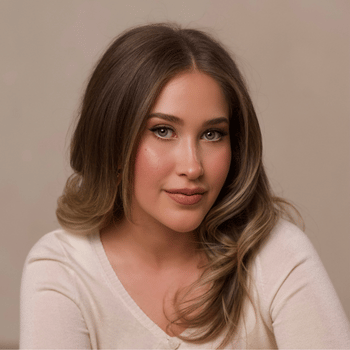
“I saw my Laurier experience as an opportunity to research and develop the resources clients like mine might need."
Alison Albright (MSW '26), founder of Post-Court Pathways at Victim Services Toronto
Without that specialized expertise, survivors can find themselves having to explain the legal process and its impacts to the professionals trying to support them.
Albright saw an opportunity to close that gap by creating the kind of support she believed young survivors deserved.
“Alison has an extraordinary ability to see where the system is failing survivors and then imagine something better,” says Carly Kalish, chief executive officer of Victim Services Toronto. "Instead of accepting a gap in the system, Alison built a program she knew should exist. We are incredibly proud of her and believe the program has the potential to change how young survivors are supported far beyond Toronto.”
As Albright considered how to bring a specialized post-court therapy program to life, she returned to school in spring 2024, enrolling part-time in Laurier’s advanced standing online Master of Social Work program. Many of Albright’s colleagues highly recommended the program, which offers flexibility for professionals already working in the field, as well as the option to complete an approved field placement in their workplace or community.
“Because of its outstanding reputation for clinical social work, Laurier’s MSW program was the only one I applied to,” says Albright. “I saw my Laurier experience as an opportunity to research and develop the resources clients like mine might need, and I am so grateful for the community and connections I found.”
Albright’s passion for supporting her clients shaped every aspect of her master’s experience and drew interest from her classmates. She, along with Janet Lewis (MSW ’26) and Stephanie Hanson (MSW ’26), co-authored the forthcoming children’s book Brave Like Me as part of an assignment from Associate Professor Nancy Freymond (MSW ’93, PhD ’07).
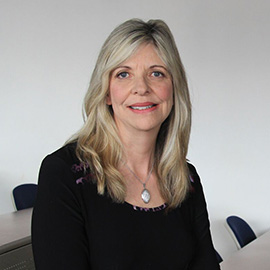
“The creativity and innovation demonstrated by Alison, Stephanie and Janet exemplify how Laurier students can personalize their master’s program experience to further their professional interests and pursue their passions.”
Nancy Freymond, associate professor, Lyle S. Hallman Faculty of Social Work
Freymond tasked students with adapting research findings into a practical resource. At Albright’s suggestion, the group selected a 2018 article published in the academic journal Child Abuse & Neglect about the impact of testifying in criminal court on the recovery of child sexual abuse survivors.
Lewis, a social worker and author from New Brunswick, and Hanson, a social worker and PhD student in Toronto, suggested writing a children’s book to communicate the research and educate young survivors and their families about the legal process and its emotional impacts.
Brave Like Me features illustrations by artist Laura Lavender and is being published in partnership with Victim Services Toronto. It is expected to be released in late 2026 and will be a resource for young survivors navigating any stage of the criminal justice system.
Freymond says the students’ adaptation of academic research into a children’s book is among the best examples of knowledge mobilization she has seen in nearly two decades of teaching at Laurier.
“Brave Like Me takes complicated qualitative analyses of children’s experiences and turns them into an educational resource for young survivors of abuse,” says Freymond. “The creativity and innovation demonstrated by Alison, Stephanie and Janet exemplify how Laurier students can personalize their master’s program experience to further their professional interests and pursue their passions.”
Students in the part-time advanced standing program must complete 500 placement hours to fulfil their field education requirements. Albright saw her field hours as an opportunity to pilot post-court therapeutic support. She secured a placement with former colleagues Heather Gregory and Kayleigh Arkalgud, registered social workers who have supported survivors of child abuse through their private practices in Toronto.
Shortly after Albright shared news of her placement with her professional network, a survivor was referred to Gregory and Albright for support. Albright observed the client’s sessions with Gregory and worked behind the scenes to develop resources for social workers and counsellors about the legal system and courtroom experience.
“Our client was reporting really positive strides in her recovery and sharing how helpful this specialized support was,” says Albright. “It was incredibly rewarding to use my placement to start piloting post-court support, help her move forward and lay the groundwork to bring a more formal program to life at VST.”
Inspired by the client’s progress, Victim Services Toronto approved Albright’s request to pilot a post-court therapy program, with the first offering in progress. Albright also co-chairs the program’s major fundraising initiative, SOAR for Victim Services Toronto, which has raised $1.2 million to date.
“It’s my hope that Post-Court Pathways can eventually exist at other organizations throughout the country, because the need is there and because support should not end when court ends,” says Albright. “I am so grateful to everyone who has helped bring this program to life so that young survivors can access this kind of specialized support. Their courage and bravery keep me going.”