The Lyle S. Hallman Faculty of Social Work is celebrating 60 years of advancing social work and changing lives in 2026-27. For six decades, Social Work faculty, students, alumni, staff and community partners have promoted wellbeing, strengthened communities, challenged systems, and made a lasting difference across Canada and around the world.
This anniversary year also marks 20 years of Laurier’s Indigenous Field of Study. Throughout the year, we’ll come together to celebrate the people and programs that have shaped Laurier Social Work and look ahead to its future. On this page, we’ll share events, lectures, stories and opportunities to get involved. We welcome you to celebrate with us!
For 60 years, the Faculty of Social Work has grown through the knowledge and commitment of students, alumni, faculty, staff and community partners. From a first class of 28 graduate students to programs that connect learners across campuses and communities, our history reflects many ways of teaching, knowing, learning and working toward social justice and the promotion of wellbeing.
Explore some of the moments that shaped our faculty. This timeline is a starting point, and we look forward to sharing more stories and photos throughout our anniversary year.
1966
The Graduate School of Social Work opens at Waterloo Lutheran University with 28 students. It is the first graduate school of social work in southwestern Ontario and the university’s first graduate program.
1968
The first Master of Social Work students graduate, beginning a community of alumni whose work reaches far beyond the university.
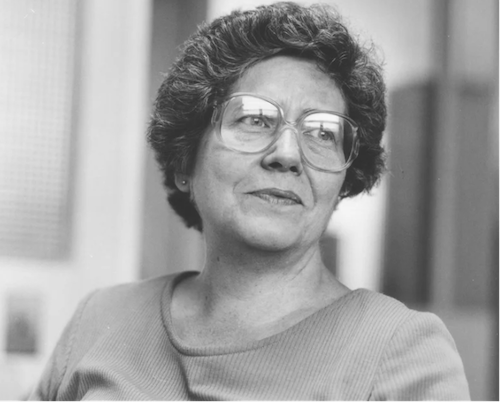 First MSW graduate, Emily Dolbeer
1970s
As the school grows, so do its connections with social service agencies and graduates. Field education partnerships create opportunities for students to learn alongside practitioners and communities. Alumni return to help shape the future of social work education, and continuing education offerings support people already working in the field.
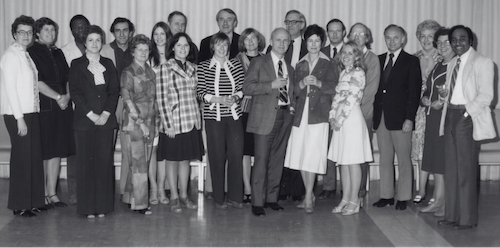 Faculty and Staff 1977
1974
The Graduate School of Social Work becomes the Faculty of Social Work, reflecting its expanding work in education, the profession, and the broader community.
1980s
The faculty expands opportunities for working professionals to pursue the MSW through part-time study. Research and public conversations address issues affecting people and communities. The faculty also develops Laurier’s first doctoral program, creating a new pathway for social work scholarship.
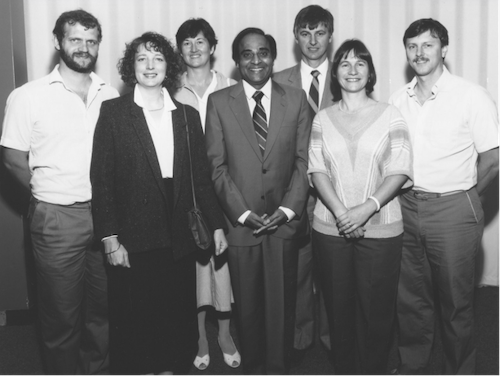 First DSW students, 1987 – Adje van de Sande, Leslie Tutty, Anne Munroe, Dean Shankar Yelaja, Dieter Kay, Elizabeth Pittaway, and Jean-Marc Belanger
1987
Laurier announces its first doctoral program, the Doctorate in Social Work.
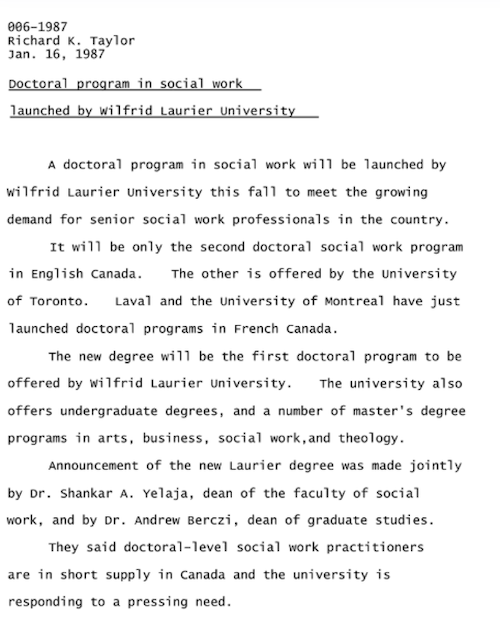 Announcement of the doctoral program
1990s
Laurier awards its first doctoral degrees to Elizabeth Pittaway in 1990, followed by Leslie Tutty in 1991. Throughout the decade, faculty and students continue to connect research, education and practice, exploring issues including community wellbeing, mental health, disability, migration, and social justice.
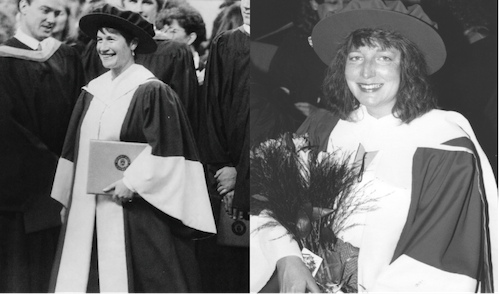 FSW's first DSW graduates – Elizabeth Pittaway ('90) and Leslie Tutty ('91)
2004
The faculty is named the Lyle S. Hallman Faculty of Social Work, recognizing the support of the Lyle S. Hallman Foundation.
2006
The faculty opens its home in downtown Kitchener. The space brings students and faculty closer to many of the community organizations with which they learn and work.
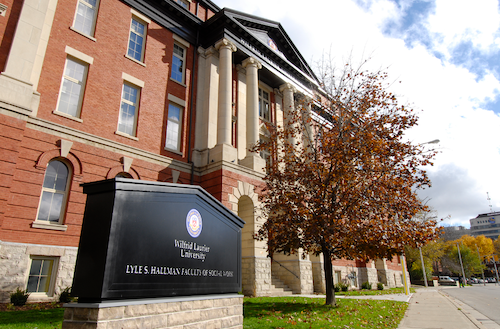 Lyle S. Hallman Faculty of Social Work building in Kitchener
2006
The program now known as the Indigenous Field of Study-MSW also begins in 2006. Rooted in a wholistic Indigenous worldview, the program brings together the teachings of Elders and Indigenous faculty, circle process and ceremony. Twenty years later, we celebrate this groundbreaking and vital program, its people, relationships with Indigenous communities and impacts, and continue to carry it forward.
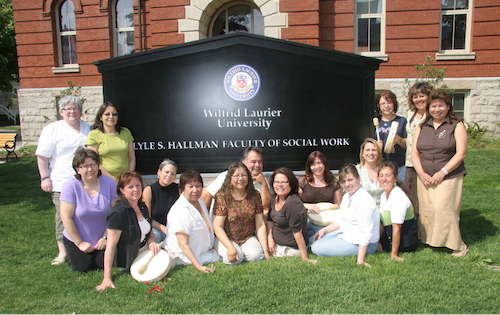 First Aboriginal Field of Study cohort, 2007
2011
Laurier offers its first course in the initiative now known as Walls to Bridges, in partnership with Grand Valley Institution for Women. Inside and outside students, that is Incarcerated students and MSW students, learn and grow together participating in this transformative program.
2013
The Bachelor of Social Work program launches at Laurier’s Brantford campus, expanding undergraduate social work education. The first BSW cohort graduated in 2017.
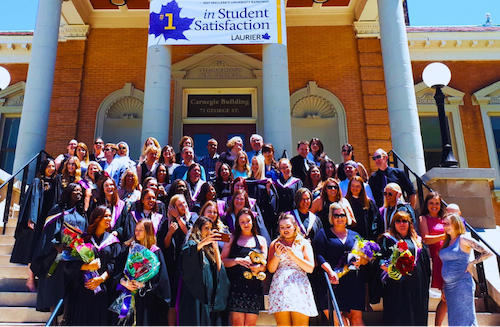 Inaugural BSW class, 2017
2018
Laurier’s online Master of Social Work program begins, making graduate social work education accessible to students throughout the country.
2020s
The faculty continues to adapt how students learn and connect. The Indigenous Field of Study introduces a hybrid format in 2025, combining remote learning with in-person experiences. In 2026, the PhD program welcomes its first virtual synchronous cohort.
Now, as we celebrate 60 years of Laurier Social Work, we honour the people and communities who have shaped our past and continue to shape what comes next.
Join us for the online launch of the book De-Colonizing Journeys: Confronting Colonialism through Circle Work and a celebration of 20 years of Laurier’s MSW Indigenous Field of Study program!
In this free monthly lecture series, practitioners, Social Work instructors, alumni and community partners will share insights on current issues, innovations in practice and the evolving landscape of clinical practice. These sessions are designed to inspire, inform and connect our community, whether you’re a student, graduate, professional in the field or community member.
All lectures are free and will be held live through Zoom. Please note that sessions will not be recorded or made available for later viewing. There will be a maximum of 300 spots for each lecture.
Join us as we celebrate 60 years of excellence and look ahead to the next chapter of transformative social work practice.
Nominations are now open for a series of alumni awards:
Read More and Submit a Nomination
The Laurier Social Work Alumni Ambassador Network is a new initiative that creates meaningful opportunities for graduates to stay connected with the Faculty, our students, and one another.
As we celebrate 60 years of Laurier Social Work, we're building a community that reflects the diverse experiences, identities, graduation years, career stages, practice settings, and communities of our alumni. Whether you're looking to reconnect, share your expertise, support students, or give back to the Faculty, there's a place for you.
As an Alumni Ambassador, you can participate in ways that reflect your interests and availability, including:
Complete our brief interest form to tell us how you'd like to stay connected.
As we celebrate our 60th anniversary, we're shining a spotlight on the remarkable journeys, achievements, and impact of our alumni.
We invite you to share how your Laurier education has shaped your career, the difference you've made in your profession or community, and the reflections or words of wisdom you'd like to pass on to future generations of social workers.
Throughout the year, we'll spotlight alumni stories that celebrate the diverse experiences of our graduates, reconnect our alumni community, and showcase the lasting impact of a Laurier Social Work education.
For children and youth who testify against their alleged abusers in criminal court, recounting their experiences in court can be as traumatic as the abuse itself.
Alison Albright (MSW ’26), director of court programs at Victim Services Toronto (VST), has witnessed that reality throughout her career. When a trial concludes, young survivors often turn to her for a specific kind of support that, until now, hasn’t existed.
Albright founded Post-Court Pathways (PCP) at Victim Services Toronto, believed to be the first program of its kind globally to support the psychological and emotional well-being of children and youth following their experiences in the courtroom.
As Albright considered how to bring a specialized post-court therapy program to life, she returned to school in spring 2024, enrolling part-time in Laurier’s advanced standing online Master of Social Work program. Many of Albright’s colleagues highly recommended the program, which offers flexibility for professionals already working in the field, as well as the option to complete an approved field placement in their workplace or community.
“Because of its outstanding reputation for clinical social work, Laurier’s MSW program was the only one I applied to,” says Albright. “I saw my Laurier experience as an opportunity to research and develop the resources clients like mine might need, and I am so grateful for the community and connections I found.”
Albright’s passion for supporting her clients shaped every aspect of her master’s experience and drew interest from her classmates. She, along with Janet Lewis (MSW ’26) and Stephanie Hanson (MSW ’26), co-authored the forthcoming children’s book Brave Like Me as part of an assignment from Associate Professor Nancy Freymond (MSW ’93, PhD ’07).
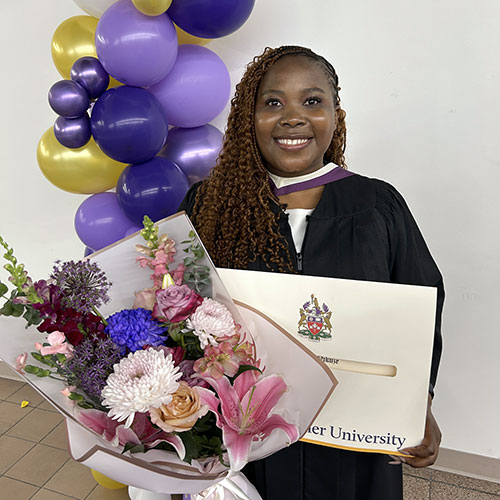
Born and raised in the Kyaka II Refugee Settlement in southwestern Uganda after her parents fled the genocide in Rwanda during the early 1990s, Stellah Nikuze (BSW '26) lived in the settlement until she came to Laurier as a Social Work student in 2023.
During her studies at Laurier, Nikuze accepted a two-year appointment on Refugee Advisory Group (RAG) of the United Nations High Commissioner for Refugees. RAG members have lived experience as refugees and promote meaningful participation in decision-making processes related to regional, national and global refugee issues.
Nikuze also served as the president of the World University Service of Canada (WUSC) chapter at Laurier’s Brantford campus and co-founded Hodari Foundation, a non-governmental organization that operates in Kyaka II.
After graduating in spring 2026, Nikuze accepted an offer from Oxford University’s Master of Public Policy program. She is focusing her graduate studies on advancing economic policies to better support women, girls and youth in central Africa.
Nikuze has also been named a Mastercard Foundation Scholar. The Mastercard Foundation Scholars Program is a global initiative designed to develop the next generation of transformative leaders by enabling highly talented, service-oriented young people to pursue higher education and cultivate their leadership potential.
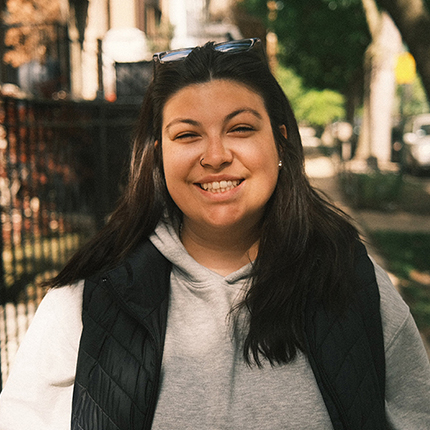
During her fourth-year BSW field placement at Brantford General Hospital — the very hospital in which she was born — Shy Traverse (BSW ’25) introduced clients of an outpatient mental health program to an innovative project that would leave a lasting impact. Combining art therapy with her BSW course learnings, Traverse invited participants to decorate “expression jars” and then fill them with handwritten affirmations they could revisit in difficult moments.
“The outpatient program emphasizes mindfulness and self-talk as important tools in dealing with daily stressors,” says Traverse. “The expression jars are an activity that encourages that kind of reflection, and one they can carry on after they leave the program.”
The forward-thinking initiative earned Traverse a Student Placement Project Award from the BSW field team at Laurier, as well as glowing praise from her hospital placement supervisor, Aimee Graham.
“It’s something that resonated with clients that we wouldn’t necessarily have tried,” says Graham. “With her training in social work, Shy approached the program with a slightly different lens. It’s something we’re going to continue doing with our clients going forward.”
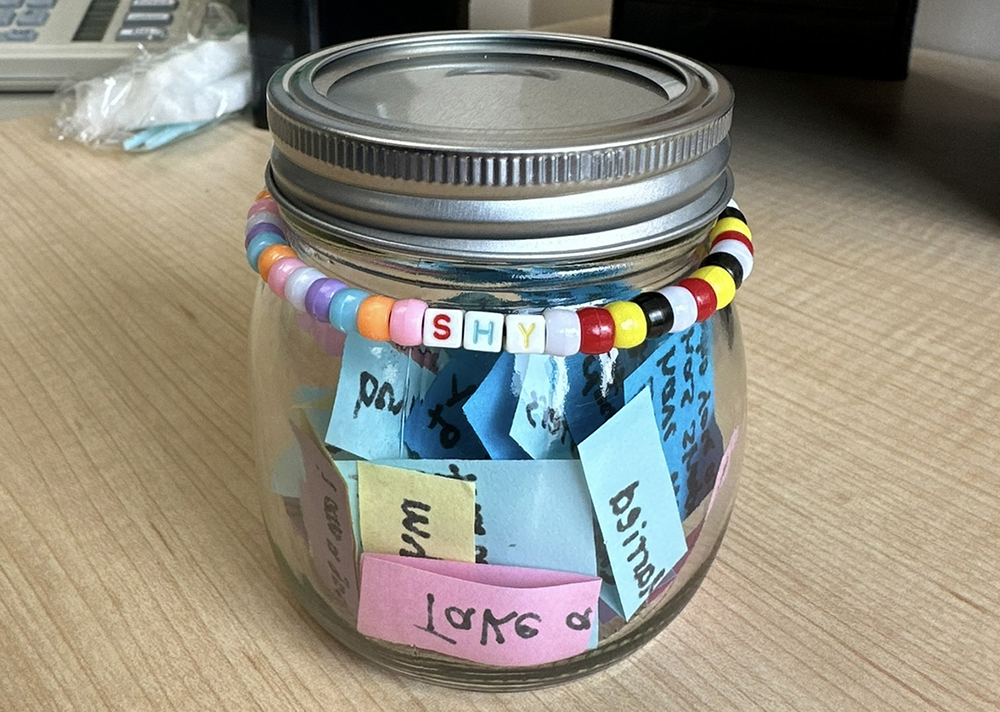
An expression jar created by Shy Traverse.
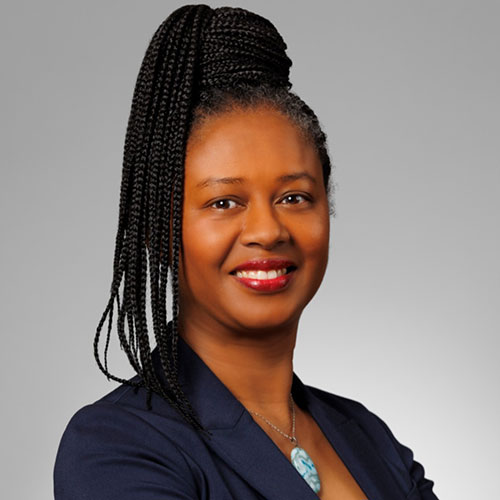
Through her research, Dalon Taylor (Social Work) is amplifying the voices and lived realities of Black and racialized people to help “outshine the stories that are meant to stigmatize and mislead.” She is exploring a range of topics connected to race and anti-Black racism, including immigration and health inequities, to “change the course of experience that results from them.”
“I hope my research will inform and educate, highlight empowering discoveries and perspectives, and help move societal systems, institutions and structures toward social justice,” says Taylor.
Currently, she is employing virtual reality technology to create immersive pathways for social work education and practice. One project uses mixed reality to build safe spaces for racialized youth exposed to violence.
Taylor is also interested in the effects of climate change on individual well-being in Small Island Developing States, a group of nations facing unique social, economic and environmental vulnerabilities. In Jamaica, she has partnered with local researchers and representatives of a primary school impacted by a recent hurricane to study community resilience and social stability in relation to climate action.
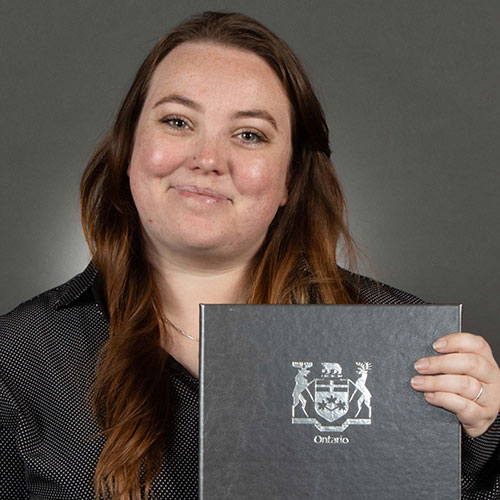
Ashton McCormick-Kelly, a Master of Social Work student, was awarded a Hilary M. Weston Scholarship by the Government of Ontario.
McCormick-Kelly lives with borderline personality disorder and pursued social work because of her desire to help others with similar mental health struggles. As a queer woman, she is interested in the intersections of identity. Her research is wide-ranging, focusing on women’s contraception, housing services for seniors and mental health treatment for individuals with disabilities.
“Marginalized groups continue to be invalidated and underrepresented and are expected to exist within a social service system that was largely built without their input,” says McCormick-Kelly. “This has led to inadequate services that lack awareness and connection to their histories of oppression.”
Inclusion is at the heart of McCormick-Kelly's research.
“I aim to make space for people who have been removed from, or neglected within, traditional research,” she says. “I want to enable them to have their voices heard and reclaim power that has been taken from them.”
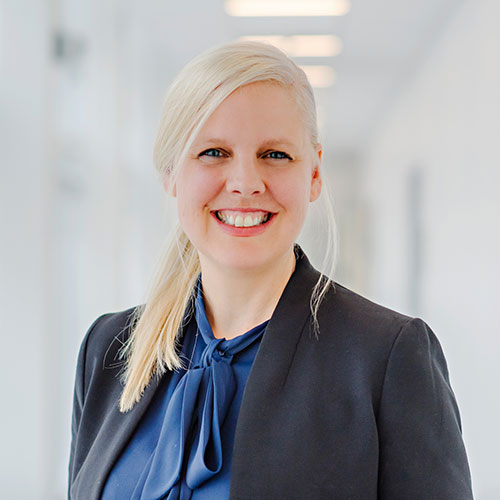
Following a successful first term, Social Work Professor Bree Akesson's position was renewed for an additional five years as the Canada Research Chair in Global Adversity and Well-Being.
Askesson's research examines how families survive in the face of extreme adversities including war, climate-induced disasters and displacement. Her research helps humanitarian workers, policymakers and communities respond to families in crisis. Recent research includes working with Rohingya communities displaced from Myanmar and living in Bangladesh, and Palestinian communities in the West Bank and Gaza.
The Canada Research Chairs (CRC) Program attracts and retains some of the world’s most accomplished and promising minds. Chairholders receive research funding, including support for student researchers. Laurier is currently home to 11 CRCs.
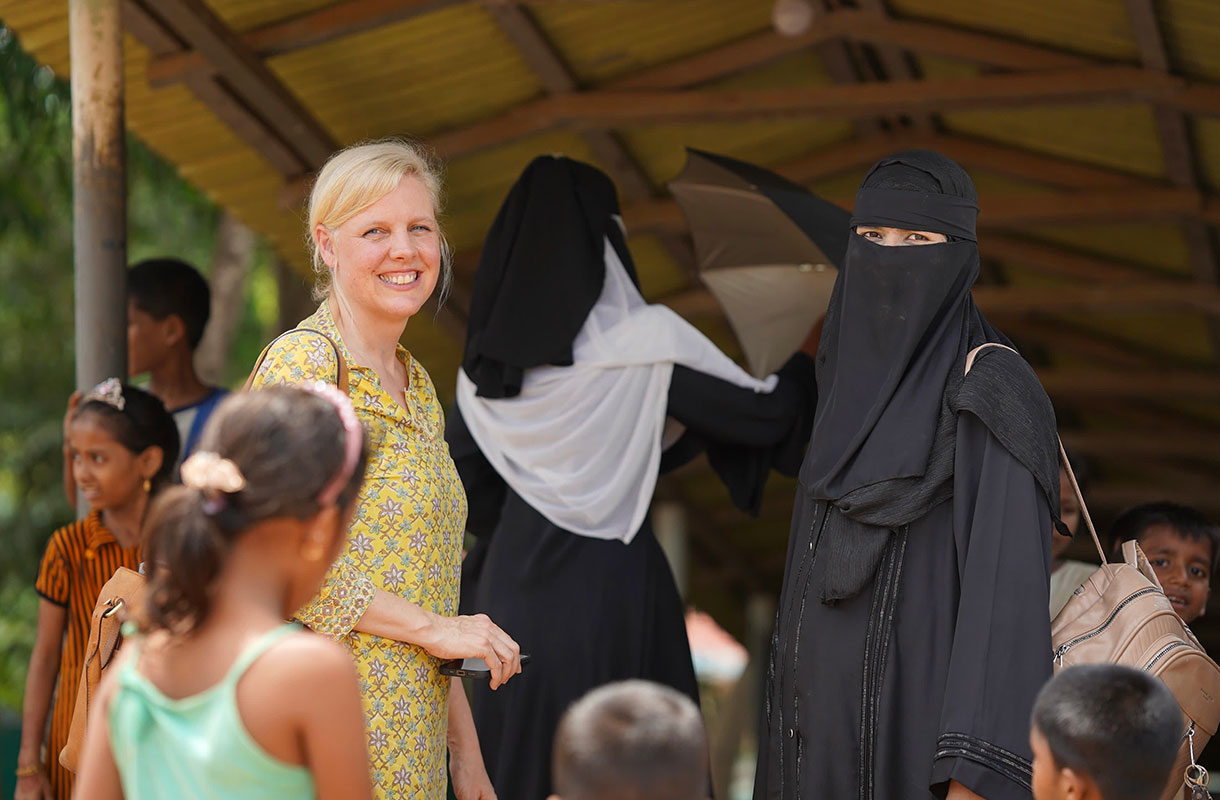
Bree Akesson at a refugee camp in Bangladesh in 2025.