


We use cookies on this site to enhance your experience.
By selecting “Accept” and continuing to use this website, you consent to the use of cookies.

May 21, 2026
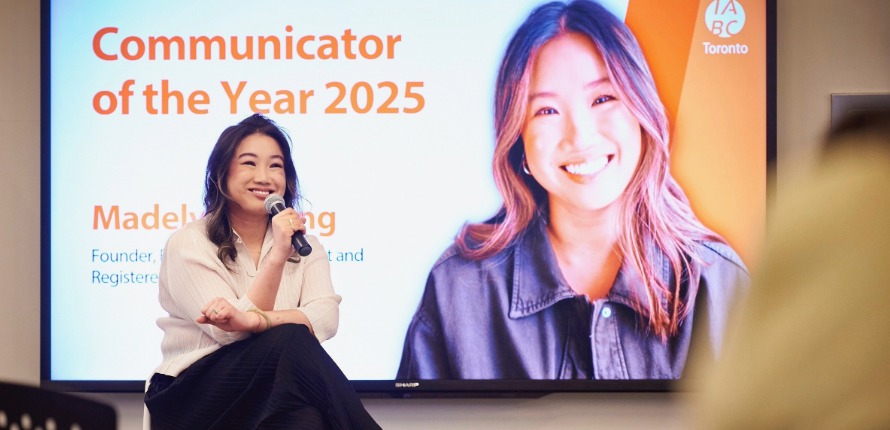
Print | PDFWilfrid Laurier University Master of Music Therapy alum Madelyn Chung (MMT ’21) has been named communicator of the year by the International Association of Business Communicators (IABC) Toronto chapter. Chung was recognized for amplifying marginalized voices and experiences through building the RepresentASIAN Project, as well as her dedication to mental wellness as a registered psychotherapist and founder of the Blossom Mental Health Fund.
“Madelyn is focused on tackling negative stereotypes and building empathy through her advocacy and storytelling,” says Amie Silverwood, president of IABC/Toronto.
IABC/Toronto’s communicator of the year award celebrates leaders who use communication to inspire change and strengthen communities.
Chung began her career as a journalist, working in fashion and lifestyle media for more than eight years. Although it had been her dream since her teenage years, she became disillusioned with the industry and felt something was missing.
A passion for music was deeply ingrained in Chung by her family. When the classically trained pianist saw a music therapy demonstration, it led her to her next chapter in Laurier’s Master of Music Therapy program.
“Seeing music therapy in action moved me to tears,” says Chung. “I called my mom sobbing and said, this is it. This is what I want to do.”
Laurier’s Master of Music Therapy is currently the only music therapy program in Canada recognized by the College of Registered Psychotherapists of Ontario (CRPO), enabling graduates to work in the regulated field of psychotherapy.
While studying to become a psychotherapist, Chung continued to work as a freelance journalist, pitching stories about her community and her own lived experiences as a Chinese-Canadian woman to media outlets.
“I was writing more from the lens of my own identity,” she says. “A lot of the places that I pitched to said that my perspective was too niche.”
Frustrated by her experience, Chung conceived the RepresentASIAN Project to tell the stories that were important to her but weren’t being told. Launched on March 11, 2020 – the day the World Health Organization declared COVID-19 a worldwide pandemic – the project provided a much-needed outlet during a challenging time.
“It turned out to be such a lifeline of community for the Asian diaspora and for myself to process everything that was happening,” says Chung. “And it’s grown into an incredibly engaged community.”
The RepresentASIAN Project includes interviews with successful creative individuals – including Maggie Kang, the creator of K-Pop Demon Hunters – as well as gift guides featuring Asian-owned businesses. It also features long-form videos, including GENERASIANS, a docuseries that examines Asian Canadian family businesses as they transition to the next generation of owner-operators.
“These are not stories that we typically see in mainstream media, but they are important and valuable nonetheless,” says Chung.
Chung extended the positive impact of the RepresentASIAN Project to tackle a gap in health care, where Asian North Americans are significantly less likely to access mental health services than other segments of the population.
In 2023, she launched the Blossom Mental Health Fund, a registered non-profit focused on supporting the mental health of Asian Canadians by normalizing discussions about mental health through storytelling, removing financial barriers to therapy through grants and providing culturally specific resources.
“Music is such a powerful tool for exploring and expressing your emotions, especially if you have difficulty doing it through words,” she says. “Laurier’s program helped me tremendously in my role as a registered psychotherapist.”
Today, Chung continues her psychotherapy practice, supporting Asian women navigating racial and intergenerational trauma, while growing RepresentASIAN Project as a platform for community storytelling.
“As immigrants or children of immigrants, we often see stories told about us, but not by us,” she says. “The important thing is owning our stories and telling them in ways that are accurate and authentic.”