

We use cookies on this site to enhance your experience.
By selecting “Accept” and continuing to use this website, you consent to the use of cookies.
Jan. 12, 2026
Print | PDFFor more than two decades, downtown Brantford has been shaped by the students who live, work and learn there. In December, that presence became even more visible as Wilfrid Laurier University User Experience Design Master’s students unveiled smart-city concepts designed to make the city’s core safer, more connected and more welcoming.
The community presentations at One Market marked the culmination of a semester-long civic innovation project developed in collaboration with the Workforce Planning Board of Grand Erie aimed at improving safety, accessibility and user experience in the city’s core.
Guided by the ICF Canada Smart City framework, eight student teams in the course UX600: Human Centred Design unveiled working prototypes designed to integrate the Laurier campus more meaningfully into downtown life and advance Brantford’s transition toward a more connected urban environment. The projects were part of the Client Projects course in the Master of Science (MSc) in User Experience Design program.
“We can always learn from great ideas,” says Danette Dalton, executive director of the Workforce Planning Board of Grand Erie. “Students are a huge part of downtown – they live here, they work here – and this project gives them a meaningful way to contribute to the community they’re a part of.”
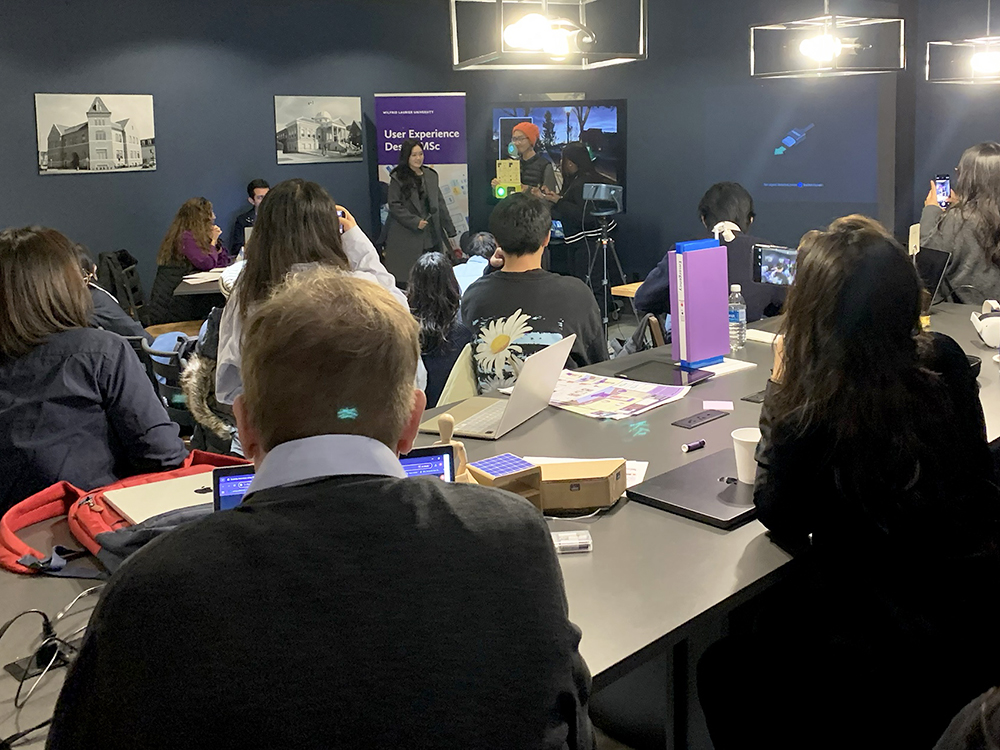
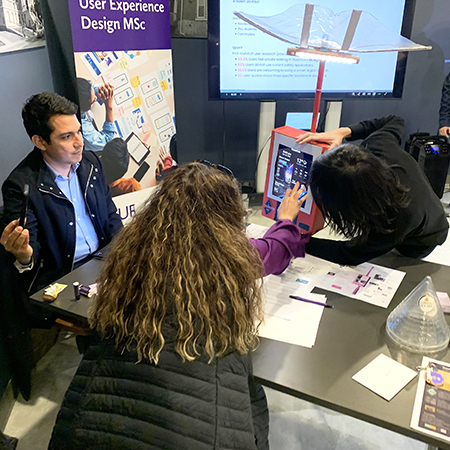
Laurier User Experience Design Master’s students recently unveiled smart-city concepts designed to make Brantford’s downtown core safer, more connected and more welcoming.
The project was in response to growing evidence that downtown user experience, accessibility and safety directly influence workforce attraction, retention and participation. With postsecondary students representing a significant and growing segment of Brantford’s current and future workforce, the board identified smart-city design as a practical way to explore how the downtown core can better support people who live, study and work there.
By focusing the project on downtown Brantford, the Workforce Planning Board aimed to connect workforce development priorities, including labour-force engagement, transit access and inclusive public spaces, with student-led innovation and real-world design thinking.
During the fall term, students worked through months of user interviews, stakeholder engagement opportunities and design iterations to produce concepts addressing transit access, safety, civic information and public space activation. Their final presentations included:
For many students, the project provided a first opportunity to apply their design training to challenges with direct community implications. Assistant Professor John E. Muñoz, who led the UX600 course, notes that the student projects were built on real-world research.
“Students conducted interviews, gathered user feedback and iterated their designs based on what they learned,” says Muñoz. “Human-centred design was the goal.”
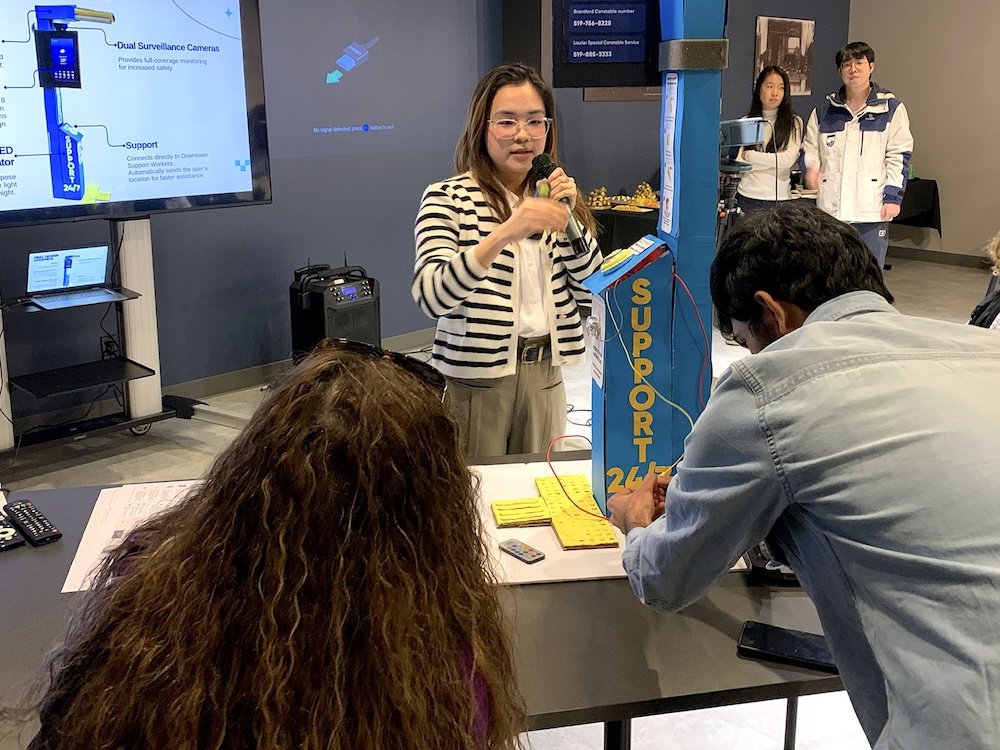
Students prepare a prototype during presentations by Laurier User Experience Design Master’s students.
The collaboration with the Workforce Planning Board of Grand Erie was shaped by the board’s Workforce Strategy, which focuses on strengthening the region’s talent pipeline by aligning education, employer needs and community conditions that support labour-force participation.
As the organization responsible for understanding labour-market trends across Six Nations of the Grand River, Mississaugas of the Credit First Nation, Brantford, Brant, Haldimand and Norfolk, the board identified downtown livability, accessibility and safety as factors that directly affect workforce attraction and retention, particularly for students and early-career workers.
Dalton says the project reflects the board’s commitment to engaging students as both a current and future workforce, while giving employers greater visibility into the skills being developed locally.
“Engaging with the future workforce is essential,” says Dalton. “We want local employers to see the skills and abilities students bring, and events like this shine a light on that talent.”
The project offered students hands-on experience in client engagement, project iteration and public presentation, skills the UX program emphasizes. Assistant Professor Sadeem Qureshi, Laurier’s User Experience Design graduate program coordinator, says the real-world pace challenged students to adapt quickly.
“When you’re working with clients in UX design, there are changes you have to manage and sometimes the turnaround time is fast,” says Qureshi. “These are things we work to train students in – and the best part is they get to learn that while working with real clients.
“And when they present their ideas, they have to tell a story that resonates, a skill they’ll need whether they’re presenting to CEOs or doctors in the future.”
“Engaging with the future workforce is essential. We want local employers to see the skills and abilities students bring, and events like this shine a light on that talent.” – Danette Dalton
For the student teams, the assignment was both challenging and energizing. Student Swarali Gogate describes the opportunity to help create and present her group’s project as “daunting,” but ultimately transformative.
“We were a multicultural team with lots of diversity,” says Gogate, whose group presented the Bus Information Kiosk project. “But we found a way to communicate and bring everything together. Delegation and communication were the key parts but, once we got those sorted, we were able to present an idea we were proud of.”
Muñoz echoed that sentiment, noting that one of the most powerful parts of the project was seeing students from more than 15 countries in his diverse class come together to design innovations for downtown Brantford.
“I think that’s one of the most interesting aspects of this course – having students from a diversity of nationalities and backgrounds, all of them thinking about solutions for downtown Brantford,” says Muñoz. “I think that’s unique.”
Following the presentations, Dalton praised the students’ work, adding that the projects presented underscored the value of bringing student insight into local conversations.
“These ideas show what’s possible when we ask students to help shape the community,” says Dalton. “There’s a lot of value in that, and a lot that was presented here worth exploring.”