


We use cookies on this site to enhance your experience.
By selecting “Accept” and continuing to use this website, you consent to the use of cookies.

Search for academic programs, residence, tours and events and more.
Dec. 2, 2025
Print | PDFWilfrid Laurier University is expanding its STEM footprint and reshaping tech education in Halton Region with the launch of its first-ever engineering degree: the Bachelor of Engineering in Software Engineering, which will welcome its inaugural cohort to Laurier’s Milton campus in fall 2026.
Laurier’s Software Engineering program is intentionally designed to prepare students for meaningful, future-ready careers while supporting their success at every step. Small class sizes, modern learning spaces, personalized faculty mentorship and balanced course schedules create an environment where students can thrive academically and personally.
“Laurier’s Software Engineering program is built around the needs of students; preparing them with the skills, technologies and real-world experience required to step confidently into industry the moment they graduate,” says Assistant Professor Saiqa Aleem, program coordinator of Laurier’s Software Engineering program.
The new program will emphasize software systems that benefit people and the environment, with students studying disciplines including cognitive science, artificial intelligence, user experience design and climate science. Upon completion, students will be prepared for careers in rapidly growing fields including software systems engineering, artificial intelligence, human-centred computing (HCI), climate modelling, psychoinformatics, bioinformatics and more.
Software Engineering students can tailor their studies through two embedded streams: Biology or Psychology and Cognitive Science, matching their interests.
The program focuses on a People and Planet specialization, dedicated to addressing real-world social, environmental and economic challenges.
“Students graduate with high-demand skills to help solve global challenges through purpose-driven engineering,” says Aleem. “Our small class sizes create meaningful engagement and interaction, offering students a strong sense of community and personalized support from professors.”
Classroom learning is enhanced by interdisciplinary courses in physics, chemistry, biology, psychology and history, providing students with a broad foundation for the modern workforce. Students tailor their studies through two embedded streams: Biology or Psychology and Cognitive Science, matching their interests. From the start, they work with modern technologies and engage in integrated, project-based experiences that replicate professional workflows of software teams.
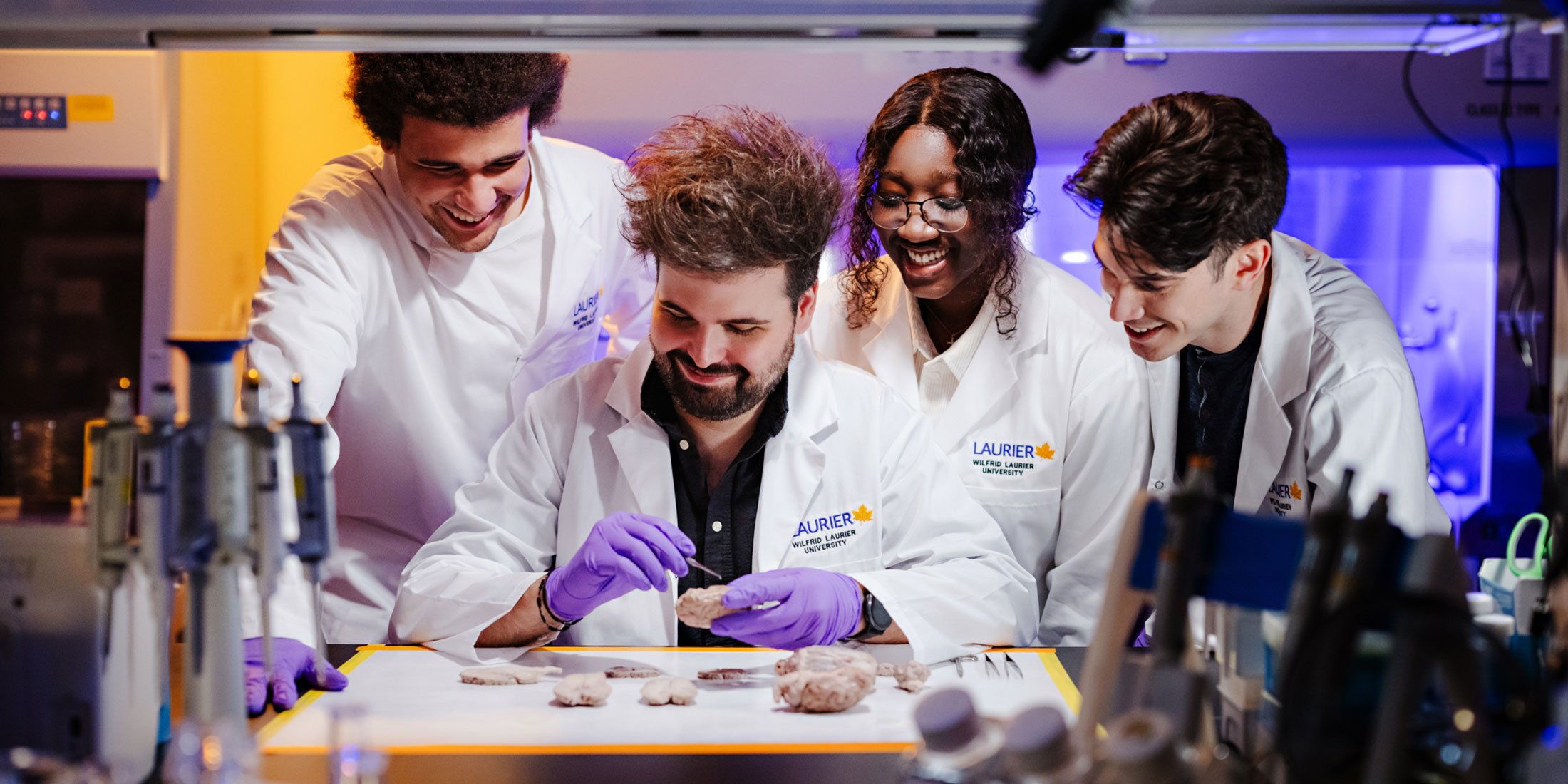
Students receive mentorship as they engage in hands-on experiences, from mandatory courses in software engineering design to technical elective courses such as Web Application Development, Intelligent Robotics: Design and Safety, and Embedded Software Systems. They finish with a capstone project that showcases their technical depth and creativity, building a strong professional portfolio along the way.
Laurier’s Milton Academic Centre sits in a booming tech region, creating strong connections to industry, research partners and employers.
Laurier’s Bachelor of Engineering in Software Engineering will offer a student-centred academic experience, including modern labs, accessible faculty members and access to academic supports. The Laurier Milton Academic Centre at 555 Industrial Drive is located in one of Ontario’s fastest-growing innovation corridors – providing links to local employers and community partners – and designed to serve commuter students in Halton Region seeking to study close to home.
Additional programs offered at the Milton campus include Business Technology Management, Computer Science and Psychology.
“The Software Engineering program positions graduates to contribute directly to innovation and economic growth across Halton Region and Ontario,” says Aleem. “It will also serve to enhance Laurier’s connections with industry through research, partnerships and co-op experiences.”
Experiential learning is embedded throughout Laurier’s Software Engineering degree. Students can apply for competitive-entry co-op after their first year and those admitted will gain 12 to 16 months of work experience before completing the program.
The program is built to meet Canadian Engineering Accreditation Board standards, with plans to pursue accreditation after the first cohort completes their degrees, allowing graduates to pursue their Professional Engineering (P.Eng.) designation.
“Laurier’s Software Engineering program is built around the needs of students; preparing them with the skills, technologies and real-world experience required to step confidently into industry the moment they graduate.” – Assistant Professor Saiqa Aleem
Incoming undergraduate students entering the Software Engineering program at Laurier Milton are also eligible for a competitive entrance scholarship. Awarded to a select group of applicants with the highest admission averages at the time of offer, this renewable scholarship provides $5,000 over four years ($1,250 per year).
As Laurier prepares to welcome its first group of Software Engineering students in 2026, the program reflects a broader commitment: to educate innovators who are job-ready, supported and prepared to make a meaningful difference in a rapidly evolving technological landscape.
“Laurier’s Software Engineering courses will encourage students to consider the ethical, societal and environmental implications of technology, reinforcing the university’s commitment to socially responsible innovation,” says Trish McLaren, Laurier’s acting provost and vice-president: academic. “We’re thrilled to offer this program to students passionate about technology’s role in solving societal issues.”
Applications for the Bachelor of Engineering in Software Engineering program are now open, with a deadline of Jan. 15, 2026 for studies beginning in fall 2026.
Learn more about Laurier’s Bachelor of Engineering in Software Engineering degree and the university’s Milton campus.
With hands-on preparation for careers in software systems engineering, artificial intelligence, human-centred computing, climate modelling, psychoinformatics and bioinformatics, Laurier’s Software Engineering program blends software engineering with physics, chemistry, biology, psychology and history – offering broad training for the workforce.
Hands-on experiences like designing software systems, building full-stack web platforms, programming robots and developing embedded systems help students build strong, professional, industry-ready portfolios. Competitive-entry co-op gives admitted students 12 to 16 months of work experience, strengthening their employability.
With small class sizes, personalized faculty mentorship and balanced course schedules, students receive individualized attention and support throughout their degree. The program’s student-centred design ensures learners can thrive both academically and personally.
Laurier’s Software Engineering degree emphasizes building technologies that benefit people and the planet. The program is centered around a People and Planet focus and students graduate ready to design technologies that make a meaningful impact on social, environmental and economic challenges.
Laurier’s Milton Academic Centre sits in a booming tech region, creating strong connections to industry, research partners and employers. Students benefit from proximity to the Halton innovation ecosystem.