April 14, 2026
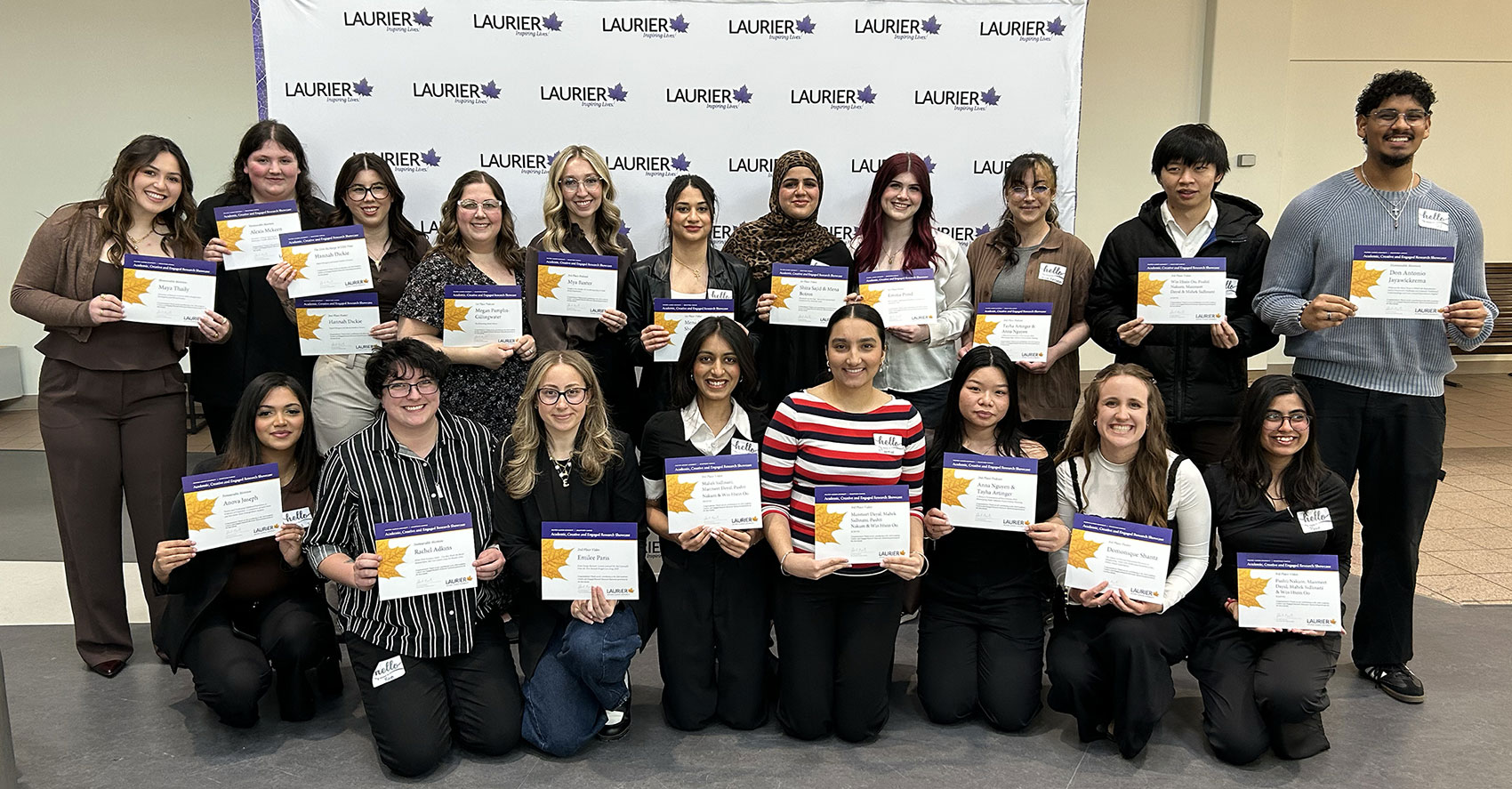
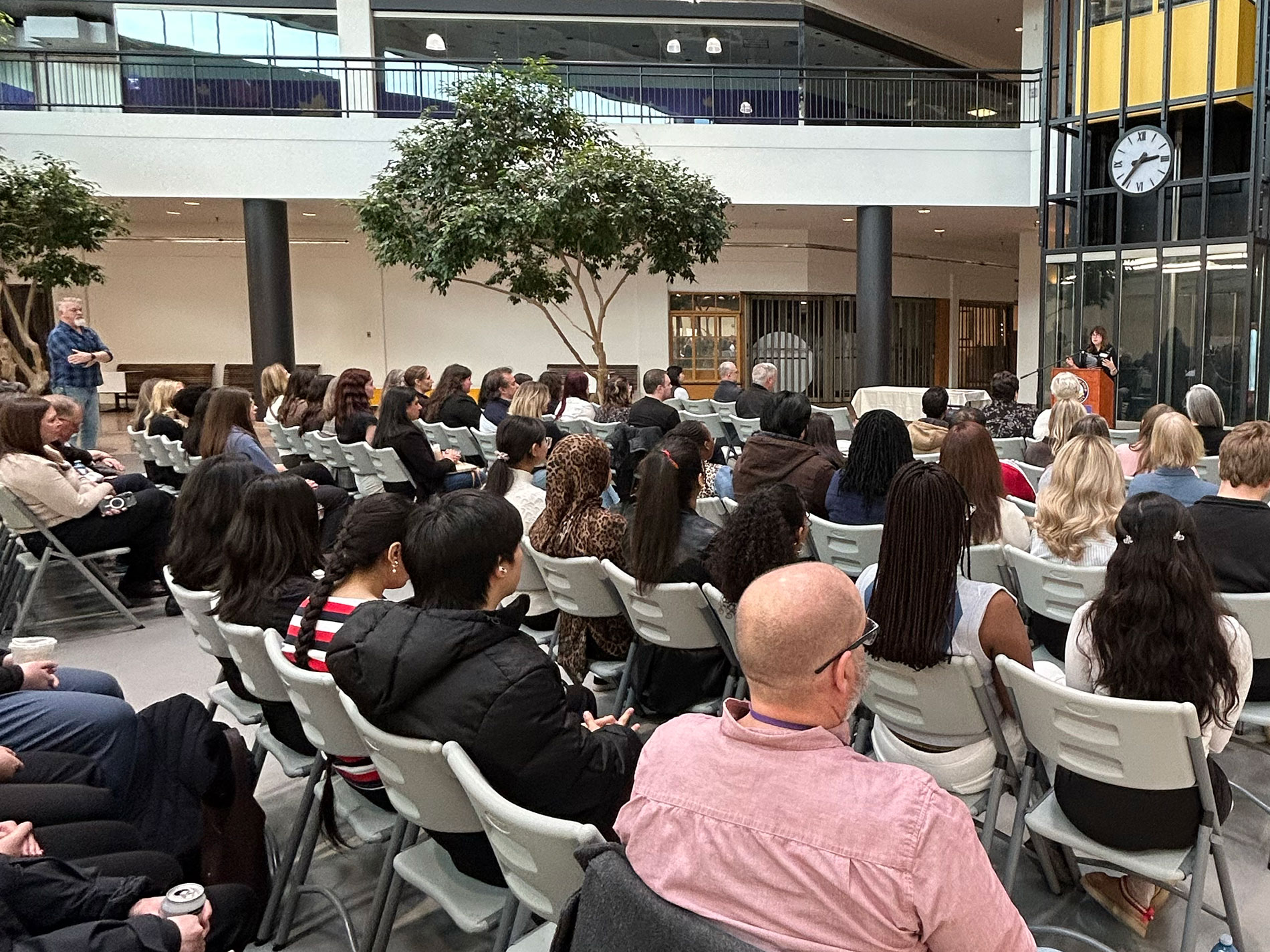
Students, faculty, staff and community members celebrated outstanding undergraduate student research at Wilfrid Laurier University’s Academic, Creative and Engaged Research Showcase (ACERS) on March 19.
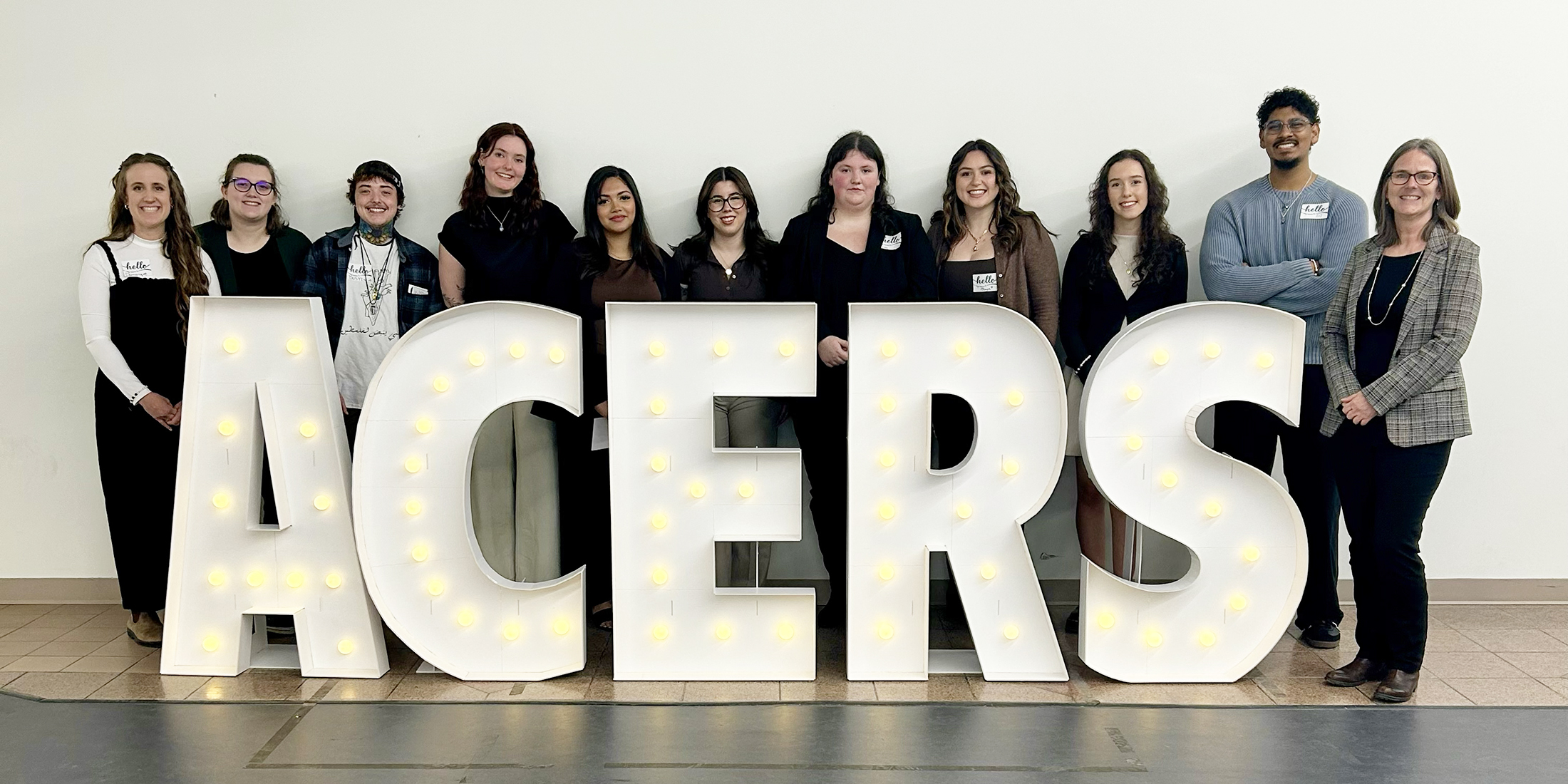
Hosted at Laurier’s Brantford campus, the 10th annual ACERS event gave students the opportunity to present multidisciplinary research projects to peers and the broader university community while competing for over $5,000 in cash prizes. More than 30 student researchers participated in this year’s event, exploring subjects ranging from DNA phenotyping to video game design.
Thanks to a generous donation from the Race family, along with support from Laurier’s Sustainability Office, grand prize winners in the categories of poster, podcast and video received $750 each. Second- and third-place winners in each category received $500 and $250, respectively. Six submissions received honourable mention prizes of $100 each and the Early Year Researcher Award granted $500 to a standout project by a first- or second-year student.
This year’s program introduced the Erin McHarge ACERS Prize, a $250 award recognizing outstanding student research in the field of gender, sexuality, feminism and LGBTQ+ identity. McHarge, an alum of Laurier’s Brantford campus and a former first-place ACERS winner, was on hand to present the inaugural award.
“Congratulations to this year’s ACERS winners,” says Jonathan Newman, Laurier’s vice-president: research. “They have demonstrated what undergraduate research at its best looks like: rigorous inquiry paired with clear, compelling communication. It’s a privilege to recognize their work and I look forward to seeing where their research journeys take them.”
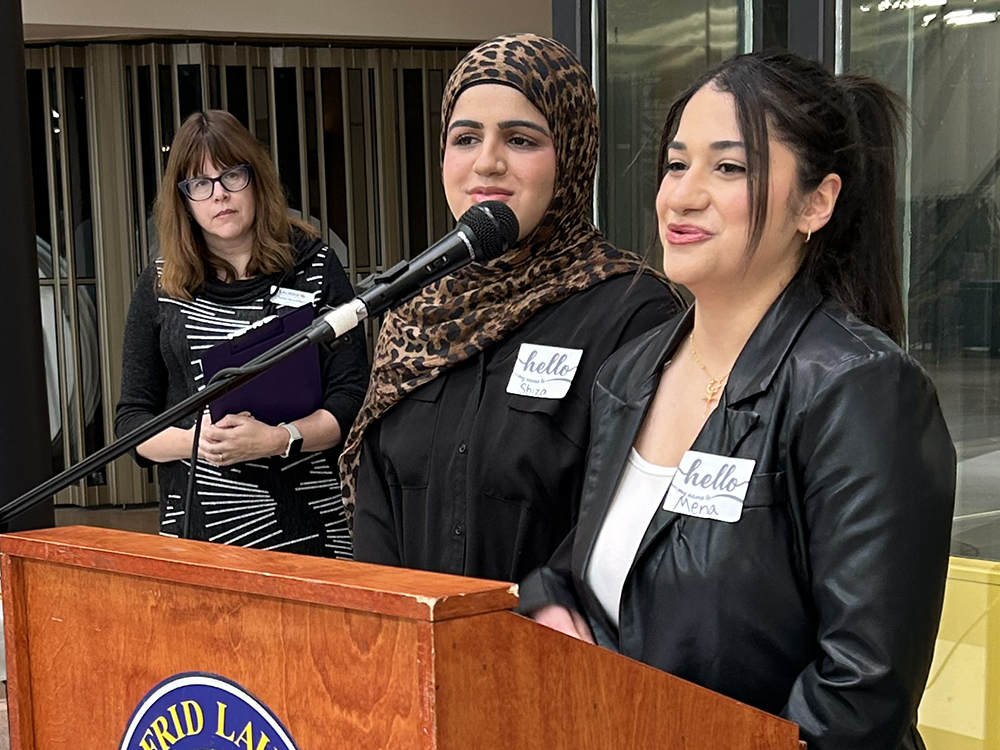
It turns out your four-legged friend doesn’t have to be Scooby-Doo to help identify a criminal. In their grand-prize winning video, third-year Applied Health Sciences students Mena Botros and Shiza Sajid explored how forensic investigators are tapping an unconventional source of canine DNA evidence to solve murders. In the cases they cited, footprints in dog feces found at crime scenes were matched to suspects’ shoes — what they describe as a “forensic version of Cinderella, except instead of a glass slipper, it’s ‘Whose shoe fits the dog poo?’”
What put you on the trail of animal fecal forensics?
MB: It started as an end-of-term assignment for Forensic Laboratory Methods I with Assistant Professor Nathan Vo. He’d prepared a list of potential topics and when it was finally our turn to choose this was the only one left! We had a good laugh about it but then realized the potential: the whole point of ACERS is to shine a light on research and this was an area of forensic research that most people — even those studying forensics — aren’t familiar with.
In your video, you convey the complexities of DNA in a way that’s accessible to the layperson, without talking down to them. How did you manage that?
SS: We went into this with an awareness that our audience wouldn’t necessarily have the same scientific background that we do. Each term that we wanted to include in the script, we went back and asked ourselves, “Are we going to lose them with that reference? Are they going to have a question at this point?” We could then include that question in the script, with one of us asking and the other responding in a natural back and forth. It was a challenge, but a fun one.
MB: The video format helped, too. We broke down complicated scientific concepts into bullet points for a quick biology refresher, illustrated with visuals and animations, before getting into the case studies.
Further complicating the science, you report there’s more than one type of DNA in dog feces.
MB: Exactly. Mitochondrial DNA tends to be abundant in dog feces and can be useful as secondary evidence, narrowing down a field of suspects. The rarer nuclear DNA — if present and not degraded by outdoor conditions — is the gold standard in forensic profiling, capable of providing a 1 in 1.16 billion match.
Speaking of accuracy, how realistic are the depictions of forensic profiling in pop culture?
SS: A lot of the time they don’t get into the methodology and the hard work that goes into cleaning samples, extracting the DNA and then trying out different methods of analysis. It isn’t glamorous work and it’s not always fingerprints or blood spatter that cracks the case — it could be something like this.
Second place: Emilee Paris — From Energy Burnout: Lessons Learned (Or Not Learned?) from the Now Banned Weight Loss Drug, DNP
Third place: Mahek Sidhnani, Manmeet Dayal, Pushti Nakum and Win Htein Oo — ECHIVES
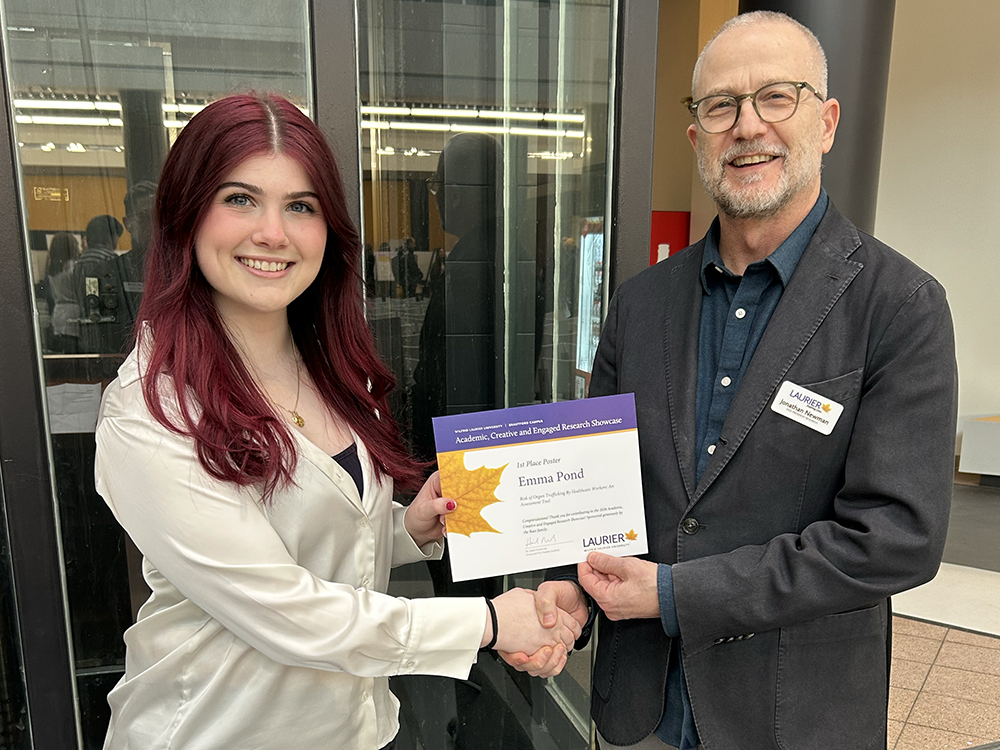
After presenting at ACERS 2025, third-year Criminology and Psychology student Emma Pond wasted no time getting started on her next submission. Despite not having placed, she left the competition with a renewed desire to succeed and a better understanding of how to bring home the gold. This time, she would apply a more research-driven approach to her project while pursuing a subject that she found endlessly fascinating. The result? A nomination from Associate Professor Jennifer Lavoie and a grand prize for developing a tool that helps flag health care workers who may be involved in the international trafficking of black-market organs.
What is it about organ trafficking that piques your interest?
EP: The unrealized scale of it all. Even though an estimated 10 per cent of organ transplants worldwide are performed with black market organs, it’s under-researched and I want to play a part in answering all those unanswered questions. My initial investigation revealed the prevention strategies that are currently in place aren’t very effective on a global scale, so I focused my research on developing a questionnaire that serves as a risk assessment tool.
What risk factors does the tool capture?
EP: People engaged in human trafficking for organ removal (HTOR) tend to be overworked, underpaid and easily manipulated, to the extent that they may not even realize that they’re being exploited by a criminal network. Health care workers who are involved — because this is a medically dependent crime — tend to have a history of ethical violations, pro-criminal attitudes and familiarity with criminal networks, even if they aren’t directly connected.
Besides the increased emphasis on research, what made this year’s entry stronger than your previous one?
EP: I incorporated infographics into my poster design and they added so much. Displaying research findings like HTOR routes on a world map with arrows and showing the black-market value of organs on a diagram of the human body conveys the information clearly and with an impact that text alone doesn’t always deliver.
Will you be taking your research any further?
EP: Next year, I plan to take Laurier Brantford’s Thesis Course and that would be the perfect opportunity to put this risk assessment tool to the test. I’d love to come back to ACERS 2027 to share the empirical evidence and results.
Second place: Hannah Dickie — Digital Misogyny and Mental Health in Women
Third place: Domonique Shantz — The Impact of Parental Educational Resources in Safeguarding Youth with Intellectual Disabilities from Online Sexual Exploitation
Honourable mentions:
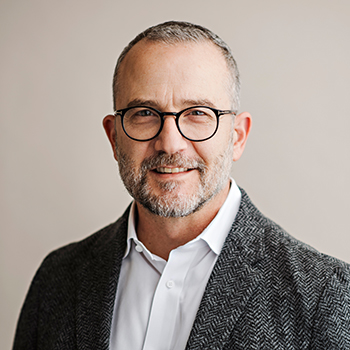
“Undergraduate research matters because it changes how you see the world. You learn how to ask better questions, how to deal with uncertainty and how to persist when the answers are not immediately clear. Those are not just academic skills — they are life skills.”
Jonathan Newman, vice-president: research
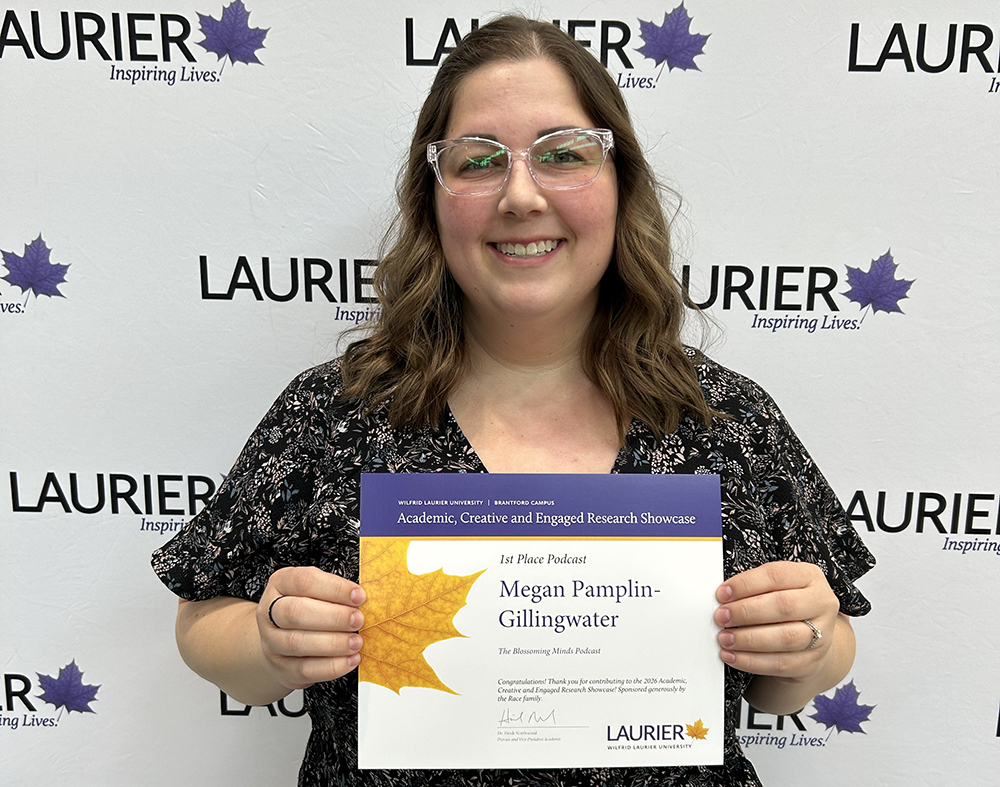
For Megan Pamplin-Gillingwater, a first-year student in Laurier Brantford’s Bachelor of Education program, engaging in research is an investment in her future as a teacher.
“I’m always thinking about how I can get students excited about school when I become an educator,” says the Brantford resident. “My own kids love being outside, so exploring the benefits of outdoor education was a natural direction for my research.”
More than merely shaping Pamplin-Gillingwater’s project, her boys, aged six and eight, also helped bring its central theme — the merits of learning in nature — to life. They appeared as featured guests on the podcast-style presentation, which ultimately earned an ACERS grand prize.
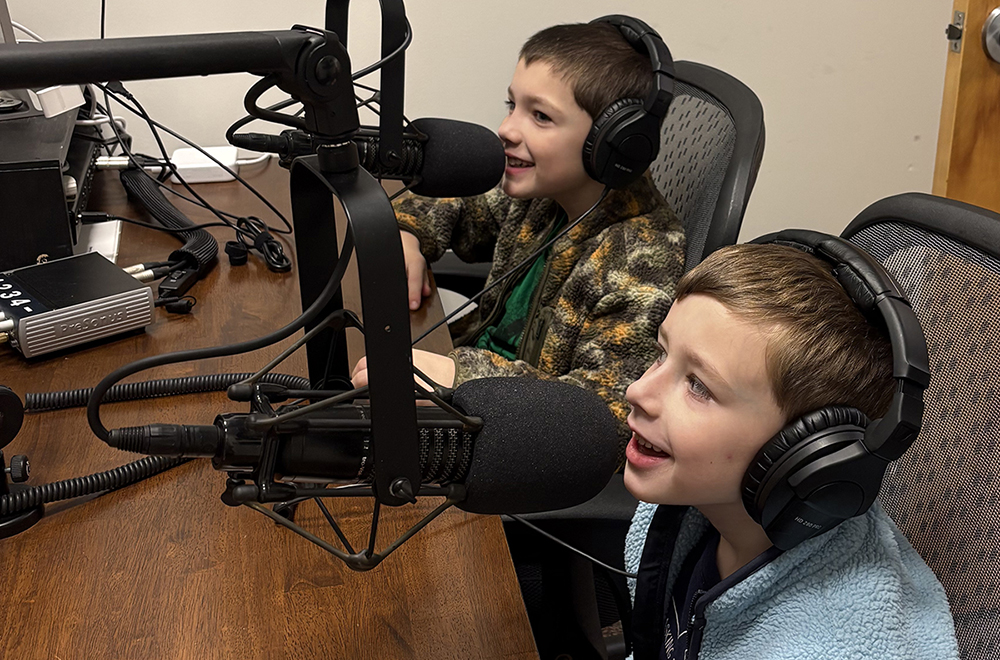
How did the recording of your ACERS submission become a family affair?
MPG: Since I was talking about children, it felt important to include their voices in the conversation. It took a bit of persuading to get Leo and Noah on board, but it worked out great.
What did you learn about the podcast recording process?
MPG: That I’m not very good at it! Thankfully, Laurier Brantford has a Podcast Studio with a podcaster-in-residence, Avery Moore Kloss. She is absolutely fantastic and helped produce something that was so much more professional than I could have recorded on my phone. It was really exciting for my kids, too — especially getting to speak into those big studio microphones.
What’s the most convincing argument for the expansion of outdoor education opportunities?
MPG: Research shows learning in nature supports academic success, mental health and engagement. Instead of relying on math cubes, for example, students can count stones, twigs and leaves — real-world materials that make learning more tangible.
Given the benefits, what’s preventing its widespread adoption?
MPG: Not every school has access to a suitable outdoor space. If you’re going to be counting twigs and leaves, you first need trees. You also need to get teachers excited about the opportunities, reimagining education beyond printed worksheets and the traditional classroom setting. And there are socioeconomic hurdles to consider, like ensuring every student has proper weatherproof clothing. It’s sad to think that not every child has what they need for a day outside, but it’s a real concern.
If you had the resources, what would your ideal scenario look like?
MPG: I’d love to pilot an outdoor education program in my own classroom. Even creating a simple outdoor learning space — tree stumps for seating, a garden where students can count seeds and measure plant growth — would be an incredible start.
Second place: Anna Nguyen and Tayha Artinger — A Biosocial Examination of How Forensic DNA Phenotyping Might Influence Future Family Planning
Third place: Mya Baxter — Caught in the Middle: AI’s Conflicting Roles in Child Sexual Exploitation
Honourable Mentions:
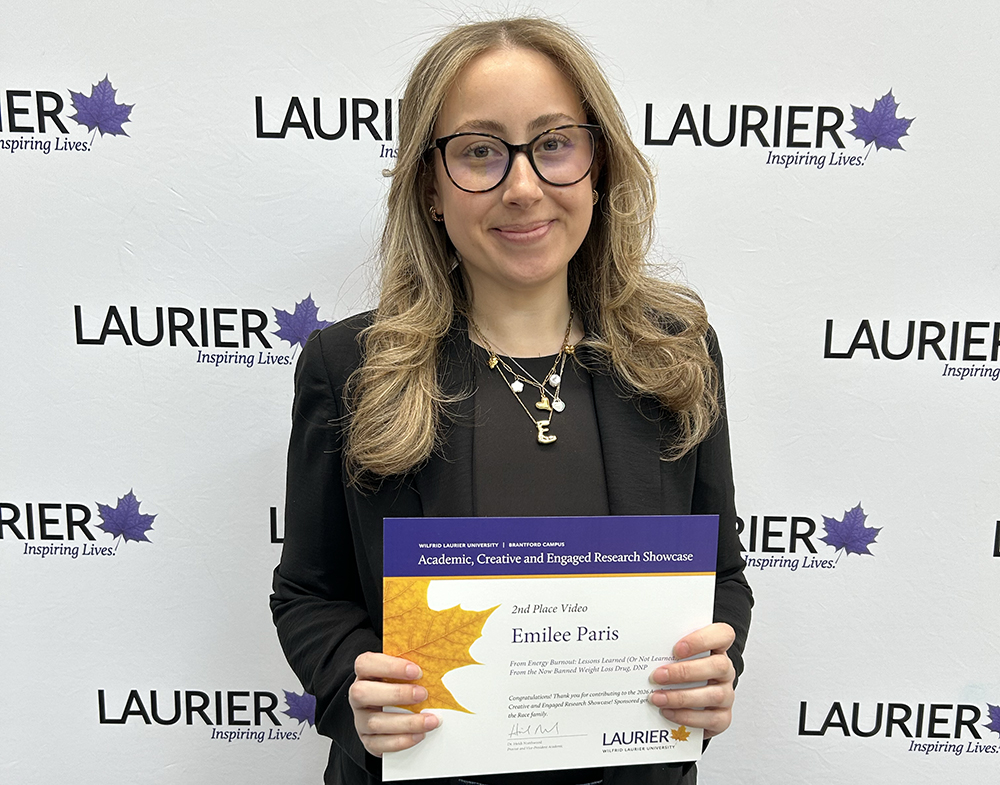
Marketed as a magic pill for weight loss during the 1930s — and very quickly banned as a toxic substance — the drug known as DNP (2,4-Dinitrophenol) has nonetheless proven difficult to stamp out completely. As Emilee Paris discovered in her research for Assistant Professor Nathan Vo’s course on Unifying Life Processes, it’s even experiencing a comeback.
“Social media really pushes weight loss culture,” says Paris. “This project really opened my eyes to the risk of using drugs to meet unrealistic body standards.”
Building on the work she’d started in Vo’s class, Paris explored both the toxicity of DNP and its re-emergence on the black market. Her professor nominated the project for ACERS, where it earned not only second place in the video category, but also the Early Year Researcher Award, recognizing the top submission from a first- or second-year student.
What makes DNP so toxic?
EP: The body’s cells have tiny “power plants” inside them that convert food into usable energy. Imagine that power plant as a hydroelectric dam. DNP punches holes in the dam, so instead of spinning the turbine to generate the energy which powers all bodily functions, the water gets wasted — in this case, as heat. That creates chaos in the body, with symptoms including everything from high fever to seizures and even cardiac arrest.
Why are people still taking it, given the overwhelming evidence that it’s dangerous?
EP: I’ve noticed a subtle shift on social media over the past year. The conversation has moved from body positivity and wellness toward rapid weight loss and chemical shortcuts — essentially bypassing the healthy habits that can, over time, result in sustainable weight loss. Drugs like DNP that deliver fast, extreme results are particularly popular among bodybuilders trying to cut weight before competitions and it can be found in just about any gym.
You cite the tragic case of Eloise Perry, a young woman who suffered from an eating disorder and died from DNP poisoning. How do we prevent further fatalities?
EP: By spreading awareness. Even people selling DNP on the black market don’t always realize how harmful it can be. It doesn’t help that the drug is sold under so many different street names and, as an illegal substance, obviously doesn’t come with warning labels. Entering this project in ACERS has been an amazing opportunity to highlight the issue and spark some important conversations.
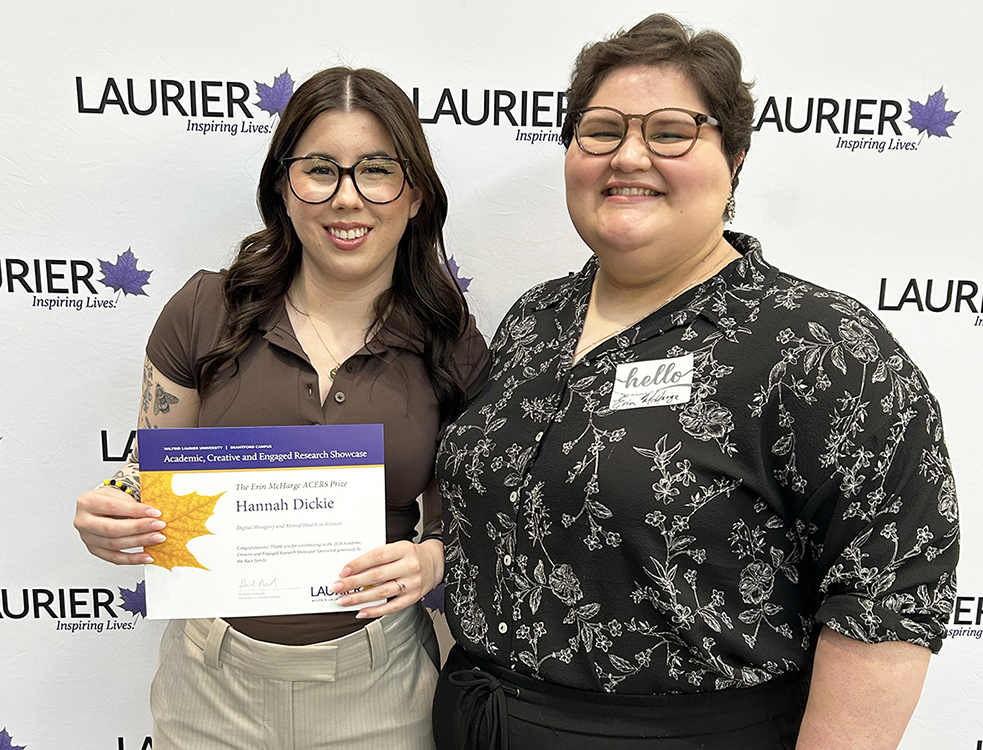
Faced with a burning question that even a comprehensive literature review couldn’t answer, fourth-year Psychology student Hannah Dickie did what passionate researchers do: she designed a study to answer it herself.
Troubled by the rise of “red pill” content online — a form of digital misogyny rooted in extreme conservatism, rigid gender roles and heteronormativity — Dickie set out to examine its impact on women’s mental health. Her findings, obtained through an original study of more than 300 women, earned her second place in the ACERS poster category along with the inaugural Erin McHarge ACERS Prize recognizing outstanding research in the field of gender, sexuality, feminism and LGBTQ+ identity.
What makes red pill content particularly concerning in 2026?
HD: A lot of my research focuses on the illusory truth effect, which suggests that repeated exposure to false or misleading information can lead people to accept it as true. When people are consuming a constant stream of digital misogyny — especially those without strong media literacy skills — they can begin to internalize those messages. As a feminist, that’s very concerning to me.
What did your research methodology entail?
HD: I began with a review of the literature on online misogyny and none of it addressed its potential effects on women’s mental health. Through Laurier’s Psychology Research Experience Program, I designed a study surveying 307 participants about their everyday exposure to and engagement with red pill content online — how often they encounter it and whether they comment on, follow or share it. I then assessed them using several validated psychological scales measuring internalized misogyny, gender role beliefs and feminist identification. My hypotheses proved correct: higher exposure to this type of content positively correlates with depression, stress and anxiety in women, with even stronger associations among those who actively engage with it. I’m now working with my thesis project advisor, Professor Judy Eaton, to publish the findings.
What role did Professor Eaton play in your research?
HD: She was the backbone. She gave me the freedom to take the reins — which was exciting and a little bit terrifying since it was my first research project — but when I was unsure about anything she was there to support me.
What was it like being the first to win the Erin McHarge ACERS Prize?
HD: It was incredible and made even more meaningful by the fact that Erin was there to present this award herself. Words can’t describe how wonderful it felt to be recognized for research in a field that wouldn’t have been acknowledged 50 years ago. It makes me even more passionate about continuing this line of study.
Check out all the research projects submitted for ACERS 2026.

Laurier Brantford is more than a place of learning — it’s a hub where community and campus come together. From cultural events like MarketFest to student-led projects that strengthen local organizations, Laurier is making a real impact in Brantford every day. Sign up for the Campus Connections Brantford e-newsletter to stay on top of upcoming events and inspiring stories.