


We use cookies on this site to enhance your experience.
By selecting “Accept” and continuing to use this website, you consent to the use of cookies.
By Katyana Sankat | Oct. 29, 2026
Print | PDFWhen five Lazaridis School of Business and Economics students arrived in Porto, Portugal, they had 15 days to find a problem worth solving, build a startup and convince investors that their idea could work.
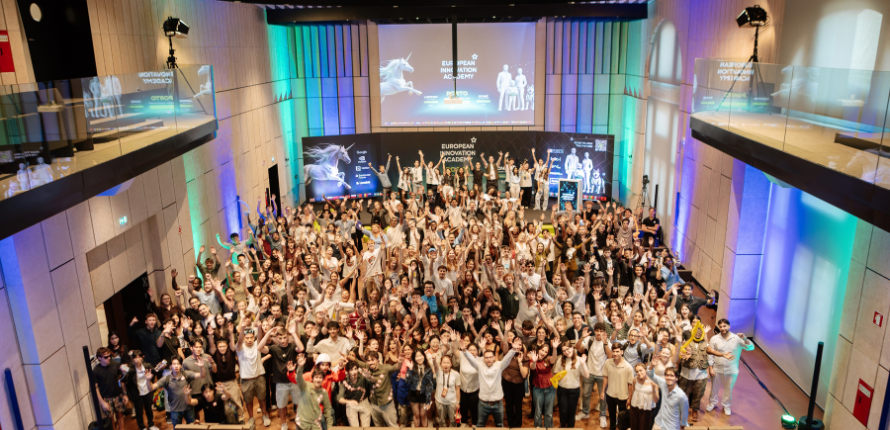
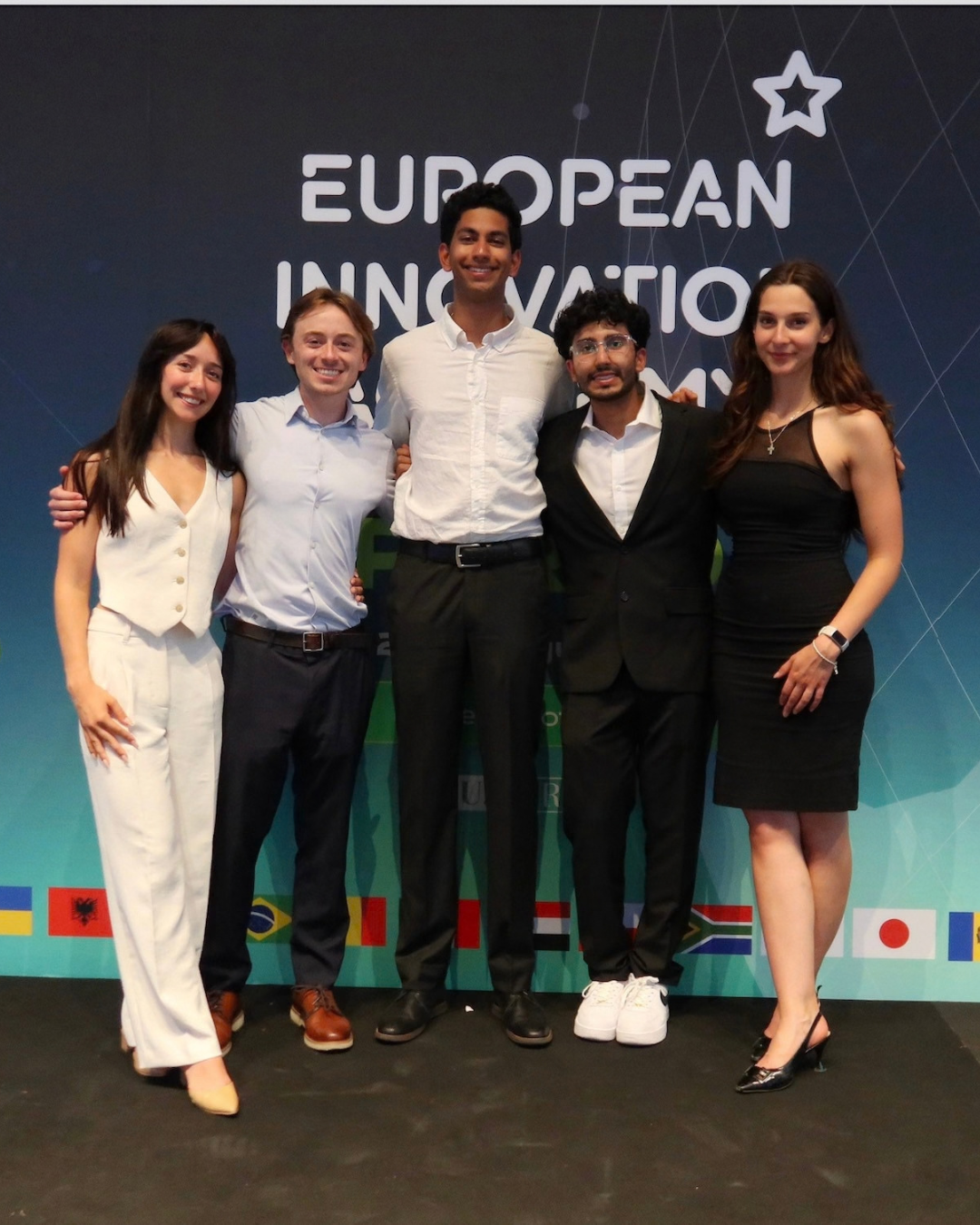
Arnav Chauhan, Dea Sokoli, Maia Flinton, Michael Wilson, and Muhammad Shahzeb Atif represented Wilfrid Laurier University at the 2026 European Innovation Academy (EIA) from July 20 to Aug. 7. They joined more than 300 participants from over 55 countries, working on international teams with people they had only just met.
Over the 15-day program, student entrepreneurs spoke with potential customers, challenged their own assumptions, and turned early ideas into products they could pitch. By the end of the program, four of the five Lazaridis students had earned spots among EIA’s Top 10 teams.
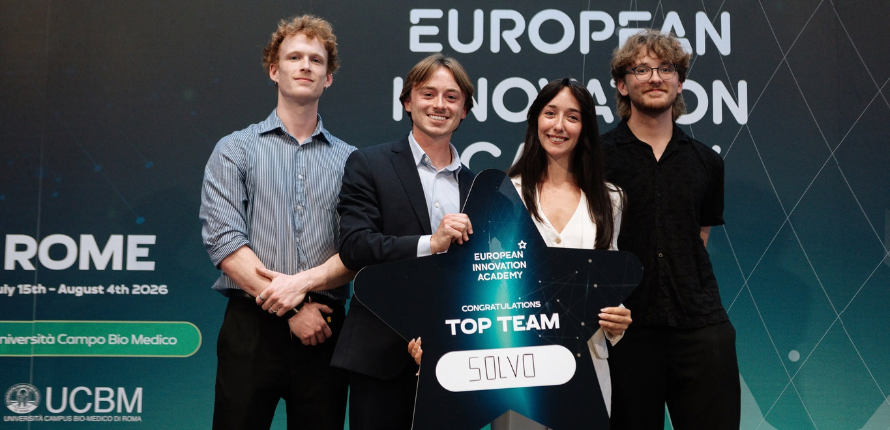
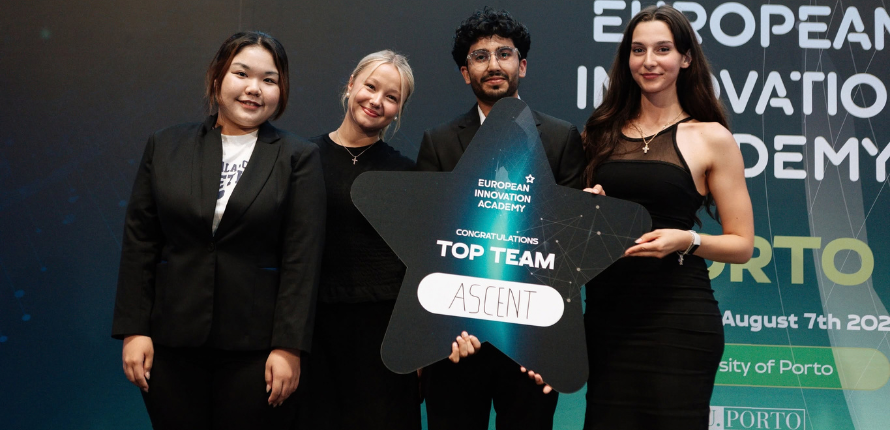
Atif and Sokoli built Ascent, a candidate-first applicant-tracking system for small- and medium-sized businesses. Flinton and Wilson founded Solvo, an artificial intelligence platform designed to give elementary teachers more time to teach. Solvo also earned US$10,000 in conditional investment and mentorship from Unicorn Factory Lisboa. Chauhan worked on, StepUp a personalized career guidance platform supporting college students in the United States.
The Lazaridis students’ ability to think critically, adapt their ideas and deliver strong presentations earned them a nickname among other participants: the “Cracked Canadians.”
EIA differs from a traditional case competition. Instead of receiving a prepared business problem, participants must identify a problem themselves and demonstrate that its solution has both consumer impact and market demand.
Over 15 days, teams move through problem validation, customer discovery, product development, prototyping, go-to-market planning, and funding strategy. At the end of the program, they pitch their ventures to peers, investors and industry professionals. This year teams were tasked with the ambitious goal of reaching $10,000 in revenue after 15 days!
For Flinton and Wilson’s team, the process began with a challenge facing Ontario elementary teachers: the time required to create differentiated practice materials, grade student work, and identify learners who need additional support.
Rather than beginning with a product, the team interviewed teachers and district education staff. Those conversations helped them determine how frequently the problem occurred, how it affected educators, and whether there was a market for a possible solution.
What they heard also changed their original thinking.
“The biggest shifts in our pitch came directly from things a district coordinator or teacher told us that we hadn’t expected,” said Flinton. “Talk to real customers before you fall in love with a solution.”
The team used those insights to develop Solvo. Beginning with Grade 3 Ontario mathematics, the platform allows teachers to select a curriculum outcome and generate EQAO-aligned practice questions. It can then mark student submissions and help teachers identify where students may be falling behind.
The aim is straightforward: reduce the time teachers spend creating and marking practice materials so they can spend more time responding to students’ needs.
Developing Solvo required the team to make decisions quickly.
“The compressed 15-day timeline forced real trade-offs you don’t get in a classroom case,” said Flinton. “We had to validate the problem with actual teachers and district staff before writing a line of code, defend our pricing model with real unit economics and adjust our go-to-market plan based on what customers actually said rather than what we had assumed.”
Atif and Sokoli’s team followed a similar customer-focused process while developing Ascent. Their team identified a challenge for small- and medium-sized enterprises navigating recruitment. Ascent was designed as a candidate-first applicant-tracking system that could help employers organize their hiring processes, respond to new hiring requirements, and build stronger candidate pools.
Learning also extended beyond customer interviews. EIA CEO Diogo Forte led sessions on the CEO operating model and team formation, while mentors with expertise in business, technology, design, intellectual property and venture capital helped teams develop their ideas.
New mentors joined the teams each week, matching the expertise to the work at hand, from customer discovery and prototyping to go-to-market planning and funding strategy. Mentors challenged the team’s assumptions and financial projections, helping strengthen both the pitch and the business behind it.
“Every hard question we got in practice pitches made the real one easier,” said Flinton.
Wilson added that the combination of public speaking, problem-solving and pressure was part of what drew him to the experience. “I’ve always enjoyed public speaking and high-pressure problem-solving, so case competitions have always been a natural fit,” he said. “Spending three tough weeks working on a startup and pitching to venture capitalists seemed like an outstanding experience.”
Building Solvo also meant learning how to work with a new team. Flinton and Wilson joined Nicholas Irvine, a software engineering student at the University of Lethbridge in Alberta, and Ben Cosgrave, a Bachelor of Business student studying marketing at Monash University in Australia. Together, they brought perspectives from business, software engineering, and marketing to the challenge of turning an early idea into a product they could pitch.
That exchange extended beyond individual teams. Throughout the program, the Lazaridis students met peers and mentors whose backgrounds differed from their own, but who shared their enthusiasm for creating something new.
“No matter where a mentor or student was from, you could still see that passion and drive to create something substantial within the three weeks,” said Sokoli. “We got to meet people both in and out of the program who have become lifelong connections and helped us learn even more about ourselves.”
For Flinton, getting to know her teammates was as much a part of the experience as developing the business. She credits the chemistry among Solvo’s four team members with helping them stay productive through the demands of the program.
“We’d end up sharing stories for hours, laughing and getting to know each other, and then somehow turn around and be incredibly productive,” she said. “I think that’s a huge part of why we performed as well as we did we—actually wanted to be in the room with each other.”
Although they worked on separate ventures, the five Lazaridis students also made time to explore Portugal together. A weekend train trip to Lisbon offered a break from developing their startups, while a boat tour beneath Porto’s six bridges gave them a chance to take-in the city from the Douro River and enjoy each other’s company.
Faculty advisor Brandon Van Dam supported the students throughout their three weeks in Porto. As they worked on separate international teams, he was there to answer questions, offer advice, and help them navigate the demands of the program. “I couldn’t be more proud of what our students from the Lazaridis School were able to accomplish. They exemplified what makes our students stand out: rigorous academic preparation paired with real-world, experiential learning. They were excellent role models for the school, and their teammates and mentors noticed.”
For Dea Sokoli, EIA offered the chance to learn, create something new, and experience another country. It was also a step into the unknown.
“Let go of the expectations you have for yourself and restructure your thinking,” said Sokoli. “When I stopped expecting, I started doing and was able to take every challenge as a new way to look at things.”
By the end of the program, the uncertainty that had initially made her anxious had become an important part of the experience.
“I learned there is no such thing as failure when your goal is learning.”
In just 15 days, the five Lazaridis students helped build three startups, spoke with real customers, and pitched their ideas to investors. They returned from Porto with two Top 10 finishes, new friendships and experience they could not have gained in a classroom alone.
For Sokoli, the biggest lesson was to take the opportunity, even when you do not know exactly what to expect. Sometimes, the best way to find out what you are capable of is simply to begin.
Congratulations to Maia, Michael, Shahzeb, Arnav and Dea on representing the Lazaridis School in Porto and making their mark on the international stage!