



We use cookies on this site to enhance your experience.
By selecting “Accept” and continuing to use this website, you consent to the use of cookies.
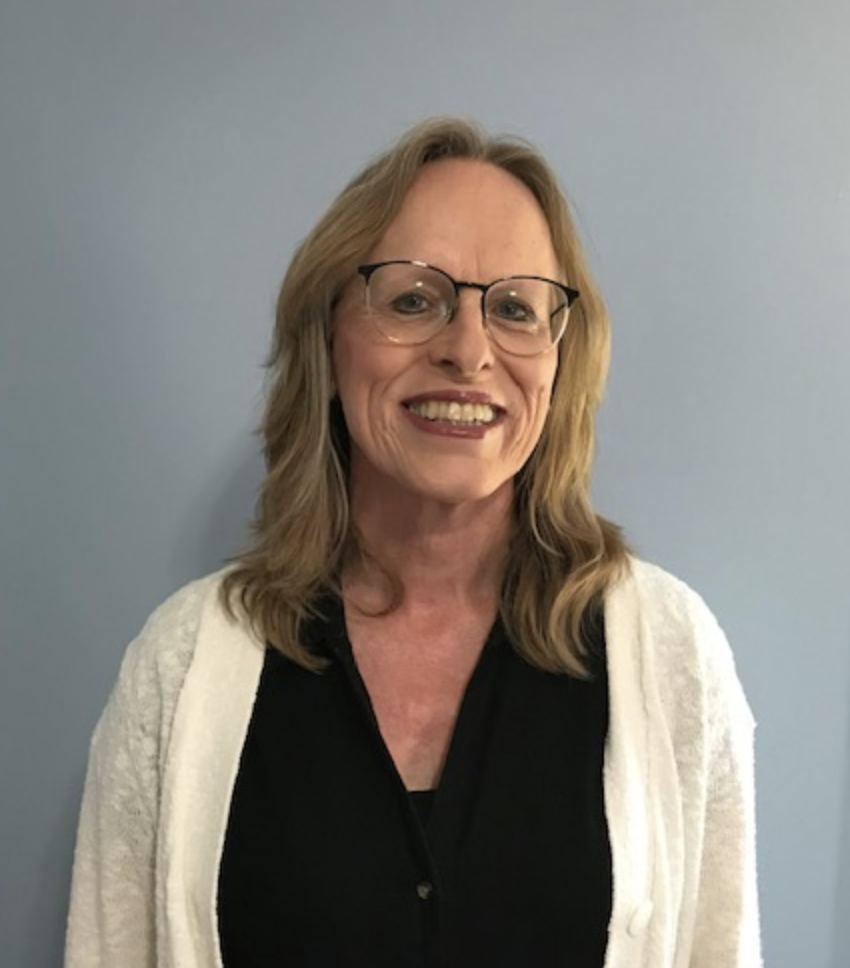
I am a Professor of Communication Studies, and a member of the MA in Cultural Analysis and Social Theory (CAST), a member of the Women & Gender Studies Program Coordinating Committee, and an associated faculty member of the Laurier Centre for Community Research, Learning & Action.
I am an elected member of the Academic Freedom and Freedom of Expression Task Force that was formed in 2024 and is at present ongoing.
I served as the (interim) Coordinator for Women & Gender Studies Program from 2024 to 2025.
At present, I have a contract for a book on the "anti-trans agenda."
Brief Outline
1992: MA in Communication, Culture & Society - Goldsmiths' College, University of London (part-time)
2000: PhD in Communication, Goldsmiths' College, University of London (part-time)
2001: Assistant Professor, Dept of Communication Studies, Wilfrid Laurier University (I started the same year that the Department was established at Laurier)
2007: Tenured & Promotion to Associate Professor
2007: Member of Graduate Faculty
2023: Member of the Women & Gender Studies Program Coordinating Committee
2024-25: Interim Coordinator of WGS Program
2025: Promoted to Full Professor in the Department of Communication Studies
Since the onset of the pandemic and the rising tide of fascism, I have been increasingly forced to speak out, research and teach on the issues directly facing the 2SLGBTQQIA+ community. I have been giving a presentation on the annual "Trans Day of Visibility" each year since 2023.
Most recently, I have taught or am teaching two courses on trans issues, one of which is at the undergraduate level (it's called "The Trans Agenda") and another one of which is at the graduate level ("Trans*: Ideology vs Reality"). As far as I know, these are the first two courses that teach specifically on the history, politics and representation of trans people in the Faculty of Arts ever.
Some of my other most recent public talks are:
A year ago, in April and May 2025, I spoke to queer, non-binary and trans* students and some of the GSA teacher-advisors in the Waterloo Catholic District School Board (WCDSB) about the history, science and politics around trans and queer youth and families.
I am researching these areas as part of a pressing community commitment to helping stem the rising tide of hate and harassment that so many of marginalised communities are facing in Waterloo Region specifically and across Canada generally.
Despite the anti-trans actions carried out by regressive conservative governments and politicians, in Canada, the USA and the UK, I find humour to be one of the most effective tools for being able to express joy and laughter as elements of resilience and resistance.
Thus, one of my newest areas of community engagement has been to engage in stand-up comedy where I weave together accounts of the anti-trans rhetoric, actions and ideology of politicians, with anecdotes about my family and my life, with my own observations on trans women's lives and everyday experiences.
Background:
Before becoming an academic, I worked at a number of different blue- and white-collar jobs and began travelling and/or living in a number of different places, from 1979 onwards, including England, Netherlands, Germany, Greece, (former) Yugoslavia, Mexico and Spain.
By my late 20s, I had started working as a lecturer in FE (Further Education) and AE (Adult Education) in greater London, England, which was followed by a short three-year stint in the media industries. This included working as a radio news editor and an assistant manager of TV post-production, both positions in the private sector and all of this media work was pre-digital.
After I started studying part-time for my PhD at Goldsmiths, I began teaching full-time in higher education in greater London. Since 1993, I have taught across six different universities in England and Ontario, Canada.
I have worked in the Department of Communication Studies since it was formed on July 1st, 2001, teaching a range of courses that have overlapped with my outside advocacy work with anti-poverty and minimum-wage campaigns as well as contract faculty campaigns.
I draw upon these experiences to integrate practical and analytical approaches in studying how news media work in covering economic and social justice movements and issues, and how these social movements communicate their ideas.
It is through my advocacy work with economic justice organisations that I have developed aspects of different courses, including my graduate level course on "The Rhetoric of Economics", and my undergraduate seminar on the ways in which the 2008 financial catastrophe was communicated via language, metaphor, story in film, book, news and advertisements: "Media, Markets, Myths".
Other courses have included a focus on public communication, public advocacy campaigns, alternative media, moral panics and free speech, culture wars, and the global financial crisis in popular communication.
Most recently, I have taught two courses on transgender issues, history, representation and politics.
--30--
At present, my research and writing is dedicated to working on a book about the "anti-trans agenda" that examines how various well-funded organisations have sought to create a "moral panic" and poisoned politics with the demonisation of a tiny vulnerable minority. We find the most private of professional relationships between physicians and patients (and their parents if they are minors) being intruded upon by politicians and governments seeking to impose ideological diktats on these relationships.
I am continuing with my research on the "Culture Wars," as it has been part of the preparation, infrastructure and proving ground for the development of what Amery and Mondon (2024) call "organised transphobia," a top-down movement.
The authoritarian right-wing machinery that organizes and fosters ideological attacks on knowledge, science and universities, and the connections these have with powerful individuals and institutions which amplify and popularize such attacks, particularly in the ways that this is used to silence those who are critical of the dominant power structures in contemporary society, are part of the problem from which "organised transphobia," in part, has evolved. Their use of argumentative strategies, rhetorical devices and tropes, and keyword and language choices are of particular interest.
--30--
2025 “W(h)ither the Party Paper? Preparing the War of Position to Build the Scaffolding for Twenty-First-Century Socialist Media”. Rethinking Marxism 37 (1): 37–52. https://doi.org/10.1080/08935696.2024.2435771
(This is my response to five interlocutors in a special issue with a roundtable on my book, “Wars of Position? Marxism Today, Cultural Politics and the Remaking of the Left Press, 1979-90”.)