



We use cookies on this site to enhance your experience.
By selecting “Accept” and continuing to use this website, you consent to the use of cookies.
Research / Areas of Expertise
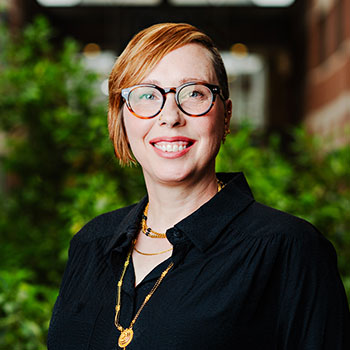
I completed my graduate studies at the University of Guelph, receiving my PhD in Development Geography (2013) and my MSc in Rural Extension Studies and International Development (2002). My undergraduate degree, a BES in Geography (1999), is from the University of Waterloo. Prior to joining Laurier (2019), I was an Instructor at the University of the Fraser Valley where I taught eight to ten courses per year.
I am a development geographer broadly interested in the politics of socio-economic and environmental change, with thematic interests in political ecology, agrarian change, labour geography, and sustainable livelihoods. I have a strong commitment to India, its professional research networks, and several rural communities in the states of Tamil Nadu and Keralam.
Growing up in the rural outskirts of a Northwestern Ontario resource town fueled my passion to explore human-environment relations and processes of marginalisation. Early-on I recognized the injustices, barriers, and structural inequalities Indigenous and marginalised community members faced, community divisions (e.g. Non-Indigenous/Indigenous, rural/urban, European Settlers/South Asian Immigrants), and the relationship between the environment and people's identity and livelihoods. But I lacked the knowledge and language to effectively understand and articulate these issues. This lead me to gravitate toward mentors and scholarship within development geography.
My research program seeks to contribute to the theoretical and practical dimensions of the structural and relational dynamics of sustainable livelihoods and development pathways, with attention to scalar relationships. The sustainable livelihoods approach is central to this work, and I engage directly with its principal critiques: its lack of theory, its local focus, and its neglect of structural conditions and global processes, including political economy, and global environmental change. Throughout, my concern is to keep connections between global and local forces in view while centring the ways in which people are embedded in social relations such as caste, class, gender and ethnicity, and engaged in diverse economies, including subsistence production, reciprocal labour, and other practices that operate beyond formal markets.
For more details visit lladr.ca (Labour, Livelihoods, and Development Research Group).
I am recruiting graduate students (Master's / PhD) and undergraduate thesis students, with whom I would be delighted to engage in various means of support throughout the process.
Graduate students working with me join projects with an established fieldwork infrastructure: a long-standing local research associate who manages fieldwork in South India, affiliations with professional networks, community engagement, and working relationships with academic and government bodies. Students gain experience in combined qualitative and quantitative methods, fieldwork, and co-authored publication.
Students, if you are curious to learn more about me and determine whether I would be a good fit to support your research please contact me. I would love to have a conversation about your ideas!
Blackman, T, Sportel, T.S. and Walton-Roberts, M. 2022. Placing Care Wrok in the Future of Work Discourse. Special Issue: New Technologies, Migration and the Future of Work. Glocalism: Journal of Culture, Politics and Innovation. 3 (6): 1-31. doi: 10.12893/gjcpi.2022.3.
Sportel, T. and Véron, R. 2016. Coconut Crisis in Kerala? Mainstream Narrative and Alternative Perspectives. Development and Change. 47 (5): 1051-1077. doi: 10.1111/dech.12260.
Sportel, T. 2013. Agency within a Socially Regulated Labour Market: A Study of 'Unorganised' Agricultural Labour in Kerala. Geoforum. 47, 42-52. doi: 10.1016/j.geoforum.2013.02.007.
Also see, Google Scholar.