



We use cookies on this site to enhance your experience.
By selecting “Accept” and continuing to use this website, you consent to the use of cookies.
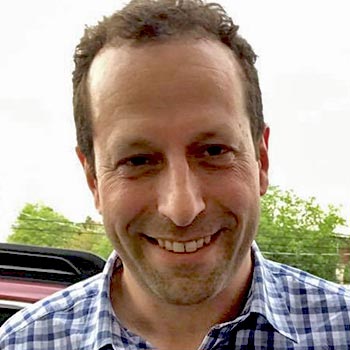
I have a PhD from the Department of Political Science at the University of Toronto, an MA in International Relations History from the University of Toronto, and a BA in History/Political Studies from the University of Guelph.
Since 2010, I have taught in the Global Studies program at Wilfrid Laurier University. I also taught in the Peace Studies Program at McMaster University, Hamilton, between 2010-2020, and I was a part-time faculty member in the Department of Political Science at Western University between 2008 to 2017.
From 2005-2007, I was resident assistant professor at the UN mandated University for Peace in Costa Rica, in the Department of Environment, Peace and Security. In 2006-07, I was the project director of UPEACE’s Climate Change and Adaptation project. Between 2008 to 2010, I was an adjunct professor at UPEACE, teaching as a visiting professor at UPEACE.
I am Fellow of the Balsillie School of International Affairs, an Associate Fellow of the Institute for Environmental Security in The Hague, a member of the Environmental Peacebuilding Academy, a member of the Global Military Advisory Council on Climate Change, and Vice-President of the Climate Security Association of Canada.
Since 2022, I am the book review editor and member of the editorial team of the Sage journal, Environment & Security.
My research focuses on the peace and conflict implications of human pressure on the natural environment, particularly qualitative research linking environmental change and violent conflict. My doctoral research explored the conflict impacts of human induced environmental and demographic change in Chuschi and Quispillacta, two communities in south-central Ayacucho, in Peru’s southern highlands. It documents the interaction between long term environmental and demographic changes in this region in relation to the currents of economic, social, and political change that have buffeted highland Peru over the past half century. This area of Peru is of particular interest because it is one of the central locations in Peru’s dirty war between the Sendero Luminoso and the Peruvian military in the 1980s. The dissertation finds that these changes were important for conditioning the patterns of local violence in the latter half of the 20th century in Cangallo. I am working to revise my thesis into a book manuscript, under contract with the Springer Anthropocene Series.
I have a deep background on all aspects of environment-conflict research, including climate change-conflict research, and more general environmental security studies. Research on environmental peacebuilding is also an area of specialization and teaching that I have been increasingly developing over the past five years.
I also have an extensive background in international security studies, including military history and war studies. Before moving into environment-conflict research, I conducted archival research on U.S. nuclear weapons policy and doctrine in the early Cold War era.
I have recently completed two multi-national research projects on the security implications of climate change on NATO. The first project, headed by Bruno Charbonneau of RMC-St. Jean, examined various climate security issues and risks for NATO. (See publications section for details.) I contributed to work on the East Flank chapter and presented that work to NATO's Political Committee Annual Roundtable on the Impact of Climate Change on Security in Brussels in January, 2025. The second project explored explored civil-military cooperation in climate emergencies through the CASA project (https://www.project-casa.org/). I was a member of the CASA Coordinating Leadership Team.
Currently, I am working on developing a project on climate security adaptation potential in Central America.
International Recognition, First International Science Prize 2023 of the Hans Günter Brauch Foundation for Peace and Ecology in the Anthropocene (HGBS) on the Theme: Climate Change and Conflicts http://www.hgb-stiftung.org/html/Award_winners.html
2023 Social Sciences and Humanities Research Council Connection Grant, Geopolitics of Climate and Security, with Will Grieves (Co-Investigator), University of Victoria; Bruno J.R. Charbonneau (Co-Investigator), Royal Military College of Saint-Jean; Gabrielle Daoust (Co-Investigator), University of Northern British Columbia.
2023 Department of National Defence, MINDS Targeted Engagement Grant, Project CASA - CLIMATE AND SECURITY ACTION through Civil-Military Cooperation in Climate-Related Emergencies. Member, Coordinating Group leadership team managing the CASA project in 2023-24.
2021 Latin America Studies Association Travel Grant.
2008/09: University Students' Council Teaching Award at University of Western Ontario
Tom Deligiannis, Conditioning Violence in the Anthropocene: The conflict impacts of human pressure on the natural environment in Southern Peru, Springer (Under Contract).
Tom Deligiannis with Rita Floyd, “Environmental Scarcity and Conflict,” in Rita Floyd and Richard Matthews (eds.), Environmental Security: Approaches, Issues, and Actors, 2nd Edition (New York: Routledge: 2026), 36-50.
Tom Deligiannis, Petr Kolar, Marju Korts, Jutta Lauf, Melanie Meitzel, and Reiner Zimmermann, “Climate Security on NATO’s East Flank,” in Bruno Charbonneau ed., The Effects of Climate Change on NATO’s Security, Final Report of NATO SAS-182 Task Group on The Effects of Climate Change on Security, NATO, Brussels, 2025.
Swain, Ashok, Carl Bruch, Tobias Ide, Päivi Lujala, Richard A. Matthew, Erika Weinthal, and Tom Deligiannis. "The U.S. Withdrawal from the Paris Agreement—Implications for Global Climate Governance and Security." Environment and Security 3, no. 1 (2025): 3-7.
Tom Deligiannis, “Decentering Climate Security: The Research and Policy Implications of Sudden-Onset and Slow-Onset Climate Change,” in Timothy Clack et. al. eds, Hot War: Climate Change and Insecurity, Routledge Advances in Defence Studies, Routledge, 2024.
Contact Info: