Wilfrid Laurier University is recognizing seven exceptional instructors and learning professionals who are elevating students’ educational experiences and inspiring fellow educators.
The Donald F. Morgenson Faculty Awards for Teaching Excellence, Laurier’s most prestigious teaching awards program, was named in memory of Laurier Professor Emeritus Donald Morgenson, a longtime faculty member who passed away in 2017.
“The Donald F. Morgenson Awards highlight Laurier faculty members whose dedication forms the heart of the exceptional learning experience we create for our students,” says Trish McLaren, associate vice-president: academic. “This year’s recipients are truly elevating their classrooms and communities through remarkable teaching, creativity, and mentorship. We thank and applaud each of them.”
The recipients of Laurier’s 2026 Donald F. Morgenson Faculty Awards for Teaching Excellence are:
Sustained Excellence (Full time)
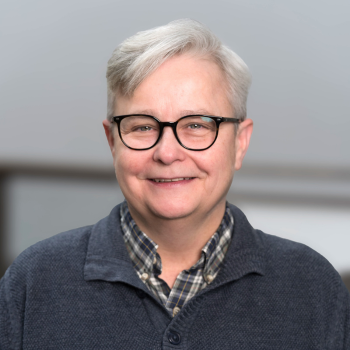
Penelope Ironstone’s very first day of teaching happened to be Sept. 11, 2001. Since that day, and throughout her 24 years at Laurier, Ironstone has helped students learn to navigate uncertainty through courses that address topics including misinformation, crisis and media polarization. Her teaching demonstrates an unwavering commitment to student wellbeing and a remarkable ability to connect theory to lived experience.
Ironstone designs learning environments that use case studies, scaffolding and professional simulations to bring theoretical concepts to life. Flexible assessments aligned with Universal Design for Learning principles provide students multiple ways to engage and express themselves through podcasts, videos, infographics, creative non-fiction and collaborative projects. In times of change, Ironstone has adapted and innovated, redesigning her courses in the wake of the COVID-19 pandemic and introducing digital literacy tools and policies with the emergence of generative artificial intelligence (GenAI). Students praise Ironstone’s clarity and warmth, with one student saying, “She made our class feel like a community.” Students also credit her courses for helping them acquire skills they will take into the workplace.
Beyond the classroom, Ironstone’s influence is felt throughout the Communication Studies department, Faculty of Arts, and broader academic community. Colleagues describe her as a leader and praise her willingness to mentor peers, support curriculum redesign and adapt evaluation methods.
"I continue to learn from my students, and this collaboration sustains the genuine enthusiasm that animates my teaching," says Ironstone. "They remind me again and again of the importance of the work we do together, not only for their individual aims and ambitions, but also for our shared futures.”
Penelope Ironstone
Sustained Excellence (Part time)
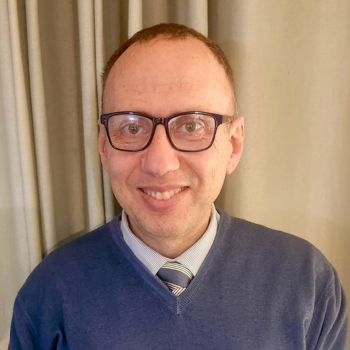
Pietro Pirani has been instrumental to the success of the Human Rights and Human Diversity program, teaching an extraordinary 76 courses since 2016. Despite the scale of his teaching load, Pirani maintains an inclusive, adaptable and student-centred environment. Students credit him with expanding their career aspirations and academic self-confidence. “Dr. Pirani made me feel seen and respected,” said one student. “He helps us recognize our strengths rather than focusing on our limitations.”
Using Universal Design for Learning principles, Pirani provides students with many pathways to engagement, including anonymous polling, low-stakes reflection, rotating discussions and flexible assessments. Whether in seminars, large lectures, online courses, or hybrid learning environments, Pirani creates an inclusive and supportive learning community. His goal is not only to educate, but to empower students academically. He notes, “Students are far more willing to take intellectual risks when they feel they belong.”
In the Human Rights and Human Diversity department and broader academic community, Pirani has had a profound impact through advising, mentoring and sustained service. His leadership contributions include nine years as the contract teaching faculty representative on the department’s program committee. Pirani also continues to advance his own pedagogical growth through workshops on inclusive syllabus design, ungrading, technology-enhanced learning and generative AI.
Pietro Pirani
Early Career Excellence (Full time)
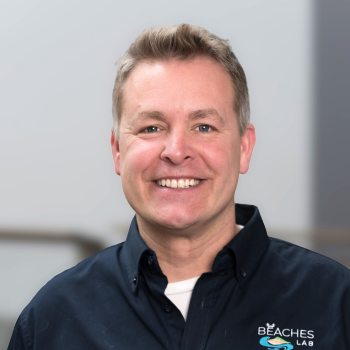
Only a few years into his full-time faculty appointment, Michael Bitton stands out for the remarkable maturity and depth of practice he demonstrates. His teaching philosophy is grounded in a profound understanding of the growth mindset, shaped by his own lived experience of rebuilding foundational abilities after a near-fatal accident. “I persevered, and now strive more than ever to help students develop their own resilience and accomplish their own goals with any and all resources available to them,” says Bitton. This authenticity translates into an approach that helps students see themselves as capable, supported learners.
Bitton’s courses are built around active, multisensory and experiential learning, incorporating everything from Google Earth visualizations and soil samples to field trips and debates. His scaffolded assignments – including public-facing op-eds, research presentations and iterative writing processes – demonstrate a clear commitment to higher-order learning. Colleagues note his exceptional skill at taking complex processes and making them accessible and understandable.
Students describe the life-changing nature of Bitton’s mentorship. One student said, “Without Dr. Bitton’s guidance, I would likely not be continuing my academic career into a master’s program.” Another describes him as “the best professor I have ever had,” noting “he hates to see potential in people go to waste.”
“I care deeply about seeing my students succeed, not just in my class, but in their confidence and growth as learners. I strive to create a learning environment where curiosity, confidence and support come first. My goal is to help students engage with ideas and see the real-world relevance of what they’re learning, so they can build the skills, tools and mindset to keep growing beyond the classroom.”
Michael Bitton
Early Career Excellence (Part time)
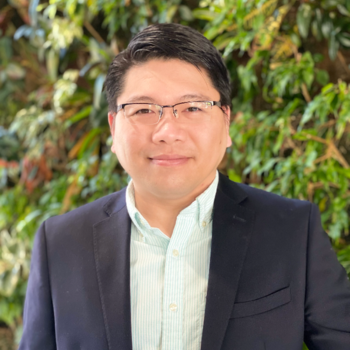
A globally recognized multidisciplinary scientist, Nathan Vo brings research excellence directly into Laurier’s classrooms. His highimpact teaching innovations include immersive forensic investigation games, virtual virology simulations, and Laurier’s first oncampus forensic science workshop, which engaged students in a handson crime scene and bloodstain pattern analysis.
A commitment to active learning defines Vo’s courses, where a substantial part of students’ final grade is allocated to active learning – polling, debates, case studies, VR simulations and field‑based inquiry. These approaches establish an inclusive, engaging and highly participatory environment that students repeatedly describe as transformative.
Vo also has an extraordinary mentorship record, having supervised independent student research projects. Students describe him as the reason they pursued advanced study, saying his support fundamentally changed their academic trajectory, and credit him for inspiring confidence in students who did not initially see themselves as belonging in academic spaces.
Vo’s rare ability to make complex scientific content accessible to non-science majors, grounded in a structured “what, why, how, what if” inquiry framework, fosters understanding, curiosity and confidence in students. In the classroom, the lab, the Health Studies department and beyond, Vo is making a profound impact on the next generation of scientists.
Nathan Vo
Innovation in Teaching
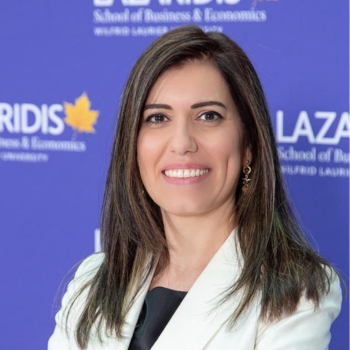
During her five years at Laurier, Rima Khatib has transformed student learning with innovative approaches that include custom generative AI-powered learning tools, simulation-based instruction, and community-engaged applied projects that bridge academic learning with professional relevance.
A hallmark of Khatib’s innovation has been her leadership in generative AI integration, both inside the classroom and across Laurier’s broader teaching community. Khatib has developed custom generative AI-based tutorials that act as simulated teaching assistants. The tutorials are generating more than 800 interactions per semester and have received overwhelmingly positive feedback from students, who describe them as “an on-hand assistant that is immediately responsive.”
At the core of Khatib’s engagement with GenAI is teaching students how to use GenAI responsibly and critically. Her work has gained institutional and national attention, with presentations at international conferences – including a best paper nomination at the International Conference on Information Systems – and invitations to facilitate faculty workshops at Laurier and beyond.
Khatib also excels at integrating experiential learning, including in her Technology Innovation Management and Enterprise Architecture Innovation Challenge courses, where students connect with community organizations through Laurier’s Community and Workplace Partnerships office. In some cases, partner organizations have hired students based on project outcomes, creating value for both students and employers.
Rima Khatib
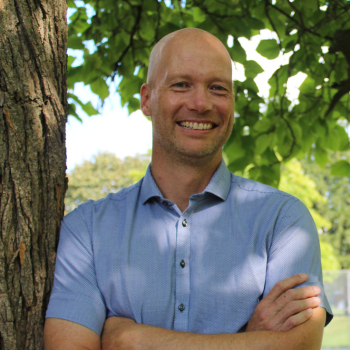
Faculty Mentoring Award
Mark Eys’s mentorship has been described as transformative, empowering and compassionate. It also spans generations: of the 37 undergraduate and graduate students Eys has supervised during his 16 years at Laurier – and the many others he has supported through committees and collaborative projects – several have gone on to become faculty members themselves. Former mentees have earned significant achievements including the Governor General’s Academic Medal, Laurier’s Medal of Academic Excellence, and the national Franklin Henry Young Scientist Award.
Eys’s teaching philosophy is rooted in what he calls a “work with the supervisor” approach, instead of the traditional model of “working under” a supervisor. This empowers students by giving them increasing independence while maintaining rigorous standards. As one student put it, “He asks questions in return, prompting me to think critically and arrive at my own solutions.” The result is a mentoring environment in which students learn not only the skills of research, but also the confidence, judgment and autonomy required for success across academic and professional paths.
Eys was a key contributor to the development and successful launch of Laurier’s doctoral program in Kinesiology and served as graduate coordinator during a period of significant program growth. In his current role as interim associate dean of Graduate and Postdoctoral Studies, Eys continues to shape graduate education and culture. As a mentor, Eys’ influence is profound, sustained and deeply human.
Mark Eys
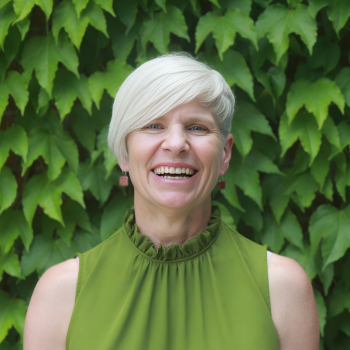
Staff Award for Excellence in Teaching and Learning
Phyllis Power has been described as Laurier’s “most committed, collaborative, impactful and tireless champion for international education.” Whether supporting faculty-led travel courses, designing intercultural training, or co-creating decolonizing field programs, Power has been central to Laurier’s global engagement efforts for more than a decade.
Power has a unique ability to bring together the practical and the scholarly, going beyond administrative coordination of international exchanges, internships and volunteerism to advance transformative learning experiences centred on equity, inclusion and reciprocity. She is known for her warmth and care for students, particularly international and refugee learners who are most at risk of isolation. Described as a “rock of support,” Power has been known to welcome students into her home and take them to local markets to shop for familiar foods.
Many global learning opportunities at Laurier were shaped by Power’s contributions. She secured more than $1.7 million in external funding to create accessible, inclusive international learning. She also spearheaded the Intercultural Certificate, a program designed to overcome confirmation bias and develop cultural empathy, and supported faculty in internationalizing curricula, designing safe mobility programs and developing partnerships such as the Laurier-Ghana initiative. Power’s thoughtful leadership is credited for ensuring students are prepared for international experiences, leading to positive impacts on student success as well as Laurier’s international reputation.
"I am motivated by the opportunity to facilitate international learning opportunities using an equitable, diverse and inclusive approach so all students will find a portal through which to participate and thrive,” says Power.
Phyllis Power