

We use cookies on this site to enhance your experience.
By selecting “Accept” and continuing to use this website, you consent to the use of cookies.
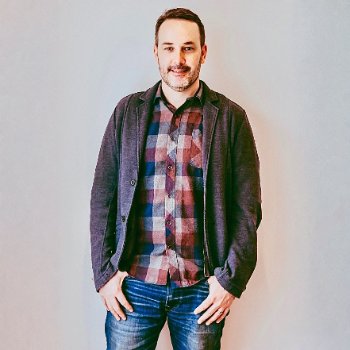
I have a PhD in cultural anthropology from the University of Toronto. Prior to my current position, I was a Postdoctoral Fellow in Planetary Health Education at York University, cross appointed to the Faculty of Education and Dahdaleh Institute of Global Health Research.
My research is broadly concerned with the role of culture in mediating human relations to the environment, and specifically the promotion of human and environmental health and wellbeing. My research has explored issues of Indigenous-led conservation and protected area co-management, the health benefits of connecting with nature, and Indigenous / youth perceptions of climate change and planetary health.
Much of my research has been conducted in Belize, Central America, and more recently I have also been working on collaborative and interdisciplinary projects in Canada, Chile and Costa Rica. Methodologically, I have significant experience with both ethnographic fieldwork as well as participatory and arts-based methods with Indigenous communities, conservation and development NGOs, and youth.
My early research examined the promotion and practice of integrated conservation and development in Belize, with a focus on ecotourism and protected area co-management. Based on long-term ethnographic fieldwork, my doctoral research examined the Indigenous co-management of the Sarstoon-Temash National Park (STNP) in southern Belize. My dissertation, entitled The Will to Conserve? Environmentality, Translation and the Politics of Conservation in Southern Belize, highlighted the complexity of cross-cultural communication and collaboration between Indigenous Maya communities, conservation scientists, and government officials, in the context of conservation and national park management.
In 2021 I received a SSHRC Insight Development Grant for the project “Smart Conservation and the Production of Nature 3.0 in Belize.” Based on an ethnographic study of the Spatial Monitoring and Reporting Tool (SMART) and its use in protected areas in Belize, this project critically examined how smart technologies and platforms are facilitating a shift toward a new model of exclusionary and violent conservation that mirrors imaginaries and technologies of the smart city, and which serve to intensify the surveillance and policing of Indigenous and local communities bordering parks and protected areas.
From 2019 to 2023, I held a Postdoctoral Fellowship cross-appointed to the Faculty of Education and the Dahdaleh Institute of Global Health Research at York University, where I was explicitly tasked with developing new research initiatives in the area of planetary health education. During this period, I played a central role in building a coherent, externally funded program of youth- and community-centred health education research. This included collaborating on the Planetary Health Film Lab, a participatory education initiative that trains youth to produce short documentary films on planetary health for submission to the United Nations Youth Climate Report and screening at UN climate conferences. I also served as Principal Investigator on a SSHRC Partnership Engage Grant, New Journey to Save Fish: Oshki Maadaadiziwin Jaa Bimaaji’ut Gigooyike, which supported Indigenous youth-led learning and digital storytelling in partnership with the Bagida’waad Alliance. Building on this work, I was awarded a SSHRC Partnership Development Grant dor the project Planetary Health Partnership: Anishinaabe youth guardians, land-based learning, and the practice of living well with the world, which advanced decolonized planetary health education through experiential, intergenerational, and community-based pedagogies. Most recently, I have served as Co-Principal Investigator of the York-funded Partnership for Youth and Planetary Wellbeing, a large interdisciplinary initiative that supports youth-led research and education on planetary wellbeing across Canada and the Americas. Collectively, this postdoctoral work established my research identity as a health education scholar focused on planetary health, youth wellbeing, and transformative pedagogical practice.
My research program continues to focus on youth-centred and community-engaged approaches to health education, with particular emphasis on planetary health, environmental education, and digital wellbeing. Across this work, I draw on critical health studies, the social determinants of health, Indigenous and decolonial pedagogies, and participatory research methodologies to examine how education can support young people’s physical, emotional, cultural, and relational wellbeing in rapidly changing social and media ecologies. A defining feature of my scholarship is its commitment to co-production: young people, educators, and community partners are not simply research participants but active knowledge-holders and co-educators shaping both process and outcomes.
A recent example of this work was the production of the Digital Wellbeing Hub, a national knowledge-mobilization and educational resource developed over 2024–2025 through funding from the Government of Canada (Heritage Canada and SSHRC). The Hub was created in collaboration with the Young Lives Research Lab, the Students Commission of Canada, and UNICEF-Canada, and was guided throughout by a Youth Advisory Committee made up of young people from across the country. Drawing on UNICEF-Canada’s Index for Child and Youth Wellbeing, the Hub explores how digital technologies shape young people’s wellbeing across nine interrelated dimensions. Designed for educators, students, families, policymakers, and the public, it translates peer-reviewed research into accessible learning materials, curated resources, youth interview clips, and pedagogical tools, including a free conversation card deck. This project reflects my commitment to health education as a public, relational, and practice-oriented endeavour that bridges research, pedagogy, and policy.
Most recently, I have been working as Co-Lead on newly funded tri-national research project with the Commission for Environmental Cooperation (CEC). This initiative focuses on the co-development of an Environmental Education Framework with and for youth across Canada, the United States, and Mexico. Grounded in participatory, decolonial, and place-based pedagogies, the project brings together youth, Indigenous knowledge holders, educators, and community leaders to re-imagine environmental education as a form of health education—one that fosters ecological literacy, emotional resilience, ethical engagement, and collective care. The framework emphasizes non-hierarchical learning, youth leadership, and knowledge dialogue across diverse epistemologies, and is being piloted in community-based education settings in all three countries.