




We use cookies on this site to enhance your experience.
By selecting “Accept” and continuing to use this website, you consent to the use of cookies.
Laurier’s Faculty of Arts is home to scholars from multiple disciplines, who conduct local, national and international research. We’re proud to showcase books published by our Arts faculty, highlighting their understanding and impact on diverse cultural and global topics.
Browse books published by Laurier Faculty of Arts scholars by year: 2026, 2025.

Nathalie Freidel (Éditions Hermann)
It is not customary to refer to women writers of the Ancien Régime by their surname alone, as is done for the so-called “great authors.” Yet Sévigné has secured a place in this exclusive club, thanks to her epistolary writing. In this book, Nathalie Freidel examines this unequal treatment and calls for a reassessment of the Sévigné’s career in light of recent developments in the cultural history of women. A feminist approach to Sévigné is especially appropriate given that debates about women’s place in society were already intense in the 17th century. Her life story exemplifies the efforts made by women of her time to gain access to knowledge that was denied to them and to take part in political, intellectual, and literary life, from which they were largely excluded.

Edited by Roberta Cauchi-Santoro, Russell J.A. Kilbourn (Società Editrice Fiorentina)
The most fertile path open to Ferrante scholars is that of observing her work through the lens of a close analysis in which authors’ identities are diffracted and margins between texts are dissolved. This collection of essays, Framing Ferrante: Adaptation and Intermediality in the works of Elena Ferrante, edited by Roberta Cauchi-Santoro and Russell Kilbourn, remarkably meets this challenge, as Ferrante’s texts are examined in adaptation, outside the orderly narrative and interpretative frame that the author created through the invention of her name. Framing Ferrante fills a gap in Ferrante studies, providing the first scholarly collection of essays entirely dedicated to adaptations of Elena Ferrante’s novels: Mario Martone’s L’amore molesto (1995), Roberto Faenza’s I giorni dell’abbandono (2005), Maggie Gyllenhaal’s The Lost Daughter (2021), and the television series: Saverio Costanzo et al.’s HBO adaptation of L’amica geniale (2018-2024) and Edoardo De Angelis’s Netflix series La vita bugiarda degli adulti (2023).
Andrea Perrella and Andrew Basso (McGill-Queen’s University Press)
The Truth and Reconciliation Commission of Canada’s final report marked a new moment in national consciousness: a recognition of Indigenous histories, an awareness of the injustices committed by Settlers and their governments, and an understanding of the need for redress and the restoration of rights. At the time, Settler populations largely voiced support for these recommendations and committed to a more just future; in the years since, words have eclipsed actions. In Shallow River of Tears Andrew Basso and Andrea Perrella mobilize four years of survey research to understand why Reconciliation has stalled. They draw from one of the largest databases of Settler attitudes to explain support for – and resistance to – what they term “Reconciliaction”: real change that fosters individual and community success while remedying past and ongoing harms. The authors identify and analyze key stages preceding action on the part of Settlers: denial, recognition, sympathy, and empathy. These variables are measured against public opinion to offer a solid empirical foundation for effecting sociopolitical change and moving Reconciliation forward.
Izabela Steflja (McGill-Queen’s University Press)
International criminal courts exist to help countries and communities move forward after atrocities and to bring those accused of war crimes to justice. Yet local residents and witnesses often perceive them to lack political legitimacy. Drawn from extensive primary research in Rwanda, Bosnia-Herzegovina, Serbia, and Kenya, Illegitimate Justice challenges the view that as long as international courts are striving for the concept of justice, establishing legal precedents, and prosecuting war criminals, they are fulfilling their purpose. Through interviews with individuals in the fields of education, law, religion, politics, the media, and civil society, Izabela Steflja listens to the people affected by conflict and by the justice processes meant to repair harm. She reveals how international courts have failed local communities through lack of accountability – even, at times, active disregard. The stories local people tell about international courts differ radically from those the international community tells itself about justice and reconciliation.
Byron Williston (McGill-Queen’s University Press)
At the quarter mark of the twenty-first century Canada faces two existential threats: runaway climate change and the rising global tide of right-authoritarian imperialism. The inextricable relationship between the two threats requires clear vision and bold policy as Canada reconceives its future. Arguing that peace, order, and good government form the cornerstone of Canada’s national identity, Byron Williston revives the vision of philosopher George Grant to explore how these values can guide Canada in reimagining its identity across its own regions, within the North American context, and in the global political order. In a work that lays out a positive vision for Canada rooted in the ideal of an ecological nation, Williston argues that this country faces a stark choice between this ideal and absorption into the American empire. The key is a refined governance model addressing the failed history of Canadian climate policy and overcoming the false belief that Canada is essentially a land of inexhaustible resources. The nation-building project described here will both benefit all Canadians and avoid capture by the forces of social and political regression. It will help secure a sovereign and flourishing future for this country.
Edited by Ehaab Abdou, Theodore Zervas (Routledge)
This book brings attention to the understudied and often overlooked question of how curricula and classroom practices might inadvertently reproduce exclusionary discourses and narratives that omit or negate particular cultures, histories, and wisdom traditions. With a focus on representations and classroom practices related especially to ancient and Indigenous wisdom traditions and cultures, it includes unique contributions from scholars studying these questions in various contexts. The book offers a range of important studies from various contexts across the Americas, including Canada, the various member nations of the Caribbean Community (CARICOM), Puerto Rico, and the United States. The various chapter contributions address and discuss nuances of each of the contexts under study. The contributions also help highlight some key commonalities across these contexts, including how dominant discourses and various forces have historically shaped—and continue to shape and reproduce— such omissions, misrepresentations, and marginalization. In addition to seeking to reconcile with some of these ancient and Indigenous wisdom traditions and cultures, the book charts a path forward toward more holistic analytical frameworks as well as more inclusive and balanced representations and classroom practices in these aforementioned geographic contexts and beyond.
Kim Rygiel and Feyzi Baban (Routledge)
This book discusses the ways civil society initiatives open communities to newcomers and why, how, and under what circumstances some are more welcoming than others, exploring the importance of transgressive cosmopolitanism as a basis for creating more inclusive and pluralistic societies. The question of how to live together in increasingly multicultural, multi-ethnic, and multireligious societies is a pressing political and policy issue, particularly as we witness a rise in right-wing populism and anti-immigrant sentiments. This book addresses the limitations of approaches that seek to secure borders, preventing the arrival of newcomers altogether, or that vacillate between assimilation and multiculturalism. The authors explore the concept of cosmopolitanism and its utility, by theorizing from real-world examples, including Germany’s Welcome Culture and Denmark’s Kind Citizens movements and other smaller-scale initiatives, such as arts and museum projects, kitchen hubs, and shared living accommodation.
Edited by Creighton Avery and Dana Thacher (Berghahn Books)
Adolescence is a critical period of the life course, encapsulating biological and social changes as individuals transition from childhood to adulthood. While the archaeology of childhood is a rapidly growing field, there has been little formal discussion on how adolescence may be biologically or socially defined and the spatial and temporal variability within these definitions. This book explores the meaning of adolescence through the analysis of material culture, historical documents, skeletal remains, isotope analysis, and other lines of evidence. Considering the implications for archaeologists and biological anthropologists, this book investigates the lived experiences of adolescents in the past to further our understanding of past societies.

The narrative history of France in 1709 combines scholarship with storytelling, and balances rigor with clarity and accessibility. The account of Louis XIV, the aging king beset by doubts and dangers yet determined to rule during the great crisis of 1709, is a gripping and immersive history of the dark year when Louis XIV and his monarchical state faced a potential military, economic, and political collapse during the War of the Spanish Succession.

This book critically examines the evolution of protection practices in UN peace operations over the past two decades. Protecting civilians has become central to the work of contemporary UN peace operations, yet the ability of peacekeepers to offer meaningful levels of protection to vulnerable civilians in conflict zones remains highly circumscribed. Focusing on the implementation of protection of civilians (PoC) mandates across three high-profile UN missions – UNMISS in South Sudan, MONUSCO in the Democratic Republic of the Congo and MINUSCA in the Central African Republic – this study asks who precisely UN peacekeepers protect and how they go about protecting them. Drawing on the key distinction between coercive and non-coercive protection strategies, this book examines how peacekeepers have struggled to translate ambitious and far-reaching protection mandates into effective protection practices in some of the world’s most dangerous and difficult conflict contexts.
Ashley Lebner (The University of Chicago Press)
A vivid portrait of how divine and human intimacies sustain colonization in the Amazon. On Brazil’s Amazonian frontier, settlers pursue land and opportunity, but they also gather for prayer and pilgrimage, yearning for a deep relationship with God and one another. In this book, anthropologist Ashley Lebner examines how everyday religious practices and feelings, what she calls a mystic of friendship, shape and sustain colonization in the Amazon. Lebner invites us to a stretch of highway in Pará, Brazil, where violent colonization coexists with prophetic dreams, Afro-Brazilian prayers, and emerging evangelicalism. She shows how, amid political tensions and physical hardship, settlers believe that the violence they experience and enact derives from the bestial nature of earthly life that must be overcome. In exposing a longing for divinely-infused friendship that animates colonization, Lebner offers a powerful new perspective on the forces driving colonialism as much as religious and political expression.
Eva Plach (Cornell University Press)
Relief on the Hoof is about the thousands of horses and cattle that the United Nations Relief and Rehabilitation Administration (UNRRA) shipped as humanitarian aid in the immediate aftermath of WWII and about the "seagoing cowboys" who cared for the animals during their trans-Atlantic journeys. UNRRA contracted the Church of the Brethren to recruit almost 7,000 men to do this work, and in exchange provided free passage on its ships to the cattle that were part of the Brethren's own humanitarian initiative, the Heifer Project. The Heifer Project emerged from a conviction that cows and their milk offered the best value as relief commodities. As Eva Plach shows, both UNRRA's animal aid program and the Heifer Project were responding to a crisis in postwar Europe. Millions of livestock were lost during the war, and contemporary experts warned that postwar recovery, food security, and the prevention of social and political unrest would be compromised without replenishing the lost herds. Poland received more Heifer Project cattle than any other country and was the major recipient of UNRRA cattle and horses as well. Relief on the Hoof shows that Poland's special status, based on assessments of wartime destruction and postwar need, reflected its unique geopolitical importance as Cold War tensions mounted.

Edited by Nathan Rambukkana (Bloomsbury)
Intersectional Automations explores a range of situations where robotics, biotechnological enhancement, artificial intelligence (AI), and algorithmic culture collide with intersectional social justice issues such as race, class, gender, sexuality, ability, and citizenship. As robots, machine learning applications, and human augmentics are artifacts of human culture, they sometimes carry stereotypes, biases, exclusions, and other forms of privilege into their computational logics, platforms, and/or embodiments. The essays in this multidisciplinary collection consider how questions of equity and social justice impact our understanding of these developments, analyzing not only the artifacts themselves, but also the discourses and practices surrounding them, including societal understandings, design choices, law and policy approaches, and their uses and abuses.
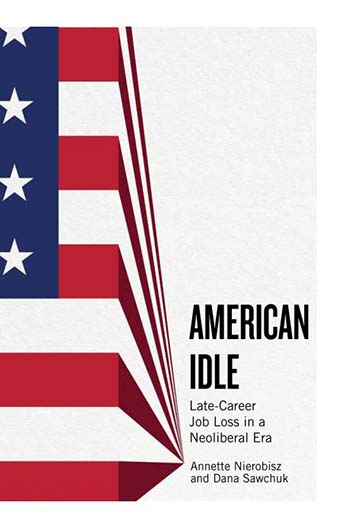
Annette Nierobisz and Dana Sawchuk (Rutgers University Press)
In American Idle, sociologists Annette Nierobisz and Dana Sawchuk report their findings from interviews with sixty-two mostly white-collar workers who experienced late-career job loss in the wake of the Great Recession. Without the benefits of planned retirement or time horizons favorable to recouping their losses, these employees experience an array of outcomes, from hard falls to soft landings. Notably, the authors find that when reflecting on the effects of job loss, fruitless job searches, and the overall experience of unemployment, participants regularly called on the frameworks instilled by neoliberalism. Invoking neoliberal rhetoric, these older Americans deferred to businesses’ need to prioritize bottom lines, accepted the shift toward precarious employment, or highlighted the importance of taking initiative and maintaining a positive mindset in the face of structural obstacles. Even so, participants also recognized the incompatibility between neoliberalism’s “one-size-fits-all” solutions and their own situations; this disconnect led them to consider their experiences through competing frameworks and to voice resistance to aspects of neoliberal capitalism. Employing a life course sociology perspective to explore older workers’ precarity in an age of rising economic insecurity, Nierobisz and Sawchuk shed light on a new wrinkle in American aging.
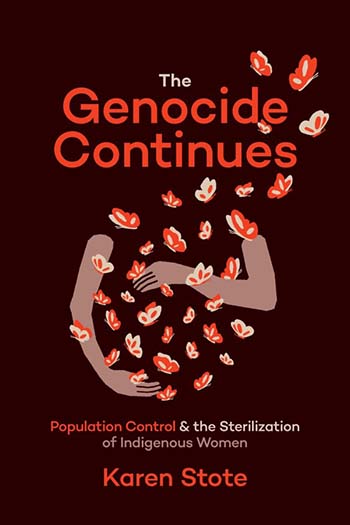
Karen Stote (Fernwood Publishing)
Indigenous Peoples in Canada have experienced coerced sterilization under eugenics legislation since the 1930s, and the violence has never stopped, even though eugenics fell into disrepute. In The Genocide Continues, Karen Stote examines the historical, political, and economic forces shaping the sterilization of Indigenous women from 1970 onward. She highlights how population control—concerned with land, resources, and who occupies them—guided public health policies from eugenics to family planning. The Genocide Continues offers new insights to show how federal, provincial and corporate activities intersected to criminalize and regulate Indigenous reproduction. Saskatchewan, which first established family planning policies in the 1970s and is now the province with the highest number of Indigenous women coming forward with experiences of coerced sterilization, is Stote’s case study to demonstrate why family planning activities consistently targeted Indigenous women. Drawing on archival research and storytelling, she connect violence against Indigenous bodies to broader systems of colonialism, extractivism, and dispossession, arguing that these conditions must be addressed to end ongoing harm.